

What Does The Lint Trap In Your Dryer Actually Do?
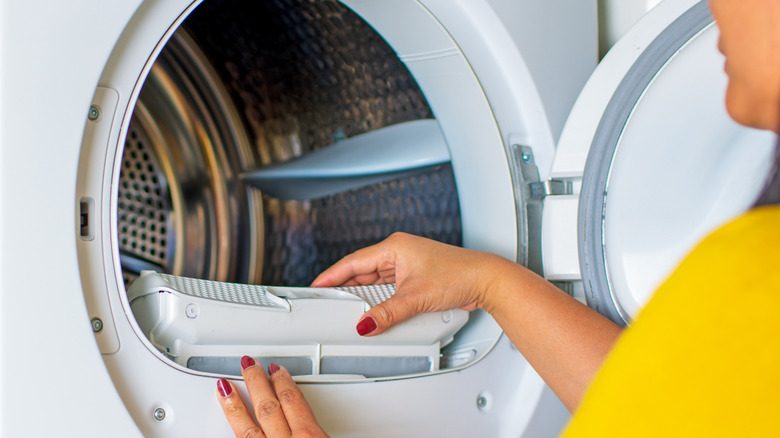
You might deserve a medal after finishing your family's laundry, but another unsung hero is your dryer's humble lint trap. There seem to be three schools of thought when it comes to cleaning it out. Some of us tackle the dusty task before every load, terrified that skipping it even once will send the dryer up in flames. Others only empty it when the mood strikes. And then there are people who have never given their lint trap a second thought. One of the keys to understanding how to clean a dryer (and why you absolutely must do it) is figuring out what a lint trap actually does. To find out, Hunker spoke with Andrew Kuznetsov, President of ADRIUM Service Solutions.
During an exclusive interview, the appliance repair expert explained that lint traps are an important part of the machine-drying process because a dryer is designed to generate heat for water evaporation and airflow that transfers moisture out. "The drum keeps the clothes moving, so warm air can circulate through the load. Meanwhile, fibers and pet hair during this process can be easily separated and come out together with moisture," Kuznetsov explained. The lint trap is there to catch those tiny bits of debris that get trapped in your sheets, blankets, towels, or favorite T-shirt.
"The lint filter is supposed to catch them to prevent air restriction inside the blower or exhaust," the expert said before adding that its most important function is keeping the air in your dryer moving. "A clogged filter restricts airflow, so clothes can stay damp even though the dryer is producing heat." That won't just make your laundry smell musty. Kuznetsov added that it can also lead to expensive overheating repairs.
Cleaning your lint trap regularly can help prevent costly problems
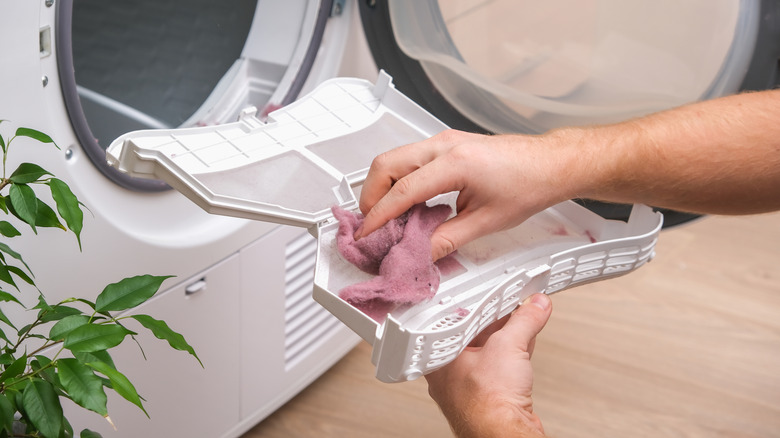
There's no need to feel intimidated about performing this basic dryer maintenance task. According to Kuznetsov, the most efficient way to deal with your lint trap is simple. "Clean the filter after each drying cycle and check its condition before starting a new one," he said. There are a ton of clever ways to reuse dryer lint around the home, so consider keeping a small bag or basket nearby for your stash.
After removing all of the lint, take a close look at the lint trap before putting it back inside your dryer. "If you see that the lint filter is damaged or warped, it makes sense to replace it," Kuznetsov noted. He added that it also makes sense to swap out a filter that has started to fit too loosely, because this won't be as effective at trapping lint against the screen (and your clothes could also snag on it). You can easily find the right one by typing your dryer's model number and "+ lint filter" together in a Google search or ChatGPT. The appliance repair expert said you should expect to pay between $20 to $40 on a replacement, depending on the brand.
A warped filter can be easily replaced, but there are some other issues that may require a little more investigation. "If the plastic frame is melted or shows heat damage, the dryer should also be checked for overheating," Kuznetsov advised. While overheating can be caused by restricted airflow from a fuzzy filter, he added that issues with your dryer's thermostat or temperature sensor are also potential culprits.
Don't forget to remove lint buildup from your dryer vent, too
Unless you decide to skip the laundry room in favor of line drying, every dryer desperately needs you to get in the habit of cleaning the lint trap before every load. "Ventless dryers handle the moisture differently, mainly by condensing it from the air and collecting or draining the water, but they still depend on clean filters and proper airflow," Andrew Kuznetsov cautioned. It's important advice for anyone who has invested in one of the all-in-one washer/dryer combos that are becoming more popular thanks to their energy efficiency.
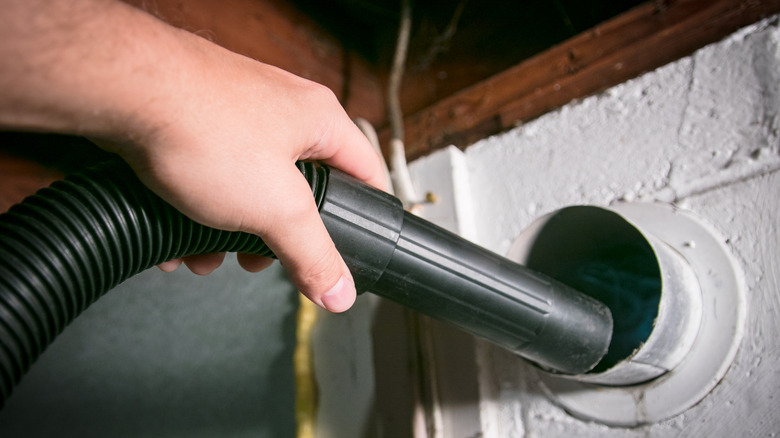
No matter what kind of dryer you have, regularly removing all of the accumulated debris on the lint trap is only one of the steps you can take to prevent dryer vent fires. "Cleaning the filter does not eliminate the need to clean the dryer and its vent," Andrew Kuznetsov emphasized. Cleaning the interior regularly is also important because it helps to keep odors and oily buildup from fabrics or dryer sheets at bay. While cleaning your dryer vent is a more occasional task, it's another one you shouldn't overlook.
"Manufacturers recommend cleaning the vent once a year," Kuznetsov said. If your dryer is producing heat but taking longer than usual to dry a typical load, the appliance repair expert recommends checking the lint filter and vent for restrictions assuming you can reach it. The process is relatively simple to DIY, but there are occasions where you may want to call in reinforcements. "If the full exhaust duct is difficult to access and clean safely, have a professional service it," he concluded.