

You Can Forget Wood: There's A More Durable Shed Material To Consider
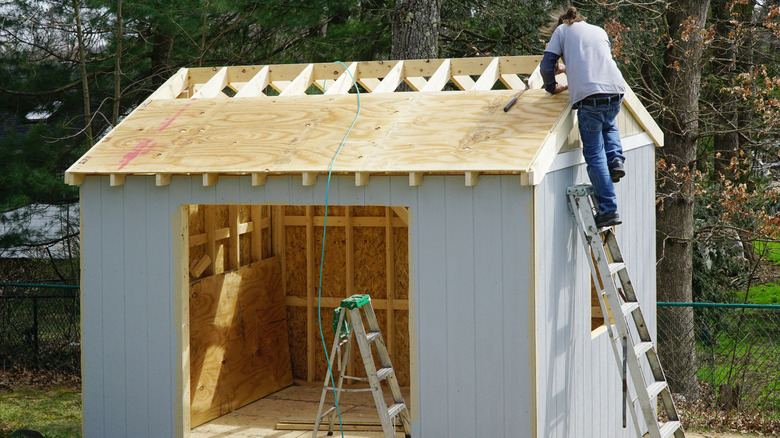
If your backyard shed is made up of wood, it has probably put up with a lot and might be screaming for a break. Rain, humidity, snow, and pests all take a toll, and wood eventually gives in with repeated exposure to these elements. Tired of fixing warped boards and getting rid of termites feasting on your wood shed year-on-year? You may want to look at corrugated aluminum. It doesn't rot, won't develop rust, and pests have little interest in it. The panels can also withstand humid conditions, acid rain, and coastal salt spray environments, so your shed can hold up for years with far less effort and maintenance.
A lot of these benefits come down to smooth aluminum being corrugated. But what does getting "corrugated" actually mean? It's when a sheet of metal is pressed into evenly placed ridges and grooves, like a series of waves. Remember, aluminum alone is soft and can't withstand high wind. However, that same softness makes it easy to shape in almost any form. It's why it corrugates readily, and since the ridges make this version stiffer than a flat sheet, it holds its shape a lot better under pressure. The waves also channel rain along the panel and away from the screw holes, where leaks tend to start. Plus, you can make your outdoor shed pull double duty as a decor piece since the wavy profile is more aesthetically pleasing than plain wood sheds. But the real advantages show up when we talk about installation, maintenance, and costing.
What makes corrugated aluminum a better shed material
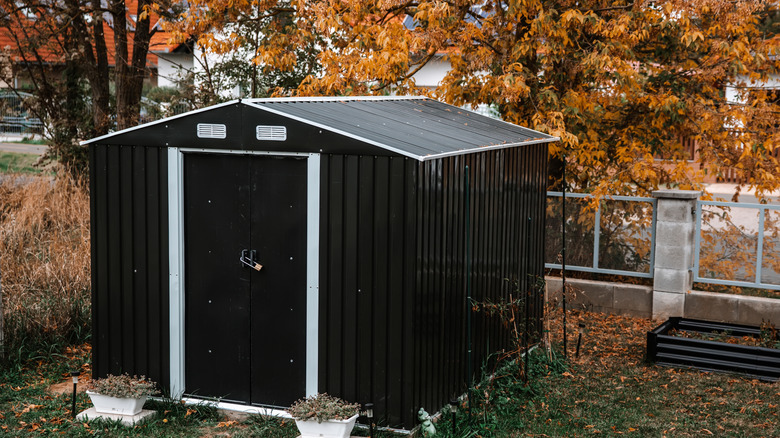
Corrugated aluminum solves a lot of the headaches you experience with wood sheds. Such structures need a fresh coat of sealant every couple of years and a fresh coat of paint or stain every five to 10 years to remain functional. Besides, corrugated aluminum resists insects and fires all on its own. It goes a step further than steel, too. It doesn't rust, because it forms a hard oxide layer that stays put instead of flaking. It also resists saltwater corrosion, which makes it a practical option for sheds in coastal states such as Florida and others along the Gulf Coast.
And if the mere thought of hauling lumber across the yard has been putting you off a DIY garden shed, know that corrugated aluminum will be much kinder to your back. One ⅞-inch corrugated aluminum panel from Arconic, for example, weighs only 0.62 pounds per square foot. Plus, DIYers find it easier to handle and position the panels. Assembling a shed kit is largely a matter of matching each panel to its screw holes, and all you need is one free weekend and a powered screwdriver, and the shed goes up with incredible speed. You'll still want heavy-duty work gloves and safety glasses, because panel edges are sharp. Afterwards, upkeep mostly involves an occasional rinse and a thorough inspection for scratches.
Price is another area where it shines. For a wood shed, be prepared to shell out anywhere between $3,000 and $15,000, per estimates from Angi. On the other hand, the same source approximates that metal sheds start at $500 and cap at $7,000. Combined with maintenance and installation, corrugated aluminum makes wooden sheds look like a thing of the past.