

How To Fix Sticky Door Locks With A Find From Lowe's (Hint: It's Not WD-40)

Since day one in our house, we've battled one of those notoriously sticky door locks that's utterly impossible –- absolutely a do-not-lock-the-knob-under-any-circumstances, deadbolt-only scenario. On the rare occasion it somehow ends up locked, we have to wrestle the key into the knob, hoping we can jam it in just hard enough to trigger the pins, but not so hard the key snaps off in the process. A year ago, we got very unlucky, which led to us spending hundreds to have an emergency off-hours locksmith remove the broken key from the door and let us into our house. This particular professional didn't offer any insight on how to avoid this in the future, no doubt happy to have a future frequent customer.
Fast forward a year, I finally called a different locksmith about getting the whole thing replaced. However, this wonderful good samaritan recommended I try a quick, easy $7 solution from the hardware store first before spending money on his services: lock dry lube. Having never heard of this before, I did further research — the idea behind the product is that it loosens buildup from dust and debris to operate smoothly within seconds without the need (and cost) to replace the hardware. And unlike WD-40, lock dry lube is meant to provide long-term lubrication without clogging the internal locking mechanisms.
So I snagged a bottle of 3-IN-ONE Dry Lock Lube from Lowe's. Come along for the ride as I put this insider pro tip from my helpful neighborhood locksmith into action and see if this simple bottle of lock lube can actually solve the jammed door lock problem and help avoid pricey professional visits in the future.
Why lock dry lube is recommended and how to use it
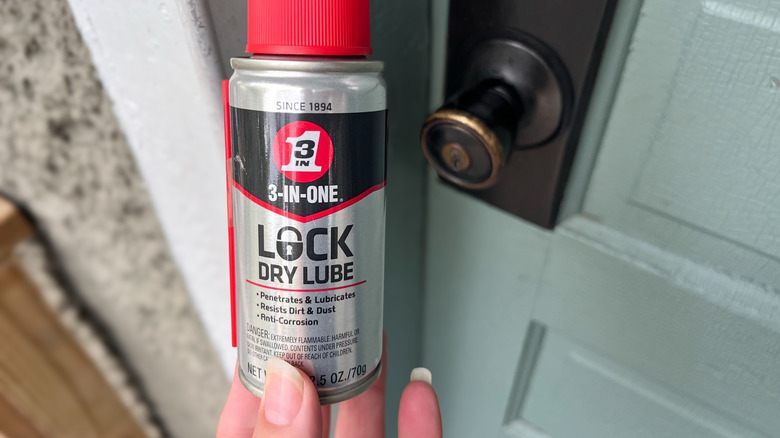
So why use lock dry lube on your door hardware and not another lubricant product like the ever-popular and versatile WD-40? Lock dry lube is similar to other lubricants in that its purpose is to dissolve buildup and smooth the use of a mechanism. Oil-based products like WD-40 may seem to help in the short term, but their formulas attract debris over time, clogging the lock pins and making the issue worse as time goes on. A graphite-free dry lock lubricant dries in seconds, forming a protective film that repels dust and grime while providing long-lasting protection against rust and corrosion. It's also a good option for older locks, which can become gummed up by graphite-based lubricants.
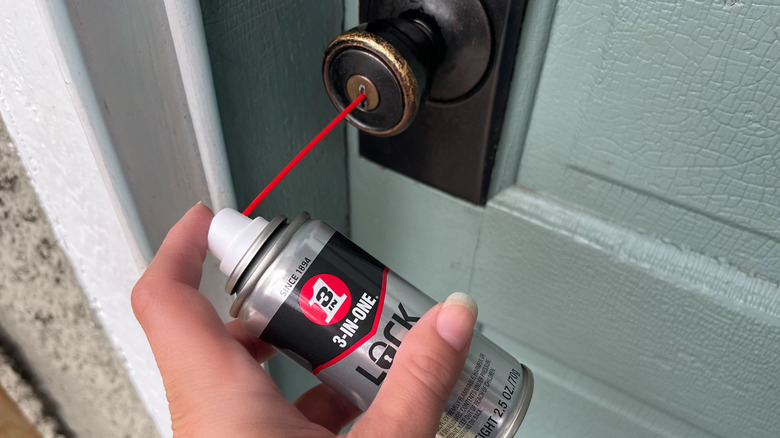
Once I had the locksmith's recommended product in hand, the instructions for using the lock dry lube were extremely basic: shake well, aim directly at the key or latch hole (such as on a padlock), and spray. The aerosol spray can came with a narrow nozzle extension for concentrated, precise application, so I inserted the straw directly into the disastrous keyhole and gave it a generous spray of the 3-IN-ONE lubricant. A small amount dripped out, so I could see that what initially went in as a liquid indeed dried in seconds, as the product claims. Then came the moment of truth –- I inserted the key, hoping to notice some improvement at least.
Incorporating this effective lock dry lube hack into yearly maintenance routines
The lock dry lube didn't just moderately improve the situation; it completely resolved the issue instantaneously, with the key sliding in effortlessly as if the lock hadn't been tormenting us for the last seven years. I was honestly a bit dumbfounded, and more than a little embarrassed that we tolerated a problem for so long that could have been easily dealt with for a few bucks (the cost broke down to a dollar per year — yikes!) had I known this solution existed. I almost paid someone a bunch of hard-earned cash to replace something that just needed five seconds' worth of attention.
I was so thrilled with how quickly and effectively the lock dry lube worked that I proceeded to tour the exterior of my home and give every lock the same treatment in the name of long-term care. I even lubricated sticky outdoor padlocks to be good as new despite years-long exposure to the elements. And I barely made a dent in the amount of product, so I expect this single can will last me a long time.
By adding this very quick and easy task to your regular home (and car!) care schedule, you can maintain the integrity, functionality, and longevity of your locks. Once a year will likely be more than sufficient for a quick pass through your main locks unless you're having a specific issue. So plan to incorporate this mini lock tune-up into your annual spring or fall home maintenance routine to stay ahead of the game. While it may disappoint your local pro, your wallet and sanity will thank you.