

The Once-Helpful Feature Boomers Loved Having In Their Homes

The years following the second World War were a prosperous time in America, when the number of single-family homes boomed in both urban and rural areas. It was also a time of unprecedented technological innovation, and new inventions increasingly influenced family dynamics. Children gathered in the den watching TV while mom was in the kitchen cooking with space-age appliances and dad was in the garage working on his Oldsmobile. The only ways to contact someone in another part of the house were to shout at the top of your lungs or physically go and find them. The home intercom system changed that.
The intercom era began in 1954, when NuTone introduced the first system, which used the same vacuum tube technology that powered the TVs and radios of the time. The company quickly moved on to solid-state technology that used transistors and diodes, and the popularity of intercom systems grew throughout the 1950s and '60s well into the latter part of the 20th century. People used them to answer the front door, call the kids for dinner, and talk to people in different rooms. No more shouting.
Intercoms weren't confined to the home. They were in schools, offices, and apartment buildings, and some of them are still in use. When you buzz your friend from the foyer of a high-rise apartment, the intercom that allows your friend to determine who's at the door is similar to the solid-state home intercoms of the '60s, if not exactly the same.
Intercoms: Gone but not forgotten
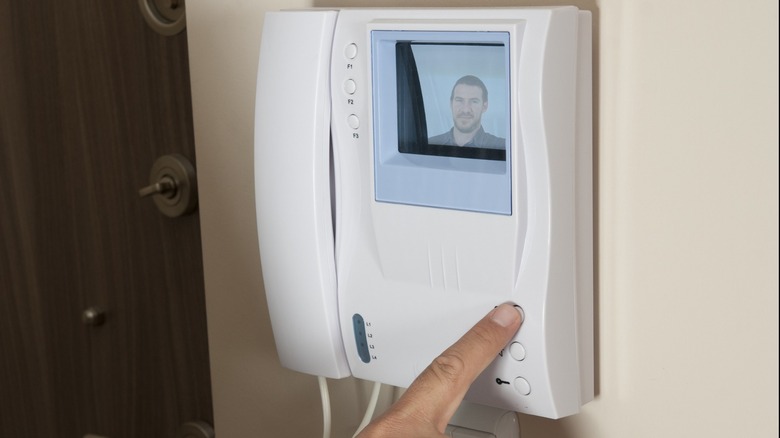
These days, the home intercom is largely obsolete, having been replaced by cell phones and wi-fi. You don't need a hardwired communication system when everyone keeps their own personal communicator in their purse or pocket. That doesn't mean intercoms have disappeared; they're still important parts of security systems, but they aren't always hardwired. Ring doorbells, for example, provide two-way audio without a subscription, and all you need to use one is a modem and an app on your laptop, or a cell phone.
One of the advantages of old hardwired intercom systems is reliability. They work without batteries or internet, and as long as the house has power, you can still use one if the modem goes down or you have spotty cell coverage. This is one reason why people with a '60s-era intercom system in their home continue to use it. It doesn't require an app or password, and you don't need to be computer savvy to use it. You just press a button and start talking. That's ideal for a home with young children, computer-illiterate elders, or both.
Old hardwired intercom systems, despite their retro charm, aren't a substitute for a wireless communication network. Many transmit only audio signals — no video — and the wires limit the reach of the system. Only some of the rooms in a large house, for example, may have intercoms because the installers thought wiring each room was too much trouble. Wireless systems, on the other hand, reach every room.