

Store Lawn Mowers Safely And Keep Them Hidden Away With This Smart DIY Cabinet
We may receive a commission on purchases made from links.
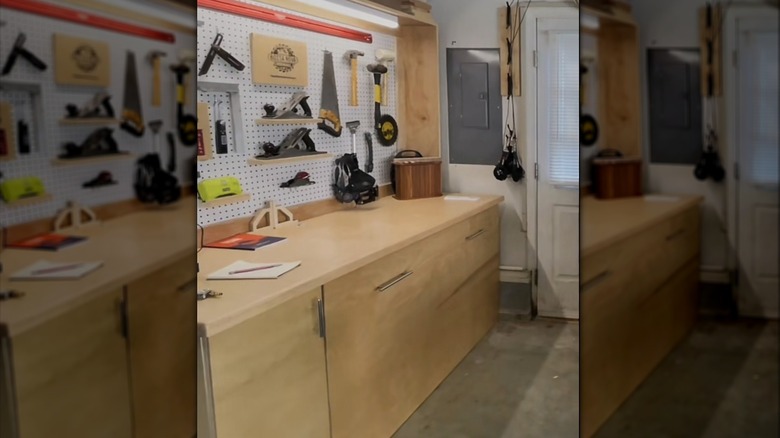
While a gas or electric push mower can certainly make the task of lawn maintenance easier, storing these bulky machines can be a serious chore in and of itself. Especially when space in the garage or shed is already at a premium, the generous footprint and heavy-wheeled base takes up a ton of precious real estate. Thankfully, TikTok user bossanovaworkshop shared how to build a custom, extendable platform for stashing a push mower hidden out of sight underneath a workbench. With heavy-duty cabinet glides, a platform with hinge-out ramp, and magnetized front cover panel to hide the whole setup, the TikToker created the perfect storage solution for regaining precious floor space that the mower used to occupy.
Before continuing, it's absolutely worth noting that while the video demonstrates storing the mower and spare gas tank in the DIY cabinet, it's recommended to keep gas-powered tools and gas tanks (in approved containers only) in ventilated, cool areas detached from the house and away from any potential spark or heat sources that could cause a fire, including electrical charging batteries or power tools. Additionally, let your mower cool down completely after use before storage in the cabinet. Always take proper safety precautions when storing gas and gas-powered tools before proceeding with this storage project.
While the dimensions of this DIY need to be tailored to your mower and available space, it should work with any push mower with a foldable or collapsable handle. Measure the overall dimensions of your mower when folded — this'll be the minimum interior clearance of your mower cabinet plus the height of the platform when retrofitting an existing workbench or building one from scratch. Measurements in hand, it's time to shop for project supplies so you can create your own incredible mower storage cabinet to revolutionize your garage or shed.
Tips for planning and purchasing supplies for your mower platform
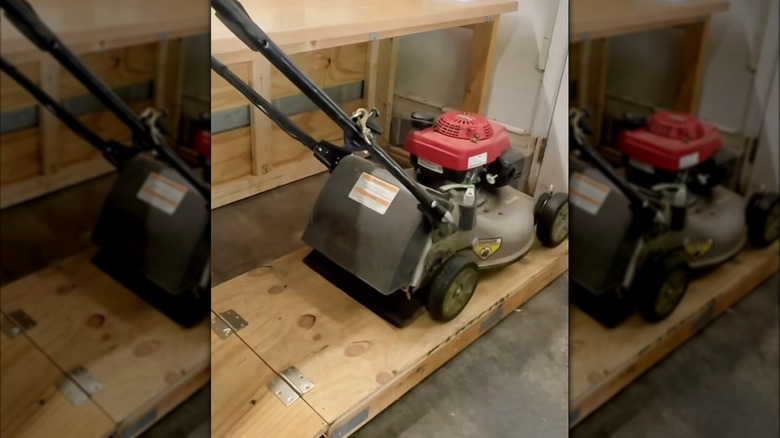
Purchase a sheet of ½-inch or ¾-inch plywood to build the platform base. While the ½ inch will be lighter to manipulate, the ¾ inch can hold more concentrated weight per square foot, which may be more suitable for heavier mowers. The average electric push mower weighs between 30 to 60 pounds while a gas mower is more like 60 to 100 pounds, with self-propelled options on the higher end of the weight range. Researching the weight of your particular mower model will help you make the decision on plywood thickness.
@bossanovaworkshop #lawnmowerstorage #lawnmowergarage #lawnmower #workbench #garageorganization #yorktownva #woodworker #diy
Similarly, when using heavy-duty, side-mounted cabinet glides to extend the platform out from under the workbench, be sure the glides are designed to handle the weight of your mower and platform — such as the REGUDA Heavy Duty Drawer Slides on Amazon that are available in a wide range of lengths (at varying prices), and are able to handle weights of 250 and 500 pounds, depending on the model. While glides may be more limiting as to how far the platform can extend than flexible casters, the motion is apt to be smoother and easier to maneuver than free-rolling wheels.
Alternatively, if you prefer to use casters to roll the platform around, they need to be able to make quick work of the weight of the mower plus the plywood base. Choose a heavy-duty swivel caster set that can easily handle the job, like the well-rated YUPEZOP 4-Inch Heavy Duty Industrial Caster Wheels built to handle 2,400 pounds for $26 on Amazon. Keep in mind that if you're working with a height maximum for the underside of an existing workbench, plan for the extra height clearance needed for the caster and plywood platform, adjusting as needed to ensure everything will fit.
Building the extendable hidden mower platform
To construct the mower platform, use your minimum dimensions, existing workbench footprint, and/or any cabinet glide clearances to determine the appropriate width and depth, cutting it to size in-store or at home. While the saw's out, cut a piece of plywood the same depth as the platform and about 18 inches wide to act as the hinged ramp to get the mower on and off the elevated platform. For the platform apron base that holds the cabinet glides, construct a 2-by-4 frame for additional structural support, as well as heavy duty corner brackets or cross supports to keep everything solid and square. If you're using castors, apron sides are optional but provide a more finished look, cover the casters, and can be cut from the leftover plywood material — attach them with hidden pocket holes or L-brackets from underneath.
Next, use a pair of butt hinges to attach the ramp piece to the top of one side of the platform so that it can be folded upwards for storage. For those using glides, attach them to the sides of your workbench and platform box, and install according to the directions. For those using castors, attach them to the underside of the plywood platform near each corner.
Finally, measure the front opening of your workbench and cut a plywood front to completely hide the mower platform. This can be made from paintable or stainable material if you'd like to finish it to match surrounding cabinetry or wall paint. Add two handles on the front for easy manipulation. This will be held in place and prevented from tipping forward by sets of heavy duty magnets, which should be placed on the workbench apron and in corresponding locations on the back of the panel.