

What To Do If You Spot A Chipmunk Burrow In Your Yard
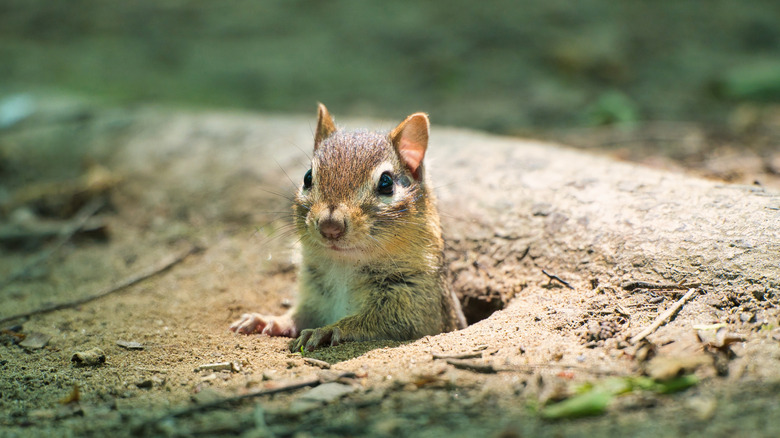
Chipmunks are cute until they start digging burrows in your yard. The chubby-cheeked rodents dig the elaborate underground tunnels using their claws and teeth, creating distinct spots along the way for their nests, food stash, and even bathroom breaks. Despite their small size, a chipmunk's burrow can stretch 20 to 30 feet underground. Since they carry dirt inside their cheek pouches, you may not even realize a chipmunk has moved into your yard until you spot one of the furry critters sprinting into or out of a small hole in the ground. As the burrow grows, their tidy little holes will start to show up next to your favorite flowerbed, under your front porch, and everywhere in between. Although you probably don't need to worry about chipmunks damaging your house, since their handiwork doesn't typically cause structural damage, you may find yourself wondering what to do if you spot a chipmunk burrow in your yard.
According to John Koprowski, Dean of the Haub School of Environmental and Natural Resources at the University of Wyoming, the most effective and environmentally-friendly approach is to annoy and disturb them until the chipmunks evict themselves. "Chipmunks primarily nest in burrows in the ground but will also use downed logs or tree cavities or cracks low to the ground," Prof. Koprowski told Hunker during an exclusive interview. While the in-ground channels can be extremely extensive, their circumference is no larger than a ping pong ball. "Burrows are usually among the roots of a tree ... or perhaps under a driveway," he explained. Unlike moles, which create larger tunnels that raise the earth, or gophers that leave piles of dirt around the entrance, chipmunk burrows are far less noticeable.
Try manually collapsing chipmunk burrows with a shovel or using smelly deterrents
Of course, just because they're less noticeable doesn't mean you shouldn't try to get rid of burrowing animals in your yard. Because a chipmunk burrow is relatively shallow, it probably won't disturb your home's foundation. Tunneling underneath concrete slab patios and even driveways can create drainage issues, but it often takes years to cause a serious problem. Prof. Koprowski said the most lasting harm caused by burrowing chipmunks will happen to your lawn and garden.
If you're certain chipmunks are burrowing in your yard, the wildlife expert offered several suggestions for getting rid of them. "The landowner can collapse the burrow using a shovel and may have to do this a few times before the chipmunk is sufficiently annoyed," Koprowski explained. "Dropping several moth balls deep into the burrow and then closing the entrance is often very effective in getting the chipmunk to abandon the burrow." He added that you should avoid using them near pets or children due to toxicity risks.
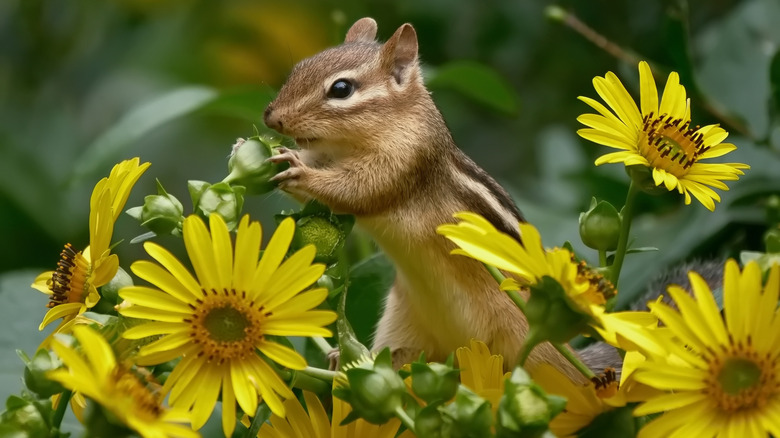
It's not just the burrowing, which can disturb plant roots or cause water to drain ineffectively. It's that chipmunks are constantly on the lookout for food. "Feeding on plant tissues, fruits, flowers and seeds is much more problematic," the wildlife expert emphasized. For homeowners who want to try less toxic deterrents, he suggested applying cayenne pepper sprays and pastes, or aromatic compounds like menthol and camphor. However, you may have to experiment or apply them several times. "Chipmunks show variability in response to these products," Prof. Koprowski cautioned.
Discourage burrowing by maintaining an open yard and garden
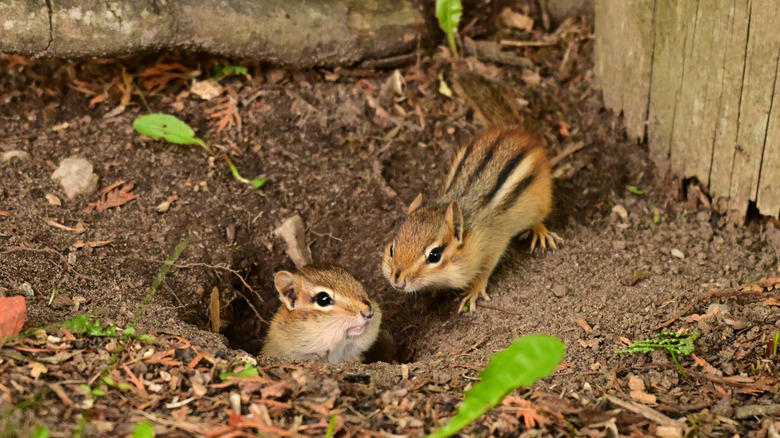
Although physically disturbing a burrow or using a homemade chipmunk repellent are relatively low-effort, low-cost solutions, it's an even better idea to take a few preventative measures to stop chipmunks from creating burrows in your yard in the first place. Prof. Koprowski said the best approach is to appeal to a chipmunk's sense of safety and security.
"Chipmunks fear predators ... raptors, foxes, etc. ... and so keeping areas surrounding and within gardens open reduces the number of visits and the duration/damage caused by those visits," he remarked. Keeping your grass short, avoiding tall ornamental plants that block the line of sight, and using gravel borders instead of dense flowers, are simple steps you can take. Pruning the lower branches of shrubs and bushes is another effective way to eliminate a chipmunk's hideout spot.
Look around your yard for other protected areas before collapsing burrows with a shovel, because that's exactly what your newly evicted chipmunks will do once they realize it's time to move. "Removing downed logs and rocky debris reduces protective cover and therefore chipmunks feel less safe," Prof. Koprowski said. It's also a good idea to eliminate any easily accessible food sources, like loose bird seed or leftovers in your outdoor pet bowls.