

Use Old Wood Pallets To Build A Rustic Planter With A Resourceful DIY
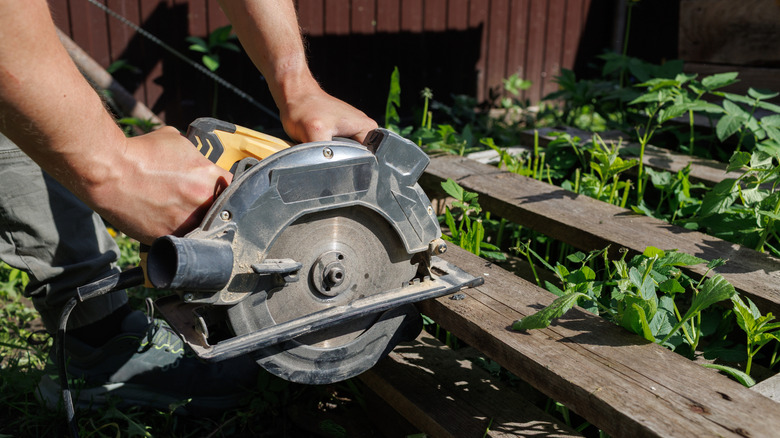
Potted plants are an easy way to liven up your home, porch, or patio, but buying planters can be a chore. You have to make sure they're the right size, find one that matches your style, and potentially try to find a complete set if you want all of them to match. Plus, the glazed ceramics and artificial plastics common in planters aren't a great fit for rustic decor. Instead, take some old wood pallets and turn them into custom, rustic planters. They're simple enough for bbieginners, but with plenty of room to improvise if you're an experienced woodworker or love a challenge. The wood from the pallets will form a basic box-shaped planter, held together with wood glue, screws, or nails. You'll also need some basic carpentry tools, such as a saw for cutting the wood and a sander to smooth down the rough edges. Optionally, grab some paint or stain as well.
The basic box shape of the planter is easy to adjust, so you can make a tiny one for your succulents or a larger one for your veggies. However, a larger planter will require more wood, so you may need multiple pallets. You'll likely also need more than one if you plan on making multiple planters. Luckily, you can find free wood pallets online or at businesses, left over from deliveries. Look for ones in relatively good condition that are marked HT. This means they were heat-treated rather than preserved using chemicals that might leach into your plant's soil.
Building your pallet planter
Start by pulling or cutting your wood pallet apart. If you choose to pull it apart, wear gloves to protect yourself from nails and be careful not to break the boards. Cutting the pallet apart may be the better choice, as you can avoid cracking the boards. Unless you want a particularly large planter, you'll likely need to cut the boards into smaller pieces. Most old pallets will have some natural wear and tear, which will contribute to the rustic vibe. However, you should trim off any rot or damage so severe it might impact the planter's stability.
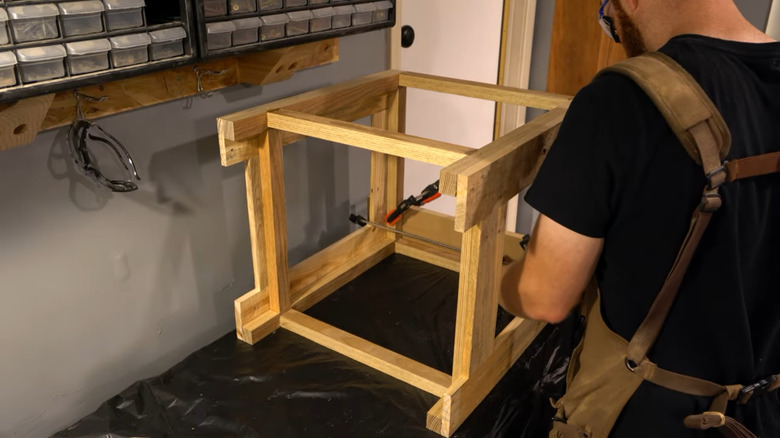
To build the frame, you'll need four posts or eight boards that are cut to the height of your planter to form the corners. If you use boards, use two boards attached in an L shape for each corner. You'll also need eight pieces that will be placed horizontally between the corners, forming the top and bottom edges. The finished planter will be slightly wider than these horizontal pieces are long. Using wood glue or nails, attach the vertical posts to the ends of the horizontal boards to form a frame. One set of horizontal boards should be flush with the top of the vertical posts, so the top of your planter will be even. The bottom boards can be flush with the bottom or raised slightly to give your planter legs. When the frame is complete, it should look like a cube with open sides. Add flat boards to cover the bottom and sides, and the basic planter is complete.
Making this planter your own
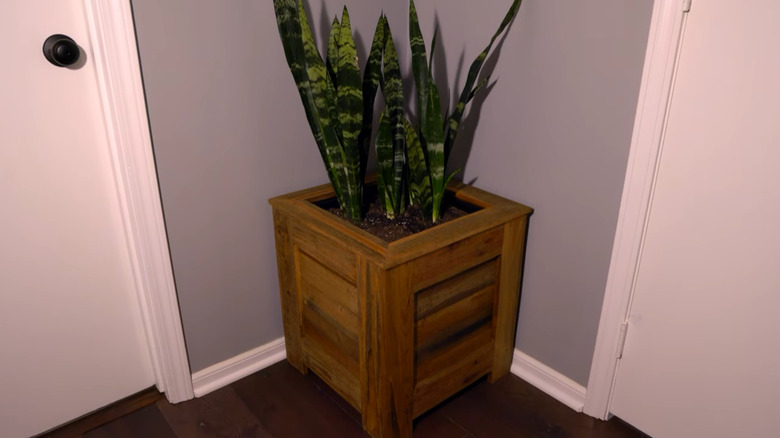
How you arrange the exterior boards will impact the look of the final planter quite a bit. For a rustic, simple look, attach the flat boards vertically or horizontally over the top of your frame. Add four more flat boards to the top of the planter, framing the opening where your plants will sit. For a neater, more rustic-chic look, start by attaching flat boards over the frame pieces, leaving the open gap in each side still somewhat open. Then, cover the center of each side with flat boards, but attach them to the inside of the planter so they don't stick out awkwardly. You could also mimic a barn door pattern on the sides using diagonal boards.
The external side boards are a great place to use any of your more rustic pallet pieces, as they'll be on full display. Pallet boards that are in better condition or are simply less interesting-looking are a good fit for the bottom and internal frame. If you're concerned that the pallet boards may not hold up, you can always leave your plants in their pots and place the entire thing inside the planter. That way, if they do break, the plant will still be safe. Leaving the pallet boards bare will give you the most rustic-looking planter, but you can always give it a coat of paint or wood stain. Consider what container garden plant you'll be putting in it and pick a color that will complement it for the prettiest effect.