

How To Smooth And Level A Spongy Lawn And The Best Tools To Use
We may receive a commission on purchases made from links.
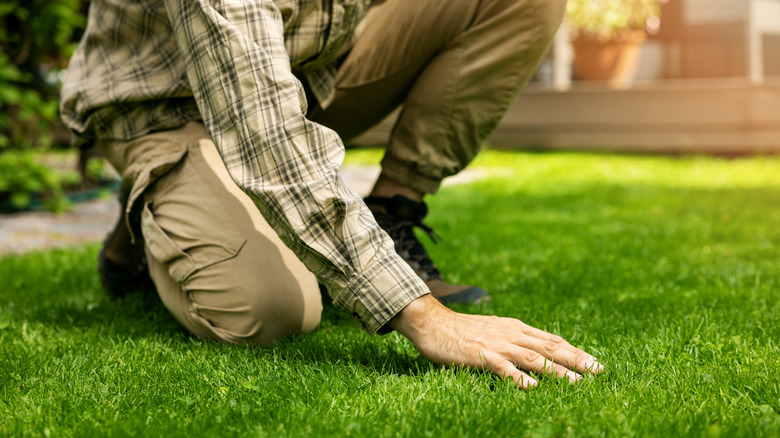
Every homeowner dreads that squelching noise shoes make when you walk across a spongy lawn, especially after a recent rain or dewfall. It's annoying, it's dangerous, it's unwelcome. So, how can you remediate the situation? Start by looking into thatch buildup.
While speaking exclusively to Hunker about smoothing and leveling a spongy lawn, Jon Sneider, the owner of Jon Sneider Lawn Care & Tree Service, says, "The first thing I'd recommend to a homeowner is to check for thatch buildup." So, what exactly is thatch? When plant matter, such as roots, crowns, stolons, and stems, starts decaying, it collects between the soil and green grassy blades, forming a spongy layer. "A little thatch is normal and can benefit the lawn," he says. That's because it helps regulate soil temperature and improves moisture retention. However, he adds, "The problem starts when thatch accumulates faster than it can decompose."
To confirm whether you need to dethatch your lawn, you must take out a small, pie-shaped section from an out-of-the-way or inconspicuous area. "I'd recommend a small garden trowel or shovel as a starting point to help you cut out a small section of turf, examine the soil, and measure the thatch layer between the green grass and the soil surface," adds our expert. If the brown thatch layer is over half an inch thick, you must dethatch. However, Sneider cautions that sometimes it's not thatch but soil compaction or waterlogging that may be to blame for a squishy lawn. To address them, you must core aerate instead.
Use a thatch rake or aerator to smoothen your spongy lawn
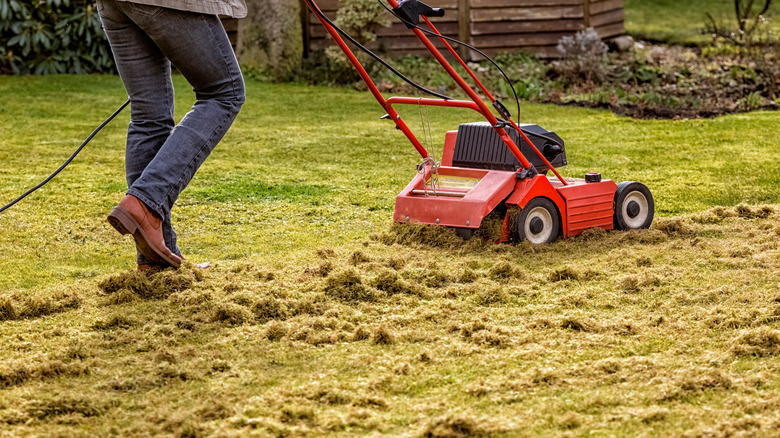
If you notice excessive thatch buildup, the tools you'll need to offset it will depend on area size. "For a small lawn, get a good dethatching rake," advises Sneider. "It has sturdy, sharp tines designed to pull out the buildup of dead and partially decomposed grass material that can make a lawn feel spongy." The Walensee 15-Inch Thatch Rake for Lawn is a highly-rated, dual-sided manual tool you can use. Be warned though — it'll loosen up lots of debris, but you can pick that up with a regular leaf rake and some elbow grease.
Contrastingly, he adds, "If you're dealing with a larger area, you can rent a power dethatcher from an equipment rental store or even a big hardware store." For instance, Home Depot lets you rent a heavy-duty dethatcher for under $70 for a day job. Exercise caution, as dethatching is an aggressive job and can worsen your lawn's condition if performed incorrectly. While Kentucky bluegrass and zoysia can tolerate multiple passes, delicate grasses like St. Augustine or centipede will only handle uni-directional dethatching.
However, if you find that the soil is compacted, consider core aeration instead. "A core aerator is another useful tool because it removes small plugs of soil and doesn't just poke holes in the ground," remarks Sneider. "Core aeration helps relieve compaction and improves the movement of air and water into the soil." It also helps break down thatch, though not as aggressively as dethatching tools would. Be sure to mark underground irrigation or sewage lines, electrical wires, or fences before aerating your lawn.
Reexamine your care practices or call in the pros
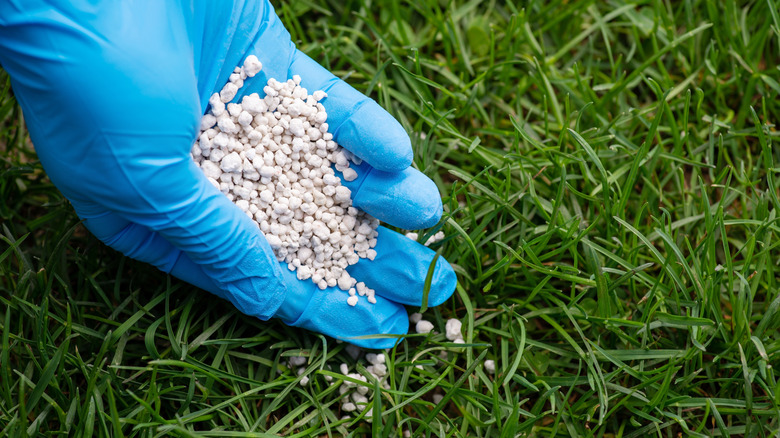
While dethatching or core aerating can help level a spongy lawn, results won't last if your lawn care practices are questionable. "Too much fertilizer, especially nitrogen, can encourage excessive growth and may contribute to thatch buildup over time," clarifies Sneider. So, fertilize as recommended for your grass type and season, and mow regularly without cutting it too short. Should your lawn fail to recover and continue to thin out, seek professional help. That's because your turf may be reeling from other issues, such as soil compaction and poor growing conditions. "...and those can be difficult to manage with basic equipment," states our expert.
"Another sign it's time to consult a professional is seeing standing water long after the rain has stopped," reveals Sneider. This often denotes a drainage problem, and pros can help determine whether it's due to poor grading, compaction, or any other issue. You may also need professional boots on your turf if you notice a thick layer of moss, as it's indicative of underlying issues with the soil. "Finally, if large sections of grass are dying, moss keeps returning, or the lawn isn't recovering despite proper maintenance, a professional can help evaluate the soil and growing conditions," he notes. In short, if you can't figure out why grass is struggling — for instance, if it's routinely diseased, pest-ridden, or features bare patches — it's best to have more experienced lawn keepers look at it before it's too late.