

Out With Tile Floors: A Gorgeous, More Durable Alternative
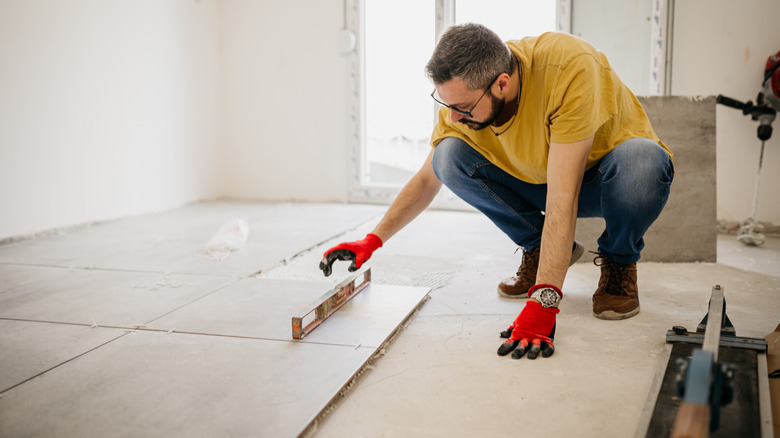
Tile floors have been a long-held flooring go-to in homes for good reason: They're durable, easy to clean, and can withstand plenty of wear and tear. However, depending on the material and installation, tiles can also be prone to cracking and chipping, not to mention that they come with seemingly endless rows of dingy grout. If you're planning to replace your flooring, there's another great flooring material that's worth considering, and it's not your basic hardwood, laminate, or natural stone — let us introduce you to sintered stone.
This composite stone offers the luxe appearance of natural stone with the durability of engineered materials, making it a beautiful and practical alternative to traditional ceramic tile, especially in high-traffic areas of the home. Sintered stone is made from mineral particles found in natural stone, such as silica, quartz, and feldspar, which are fused together using extreme heat and pressure. This process creates a nonporous surface that's highly resistant to scratches, stains, moisture, and temperature changes. Another key benefit is that it's easy to clean and, thanks to its low porosity, can inhibit the growth of viruses or bacteria, so it's a good flooring choice for kitchens and bathrooms.
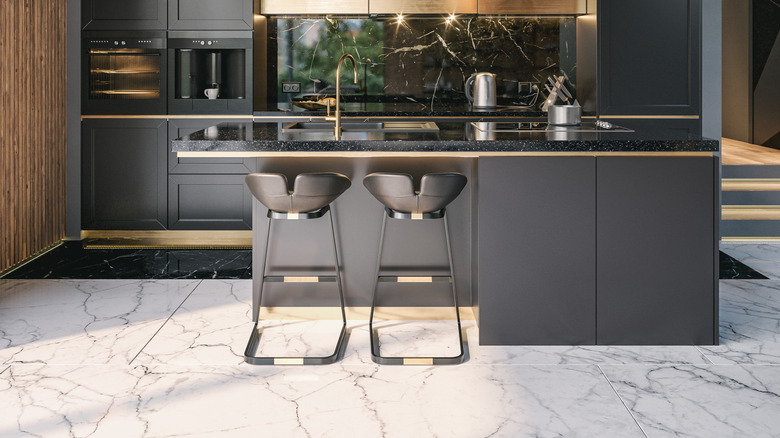
Unlike natural stone floors, like those made from marble, sintered stone does not require sealing to prevent staining and absorbing moisture. It's also available in a range of colors and patterns that mimic the appearance of marble, granite, and other natural materials, without many of their meticulous maintenance demands. And because it's cut into large slabs that require fewer joints than standard floor tiles, you won't have to worry about meticulously cleaning tile grout.
Is sintered stone the right flooring choice for your home?
Before you start looking at flooring samples, there are a few things to know about sintered stone. Firstly, it's not exactly a budget-friendly alternative. Depending on the product, sintered stone can cost considerably more than many types of tile flooring, and there is often a limited variety of styles to choose from. The large slabs are also difficult to repair, since you can't simply swap out cracked tiles. And although sintered stone is tough once installed correctly, it's not completely indestructible, so it may still crack or chip if there's a hefty impact.
Sintered stone's durability also comes with a trade-off: It's extremely difficult to cut and requires specialized equipment, including diamond-tipped tools and high-pressure waterjet cutters, so you won't be able to do a DIY install with a basic tile cutter. Plus, it can still chip along the edges or crack if handled or installed improperly. Large slabs also require careful handling and precise measurements, leaving little room for error during installation. With that in mind, hiring a pro to install it is mandatory, which tacks on additional expense. But if you want flooring with the durability and low-maintenance qualities of tile and the look of natural stone, sintered stone could be the right choice.