

Gardener Transforms A Kids' Toy Into A Functional Garden Bed
When you're crafty, a vessel is a vessel, regardless of what it was originally designed to hold. That means an old kiddie pool, sandbox, plastic storage bin, or even a children's water table can have a second life, whether it's for your home or your garden.
In a post featured on the HGTV Facebook page, one creator repurposes her children's old water table, swapping the water element for earth by filling it with soil to create a raised garden bed. The result is a colorful, kid-friendly flower garden that makes use of the table's existing shape and elevated design. Plus, the project requires very little construction compared to building a traditional raised bed from scratch.
To recreate this DIY, you'll need an old plastic water table (or your vessel of choice), a drill, silicone sealant, a plastic flower pot, and seeds or small plants. For the growing medium, choose a loose, well-draining soil to support healthy root growth. One option is to combine equal parts topsoil, organic matter (such as compost, aged manure, or peat), and coarse sand. Alternatively, you can use a mixture of 70% topsoil and 30% compost. If you want to add the creator's decorative finishing touches, gather some old plastic animal toys, terra cotta-colored paint, and a marker or paint pen for labeling your plants. Before getting started, thoroughly clean the table and inspect it for cracks or other damage, especially if it's been in storage or untouched for a while.
Creating an upcycled raised garden bed
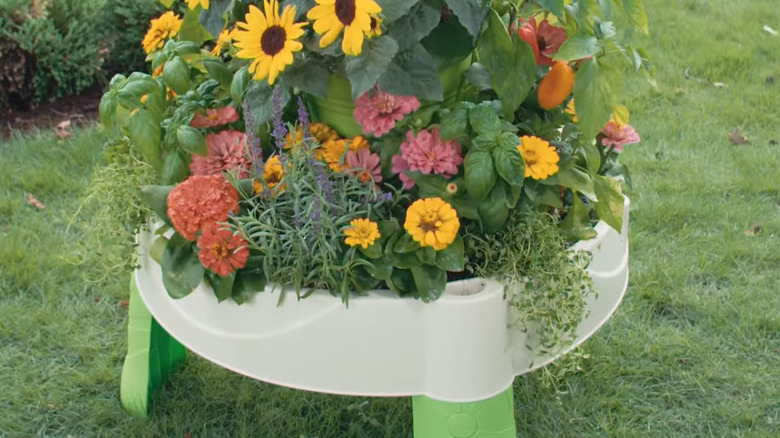
To transform her water table into a DIY raised garden bed, the HGTV creator starts by drilling holes for drainage. Then, she applies silicone sealant to the center of the table and places a plastic flower pot on top. Next, she fills both the empty basin of the water table and the flower pot with soil, until it's full and ready to plant. She and her daughter scatter easy-to-grow seeds, including sunflowers, English lavender, and zinnias. For an extra touch of functional whimsy, her children paint plastic animal toys a terra cotta color and write the names of their plants on them to create makeshift plant markers.
Although the process is simple, there are a couple things to consider before bringing a raised garden bed idea to fruition. First, remember that adding drainage is especially important to prevent waterlogged soil and root rot, since water tables are designed to hold water, not release it. Be sure the attached flower pot has its own drainage hole as well, and that the sealant doesn't block it.
Finally, consider the size and growing requirements of your plants. Choose plants with similar sunlight and watering needs, and follow the recommended spacing on their seed packets. Since containers dry out faster than in-ground gardens, check the soil regularly and water thoroughly when the top inch feels dry. You may also need to fertilize occasionally to replenish nutrients.