

Use PVC Pipes To Keep Pests Out Of Your Outdoor Plants With An Impressive DIY
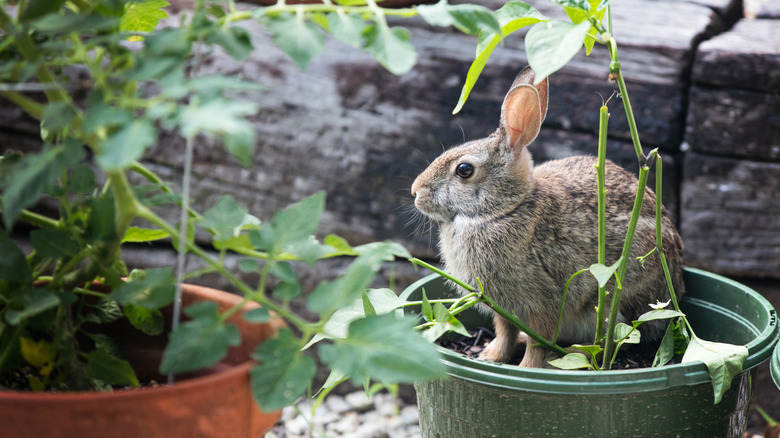
From hungry bunnies to digging squirrels, a garden is vulnerable to a variety of opportunistic outdoor dwellers. Installing a permanent fence might seem excessive (not to mention pricey) when you're only trying to protect a few young plants or containers, but there are simpler and more wallet-friendly solutions that can help prevent your garden from becoming a buffet. One gardener has a clever alternative that uses inexpensive PVC pipe to create a lightweight, customizable barrier to keep out the various visiting fauna. Best of all, it's 100% organic pest control that requires no chemical interventions.
YouTube creator Greens and Machines shares several practical uses for PVC, including a homemade enclosure designed to protect his young grapevines from hungry rabbits. Rather than building a traditional wooden fence, he assembled a PVC frame around his containers, wrapped it in chicken wire, and secured the wire with zip ties. According to the creator, the project successfully prevented further rabbit damage to his plants.
To recreate the project, you'll need PVC pipes, compatible fittings to connect the frame, chicken wire, and zip ties. Along with that, you'll need a measuring tape, a hacksaw or other suitable tool for cutting the PVC, wire cutters, and protective gloves for handling the fencing. The video doesn't specify exact pipe dimensions, fittings, or measurements, so you'll need to plan the structure around the size of the plants you're protecting.
Creating a garden enclosure with PVC pipe
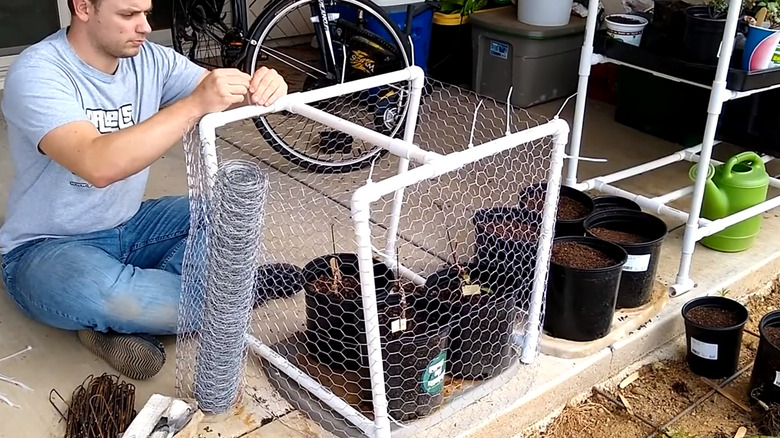
Greens and Machines' barrier for keeping critters out of the garden starts with assembling a PVC frame large enough to surround his potted grapevines. Once the frame is standing, he wraps chicken wire around the structure and attaches it to the pipes using zip ties. The result is a cage-like barrier that keeps rabbits from reaching the plants without requiring a permanent fence. Although the video doesn't provide detailed measurements or a complete assembly tutorial, the basic design is adaptable to raised beds, container gardens, or individual plants. To keep rabbits out, fencing should be at least 2 feet tall. You can also adjust the dimensions to leave room for future growth and access for watering and maintenance.
One final consideration is how your enclosure might affect pollinators and other beneficial insects. While chicken wire generally leaves enough room for many pollinators to pass through, replacing it with fine mesh or screening could prevent bees and other insects from reaching your flowers. A 2021 study published in Agriculture, Ecosystems & Environment found that protective growing structures, including netting and screen enclosures, can restrict pollinator movement and affect their health and foraging activity. So, if you're protecting flowering or fruiting plants, make sure pollinators can still access the blossoms when necessary. However, you can use fine mesh and a full enclosure if you're growing self-pollinating garden plants like leafy greens, peas, and beans.