

Forget Hostas: This Native Wildflower Thrives In Deep Shade
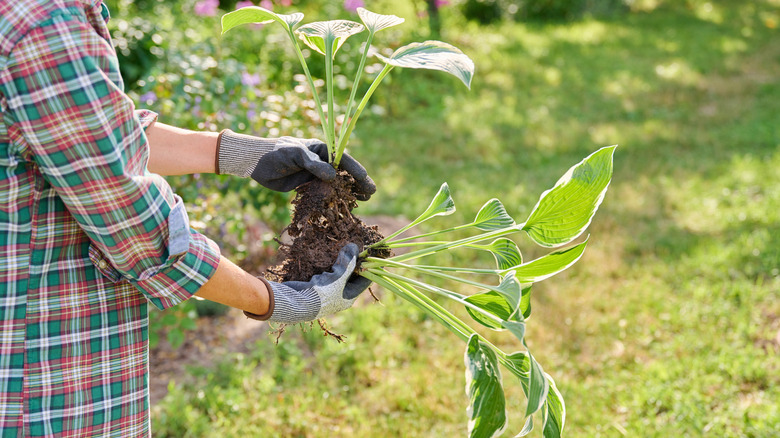
If you're looking to say "hosta la vista" to the same old plants for the shadier areas in your landscape, there's a lesser-known perennial worth considering. Mayapple (Podophyllum peltatum), also known as Mandrake, is another leafy option that offers a completely different look. This perennial wildflower unfurls vibrant umbrella-like leaves in spring, creating a lush, forested feel in places where sun-loving plants may struggle. It's an especially good option if you're exploring landscaping ideas for shady areas and want something beyond the usual hosta-and-fern combination.
Mayapple is a landscaping plant that's native to much of eastern North America and further south to Texas, where it naturally grows in deciduous forests, shady fields, and along riverbanks. Its foliage typically reaches around 12 to 18 inches tall, with one or two large, deeply lobed leaves that resemble little green umbrellas. Beneath the foliage, some plants will produce a single white or rosy-colored flower with waxy petals and a bright yellow center. These blooms appear in April and May, but only on mature plants with two leaves. As spring turns to summer, the flowers may develop into lemon-shaped berries that gradually turn golden yellow as they ripen.
Growing mayapple in a shaded garden
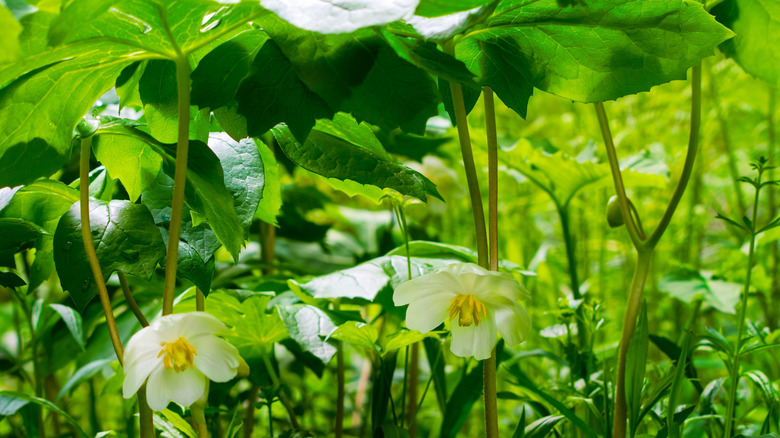
Mayapple is hardy in USDA Zones 3 through 8, and grows best in partial to full shade. If you're planting it, opt for a spot with rich, moist soil and plenty of organic matter, whether that comes from natural leaves and debris similar to its native forest habitat or by amending the soil with nutrient-rich compost.
Also, be sure to give mayapple plenty of room to spread. Its underground rhizomes produce new shoots, allowing it to form dense colonies over time. This makes it useful for adding greenery to a shady area, but it might not be a great fit for a well-manicured flower bed where you want every plant to stay in a defined spot. Mayapple also goes dormant by mid-summer, and its foliage may disappear well before fall, so consider pairing it with other plants that can fill the space later in the season.
One important caution before planting: Mayapple is poisonous, so it's not ideal if you need kid-safe and/or dog-friendly landscaping. Its leaves, stems, roots, and seeds contain the compound podophyllotoxin, which is highly toxic if eaten. The foliage and roots can also be very irritating for your skin, so be sure to wear gloves when handling it around your garden. The fully ripened fruit, excluding its toxic seeds, is the only part of the plant that isn't extremely poisonous, though it's said to have a bland taste and is probably best left as a potential snack for wildlife.