

What To Do With Your Lawn In November To Ensure It Bounces Back Next Spring

Late fall might not seem like a time when your yard will need a ton of care, but there are a few essential chores to complete in November. With winter quickly approaching, November is a time to prepare your lawn for the stress of cold, wet weather to ensure it thrives next spring. Depending on where you live and the type of grass growing in your lawn, November care will vary.
Generally, fall is the best time to control stubborn weeds, particularly broadleaf weeds, and November is no exception. For folks who have issues with dandelions, wild violet, or other broadleaf weeds, your herbicides can be more effective during November before the soil freezes. As the weather cools, these weeds prepare for winter by moving carbon to their roots to store it, which makes it easier for the treatments to affect them.
Besides weeding, there are other ways to prepare your lawn for winter and help it emerge strong next spring. Dealing with autumn leaves is often another big part of November lawncare, and those pesky fallen leaves might have a bigger impact on your grass than you realize. If your lawn is still growing at the end of autumn, your mowing practices can affect how your yard handles winter weather. Additionally, at the start of the month, there may be time to give your grass some extra nutrients. One last fertilizer application can help your lawn bounce back better when spring returns, as long as it hasn't gone dormant yet.
Consider clearing the leaves
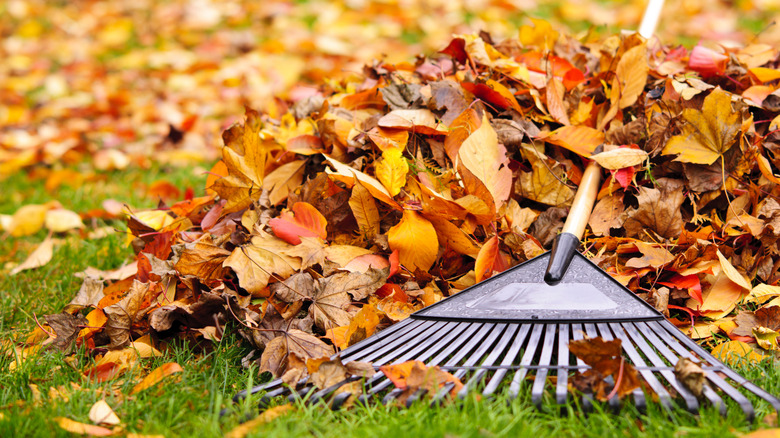
Fallen leaves can have a big effect on your grass. While leaving the leaves is often promoted as a way to help the environment, it could be hurting the health of grass during a time when it should be building strength. Unfortunately, thick layers of autumn leaves on your lawn can prevent the grass from getting enough sunlight.
If your grass is still growing in November, too many leaves and a lack of sunlight make it harder for your lawn to complete its process of storing nutrients for winter. This can lead to patchy grass with dead areas, which makes room for weeds to move in next spring. Additionally, an overabundance of leaves creates stress and can potentially lead to issues like snow mold. If you can't see your grass through the leaves, there are too many.
Consider raking or blowing to remove the debris. Add the leaves to a compost pile or bag and dispose of them. Alternatively, you can ditch the rake for a smart way to clean up leaves: Mulching your leaves with a mulcher or your mower not only makes this chore easier, but it can be beneficial for your lawn. Depending on the amount of leaves, mulching may break them down enough that you don't need to remove them. Allowing a few mulched leaves to decompose over your lawn will actually add more nutrients into the soil for spring. However, when there's still too much debris, you'll need to remove some of the chopped leaves.
Mowing and fertilizing your lawn in November
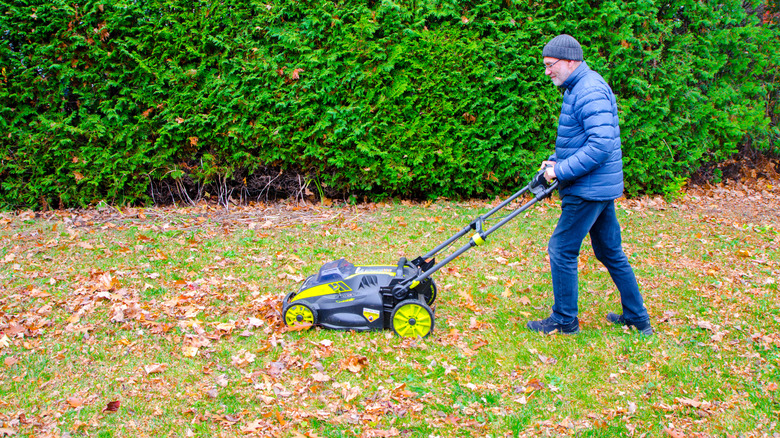
Lawns in warmer locations are often still growing in November, which means you'll need to continue mowing. For many, the end of November is often the time to stop mowing your lawn before winter for a healthier yard in spring. Keeping up with mowing at your lawn's normal height until it stops growing is a good way to prepare it for winter. However, cutting it even shorter could help to prevent issues with the leaves becoming matted underneath snow. For those with a couple of mows left in the season, gradually decrease the height of your grass a little bit each time. Shorter grass can also help your lawn avoid snow mold. When mowing lower, ensure you're not scalping the grass by cutting the height all at once.
If your grass continues to grow, November can be your last chance to give it extra nutrients to prepare for winter. This month is typically too late for a slow release fertilizer, but a quick release version can give your grass a beneficial boost. It's crucial not to fertilize dormant grasses and ensure your plants will use up the nutrients before winter. Otherwise, they won't be absorbed by your lawn and could be harmful for the environment. Apply your fertilizer early in the month and no later than mid-November to give your grass enough time to take in the food before dormancy. Feeding your grass at this time provides nitrogen to help your lawn have stronger roots and greener leaves next spring.