

Soaking Seeds In Vinegar: What It's For And Why It's Recommended
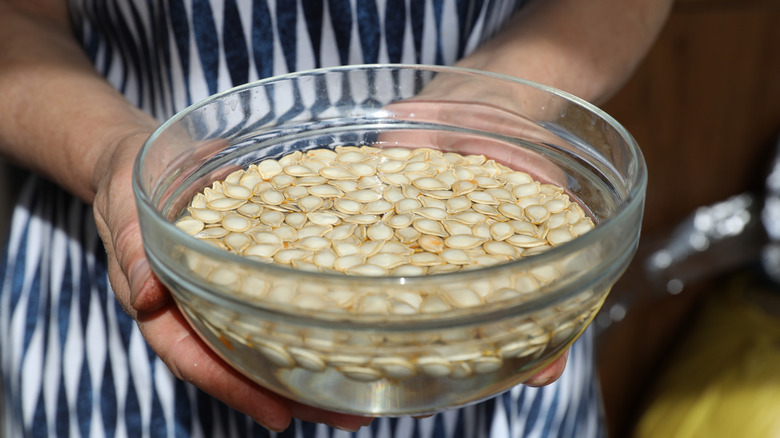
Seeds need to absorb water to germinate, but this can be a slow process when seeds have hard, thick outer shells that are water-resistant. But what if there were a trick that could speed up that germination process? Well, did you know that some hard-coated seeds can be soaked in diluted vinegar? This weakens the barrier, allowing water and gases to pass through, speeding up germination. It's a form of chemical scarification, the deliberate softening or damaging of the seed coat without harming what's inside.
This shouldn't be seen as a solution for all seeds. Chemical scarification also only alters the physical structure of the seed coat, and won't address dormancy caused by other factors, such as temperature exposure (which requires a different process called stratification). The method is only potentially useful for seeds that have failed to germinate because of hard, impermeable outer shells. Small seeds, thin-coated seeds, and other varieties that germinate readily do not need it.
Growing garden nasturtium (Tropaeolum majus), okra (Abelmoschus esculentus), and pumpkin (Cucurbita pepo), for instance, may require vinegar soaking because their seeds have relatively firm coats. When proceeding with scarification, the appropriate concentration and treatment time depend on the species, seed age, and thickness of the coat. In fact, plain old water may be all you need –- hard-coated okra can be soaked in water for 12 to 18 hours, while sweet pea flowers (Lathyrus odoratus) can follow a similar process. These methods should generally be considered before adding acid.
How to soak seeds in vinegar without ruining them
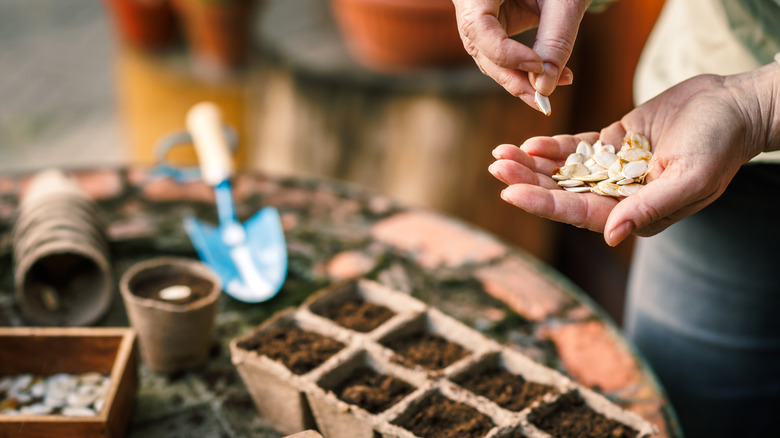
First, look at the instructions on the seed packet or search for a propagation guide online for the exact type of species you're dealing with. If acid scarification isn't mentioned, then don't assume vinegar is going to improve your results. If used incorrectly, vinegar can pass through a softened coat and damage the embryo instead of helping it, particularly if the solution is too strong or the seeds remain submerged for too long.
If you're going to go ahead with vinegar as a solution, use plain white household vinegar. It usually contains around 5% acetic acid, while cleaning and horticultural vinegars can contain a lot more. Horticultural vinegar can kill plants due to its higher concentration and caustic nature. When it comes to seed-soaking, never substitute household vinegar with one of these stronger products.
Make sure you measure the vinegar and the water. Don't estimate. Use the exact concentration and time limit recommended for the specific seed type, then drain and rinse the seeds thoroughly with clean water. Afterward, immediately sow the seeds -– you can't wait too long here, as scarification accelerates the plant's growing process, and they won't last long outside soil. With the chemical scarification complete, hard-shelled seeds should germinate more successfully and rapidly.