

Not Curtains Or Blinds: Add Privacy To Windows With This Beautiful Plant
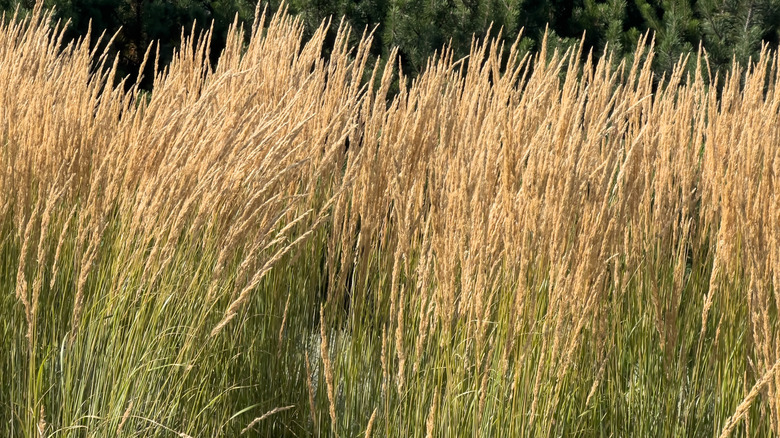
Your home should feel safe, private, and relaxing, which is hard to accomplish if your windows are totally exposed. Fabric panels cover them effectively, but they aren't perfect, and you have so many things to consider before buying curtains. Blinds are less overwhelming, but they aren't at all exciting. Why not pick something with natural charm? Ornamental reed grass (Calamagrostis spp.) is a perennial ornamental grass with tall leaves and even taller flower stems, making it a good fit for privacy. Planted outside a window, it can create a natural screen that softens the view into your home while still giving you something beautiful to look at. The shiny leaves, feathery seed heads, and pale golden-brown fall color are lovely to see.
Unless your window is particularly low, the leaves provide enough privacy on their own, as they're only a few feet tall. The flower stems tend to be a few feet taller than the leaves, though, and they can remain standing through winter. If needed, you can build a simple raised garden bed under your window to give them a boost, or plant your reed grass in pots outside your window.
There are a range of species to choose from, including the blue-green Mendocino reed grass (Calamagrostis foliosa), which is native to California, or the variegated varieties of feather reed grass (Calamagrostis x acutiflora) 'Avalanche' and 'Overdam'. This ornamental grass generally isn't considered invasive, but many species aren't native either. If that concerns you, the feather reed grass variety 'Karl Foerster' is sterile, meaning it won't spread by seed. Choose a variety suited to your local climate and available space, and check its mature height to make sure it will screen your particular window.
How to grow reed grass for privacy
Unlike curtains and blinds, you won't need to wash your reed grass. In fact, it needs little care as long as it's planted correctly. In general, ornamental reed grass is hardy as far north as zone 4 or 5. The exception to this is Mendocino and its hybrids, which typically prefer warmer climates. If you're unsure what zone you're in, this beginner's guide to USDA hardiness zones may be a useful resource. If you live in a colder area, you may need to plant it in a pot you can move indoors. Whether potted or planted in the ground, make sure your reed grass gets full sun. Partial shade will also work, but you should avoid planting it in deep shade. It won't thrive without sunlight, and a sickly plant won't cover as much of your window as a full, healthy one.
The soil should be rich in nutrients to give your ornamental reed grass the best chance of thriving. If it isn't naturally nutrient-dense, amending it with compost can help. This can also help with drainage. Reed grass prefers soil that is moist or damp, so it needs to drain moderately well. At the end of winter, you'll need to cut your ornamental reed grass back to make room for the new growth. The cut stems and leaves make beautiful decor, and you can hang them over your window for continued privacy or simply arrange them in a vase.