

Keep Bed Bugs Off Furniture With A Simple Tool
We may receive a commission on purchases made from links.
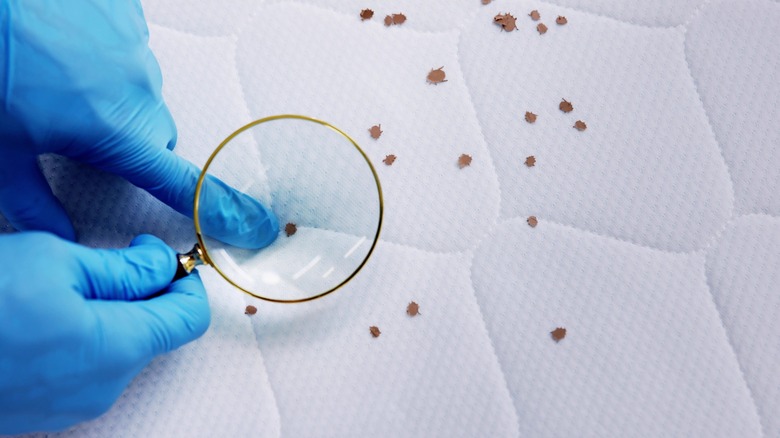
The problem with bed bugs is that they're so small. Okay, that's not the only problem. People can have severe allergic reactions to their bites, and those whose homes have been infested can experience mental health issues. You know they're around, because you're getting bitten, but they're too small to see, let alone prevent them from climbing onto your bed or sofa. Thankfully, bed bug interceptors provide a low-tech, non-toxic way to keep bugs off your furniture, identify infestations, and maintain your sanity.
Bed bug interceptors take the place of conventional furniture pads and grippers. They have the same basic shape, but they have two outside walls separated by a narrow channel. Bed bugs can climb the textured outer wall, but they get stuck in the channel, because the inner wall is too smooth and steep to climb. That's the end of the road for any bug that gets stuck there, and the number of bugs that meet that fate help determine of the severity of the infestation.
A number of brands are available on Amazon and elsewhere, and most have ratings above 4.0. The one with the most Amazon reviews by far (4,000-plus) is the eight-pack of EcoPest Bed Bug Interceptors, which costs $29.99 and has a 4.3 rating. You can also buy a four-pack of the same brand for $17.99, and it has the same rating and almost as many reviews.
Interceptors are better at detection than control
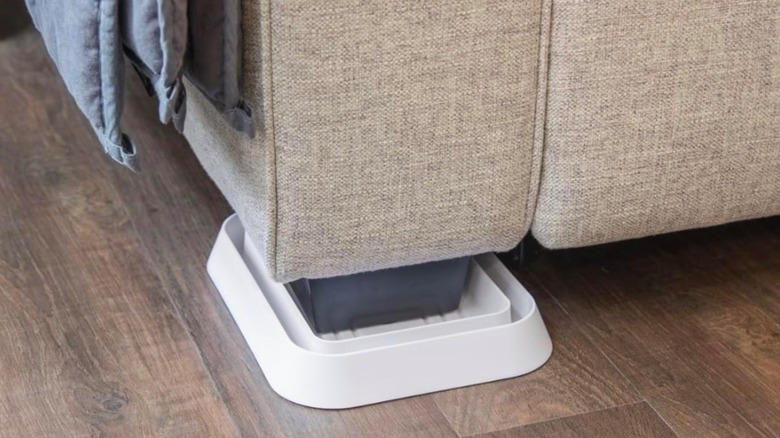
You don't need much to lure bed bugs to the trap. Your warmth and the carbon dioxide you exhale is enough to attract them, so the bugs will be more likely to come when you're actually using the furniture. Interceptors only work if there is no other way for the bugs to climb onto the furniture; you may have to pull your bed or sofa away from the wall, and you have to make sure no side tables or bed covers lying on the floor are touching the bed or sofa.
If you're hoping that interceptors are the bed bug control strategy to rule them all, you're going to be disappointed. While they are part of a successful strategy, pest control experts from Pest Control Technology Magazine (PCT) advise that their main value is in identifying a bed bug infestation. Apparently, visual examinations may be able to uncover 70% of low-level infestations, but interceptors can detect 90% of them within two weeks. Detection isn't the same thing as control, though.
Each bed bug that an interceptor traps is one less bed bug to bite you, but there are always more, and they can find all kinds of ways to get into your furniture (if they haven't already). The knowledge that you have an infestation is valuable, because you can only control what you know is there, but to actually get rid of bed bugs, you may need to call an exterminator. The EPA advises that doing it yourself, while possible, is difficult.