

Not Fertilizer: How To Care For Lavender In The Fall For A Healthy Spring
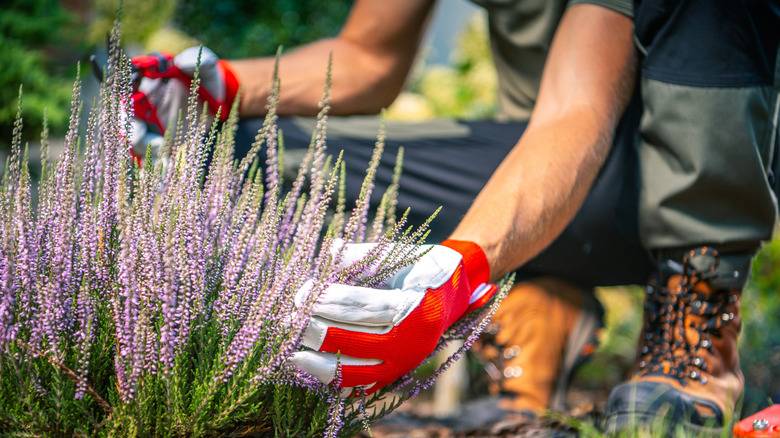
Lavender may be the poster plant for soothing aromatherapy, but it needs surprisingly little pampering itself. In fact, doing less can be better than doing more, especially when fall arrives. While you might be tempted to give your plants one last dose of fertilizer before winter, the most important adjustment to your fall lavender care routine is cutting back on watering.
Lavender (Lavandula spp.) is a woody perennial that thrives in sunny locations with relatively dry, well-draining soil. English lavender (Lavandula angustifolia), for example, generally grows in USDA Hardiness Zones 5 through 9, making it a popular choice in areas with cold winters. However, not all types of lavender tolerate freezing temperatures equally well. English lavender is more cold-tolerant than Spanish lavender (Lavandula stoechas) or French lavender (Lavandula dentata).
Lavender has relatively low nutritional requirements, and too much fertilizer can encourage dense, leafy growth and fewer flowers. Over-fertilizing can also make plants more vulnerable to disease and damage from colder temperatures. So, instead of reaching for fertilizer as temperatures dip, focus on protecting the roots from excess moisture. As cooler weather slows evaporation, the soil stays damp longer, and lavender roots are particularly susceptible to rot when they sit in waterlogged conditions.
How to adjust your lavender watering routine before winter
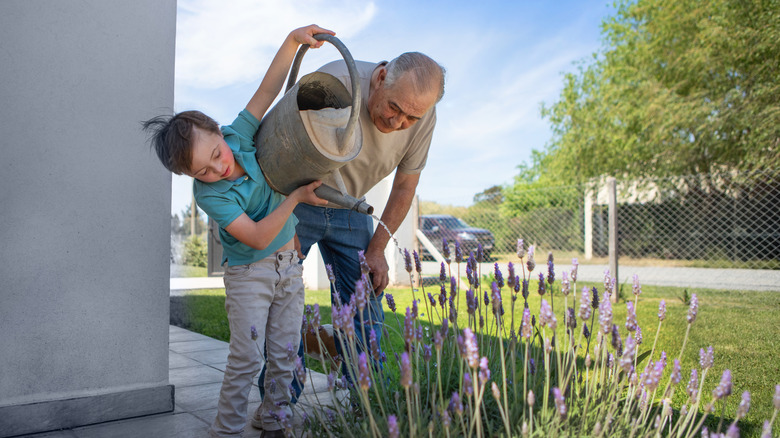
As it gets colder outside, ease up on watering your lavender instead sticking to the schedule you followed throughout summer. Established lavender is drought-tolerant and generally only needs watering when the soil dries out, so check the moisture level and take note of recent rainfall before giving plants a drink. If your lavender is newly planted, however, it may still need regular watering while its roots become established.
That doesn't mean you should go completely hands-off with your plants until spring. Watering needs vary depending on the weather, growing conditions, and whether your lavender is planted in the ground or in a container. If you're growing lavender in a pot, make sure the container has drainage holes so excess water can escape, and bring it indoors before the first frost. For colder regions, choose a cold-hardy variety like English lavender with good soil drainage for the best chance that your lavender plants survive the winter.
Ensuring proper drainage is just as important as reducing watering frequency. Lavender prefers sandy or loamy soil that drains quickly, whereas poorly draining soil can leave its roots vulnerable to rot and fungal diseases. Avoid letting fallen leaves or heavy layers of mulch to accumulate around the plant's crown, where they can trap excess moisture. Instead, opt for inorganic mulches, such as rock or pea gravel, to reduce moisture-related diseases.