

Finding Them In Your Garden Is A Great Indicator Of A Healthy Ecosystem
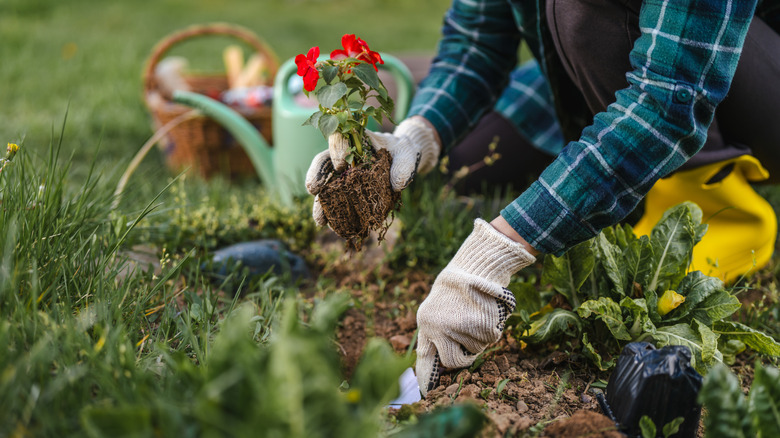
As a gardener, you know that the success of plant growth largely depends on healthy soil. Yet you can't always tell if your soil is healthy by sight alone. The University of Massachusetts Cooperative Extension office indicates that you can tell if your soil is healthy based on the overall ecosystem; if it supports larger animals, it contains the beneficial microbes important to plants. One often-overlooked yet key member of this ecosystem is the earthworm. Earthworms provide a surprising number of benefits to the soil, and their presence means your soil supports a diverse ecosystem of beneficial microbes.
Earthworms prefer moist soils that also contain organic matter, according to the Michigan State University Extension. Soil moisture helps to keep the worms from drying out, while organic matter provides them with the sustenance they also need for survival. The UMass Extension also notes that finding 10 or more earthworms in a square-foot sample (dug at least 12 inches down) is usually indicative of a healthy soil ecosystem.
Depending on the type of earthworm, they can live deep in the soil, among topsoil, or even in leaf litter. While most earthworms live within the top 6 to 8 inches of soil, says the Cooperative Extension of Ventura County, some have the capacity to burrow 5 to 6 feet deep. And when earthworms burrow into the soil, they perform several actions that add to soil health, too.
Hidden benefits earthworms provide for garden ecosystems
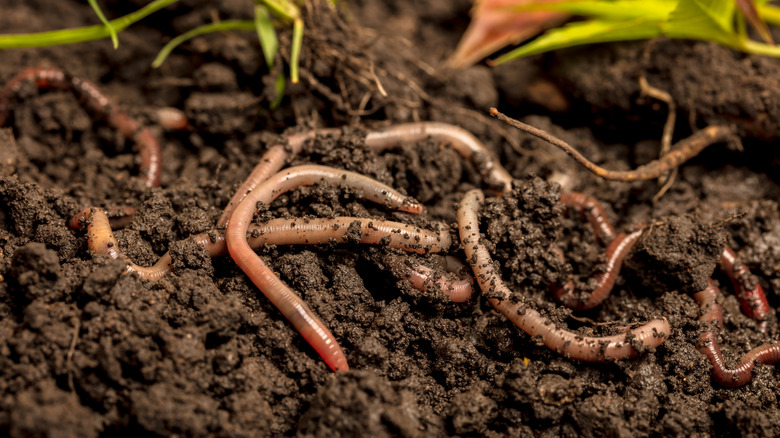
Ultimately, you should think twice before trying to eliminate earthworms from your yard or garden. Their presence in topsoil might be unsettling if you don't care for worms, and most species are technically considered invasive. Nevertheless, several university extensions point to the benefits of these creatures in home gardens.
You can think of earthworms that live deep in soil as natural aerators due to their burrowing activities. As they burrow, they poke holes through the soil, thereby improving water drainage and nutrient absorption, and reduce soil compaction. Earthworms create soil castings and subsequent piles of dirt in your yard as part of the digestion process, which can help to balance soil pH and add more nutrients. Think of earthworm castings as natural fertilizer; they add nitrogen, calcium, potassium, and phosphorus, according to Penn State Cooperative Extension. Their actions and casts improve the soil, and this can potentially translate to better plant growth. Healthier plants then support earthworms living in the soil, creating a beneficial cycle for both you and them.
Given all the benefits they offer to your soil and plants, you might wonder if a lack of earthworms means your garden is in bad shape. The UMass Extension says this isn't necessarily the case; soil analysis is more nuanced and complex than simply counting earthworms. However, if you want to attract these beneficial invertebrates to your garden, there are some things you can avoid, such as excessive tilling or plant residue removal, or the use of chemicals such as pesticides and herbicides that can kill earthworms. They also prefer soil temperatures between 40 and 70 degrees Fahrenheit, says the Colorado State University Extension. Testing soil pH can also offer clues, as earthworms thrive in more neutral pH soil conditions. To welcome more earthworms, improve your soil; and when you welcome more earthworms, they, in turn, will improve the soil, too. Keeping earthworms happy in your garden is a win-win for all.