

Trade In Your Old Table Runner: There's A Cute DIY Using A Vintage Clothing Accessory
We may receive a commission on purchases made from links.
Table runners can be an elegant way to dress up your table without having to invest in a more formal tablecloth, which gets expensive and labor-intensive to launder and iron after every few meals. Table runners can be used in conjunction with placemats for meals, allowing you to switch up the aesthetic of your table between casual lunches and formal dinners. They also provide an element of visual interest even when your dining table isn't in use. Fortunately, there's no reason to shell out for an expensive piece; just as you can DIY a table runner out of eucalyptus leaves, there's another cute and simple DIY that lets you make one yourself out of one vintage clothing accessory.
Clever Instagram creator Chickie Wu took to her socials to explain how she managed to create a stylish table runner from an assortment of vintage handkerchiefs she'd found at a local thrift store. By sewing the handkerchiefs together, she created a stylish centerpiece that instantly adds an element of cottagecore coziness or farmhouse chic style to her space. Because the final product is entirely dependent on the type of handkerchiefs you choose, there are plenty of ways to customize this look to suit your personal tastes and the aesthetic of your space.
Making your own vintage handkerchief runner
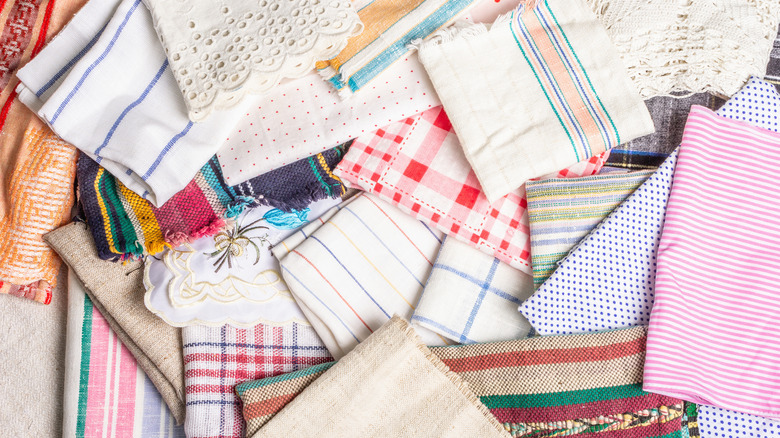
To make your own DIY table runner, start by scouring your local thrift store for handkerchiefs in good condition. Make sure that even if they're vintage, the fabric isn't too delicate to be sewn together, and ideally to be thrown in the wash a few times. You can also check Etsy, where sellers often offer whole collections in complementary patterns and styles, which can help consolidate your search efforts.
Once you've found your assortment, it's a good idea to wash them, since you never know what they might have been up to in a past life. Cold water with hand wash is the safest approach for older fabric, and opt for a phosphate-free detergent that will be gentle on delicate fibers. After the fabric has had time to dry, you're ready to sew. Line them up end to end, and sew a seam along the edges of the handkerchief, connecting each one using a simple invisible seam stitch. Make sure you're using a sharp needle, as dull needles can damage older fabric.
You can make the runner as long as you want. It's a good idea to measure the desired surface before you buy, so you'll have a rough idea of how many hankies you'll need to cover the surface. If your handkerchiefs are different sizes, you can leave them as they are for a quirky, mismatched look, or you can hem the wider ones to create a more uniform, traditional runner shape. You can also mix things up by adding other pieces of fabric — contemporary or vintage — to the runner, or by combining different styles. Who says a lace handkerchief and a paisley bandana can't work together?