

Not A Bench Grinder: Renew Outdoor Furniture With A Highly Rated Lowe's Product

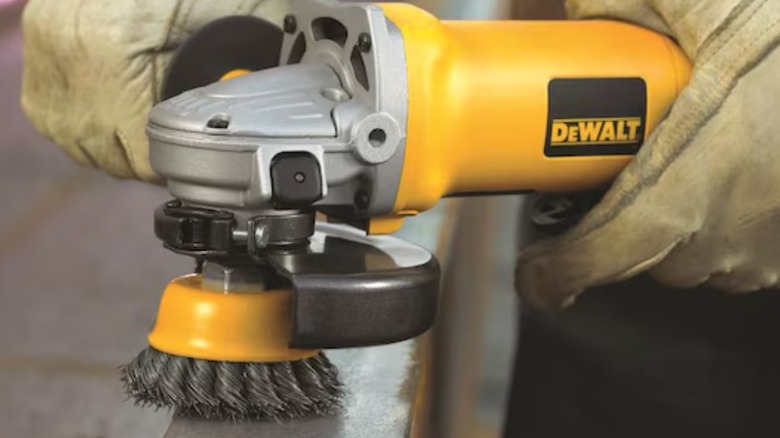
If you have some metal chairs that you're interested in refurbishing, the Facebook group "Metal Lawn Chair Restorers, Artists, and Aficionados, United" is a great place to find ideas (lengthy name, we know). In a recent group post, Tammy and Ron Young explained how they stripped their old metal chairs using a knotted wire brush. It just so happens that Lowe's is featuring a DeWalt 3-in Knotted Angle Grinder for $24.98, which despite the name, is a knotted brush attachment that works with any 3-inch angle grinder with a 5/8-inch arbor. The DeWalt brush is highly rated, with 85 users giving it a 4.9/5 rating, but before you buy one, you should know whether it's right for your project.
A knotted brush attachment is a type of wire brush that is distinguished from a standard crimped brush by having its bristles knotted together instead of hanging freely. The brushing action it delivers is more aggressive than a crimped brush, and it's typically used to remove rust from metal and prepare metal for welding. You can also use one for heavy-duty cleaning of all kinds of materials, including hard metals, concrete, masonry, and wood, and you can use it for paint removal.
Tammy and Ron chose a knotted brush for their metal outdoor chair makeover project because they wanted a quick way to remove layers of paint from the chairs so they could repaint them. It wasn't a perfect method, but they soldiered on, and in the end, it delivered acceptable results.
Choosing the right brush and using it safely
The knotted brush wasn't a perfect paint-removal tool, according to Tammy and Ron, because it generated enough heat to melt the paint they were trying to remove and smeared it around. They would have preferred to sandblast the chairs, but it was too expensive, and the knotted brush lasted longer than the "blue pads" they tried, which were probably blue zirconia flap discs typically used for heavy grinding.
Although a knotted brush is known for its ability to remove paint quickly, the speed comes with a price. This type of brush leaves a rough, textured surface that usually needs finishing or polishing with a less aggressive tool, such as a crimped brush or a sander. Moreover, because it's less flexible than a crimped brush, it doesn't conform as well to contoured surfaces and may not reach into corners. Tammy and Ron didn't mention running across any of these problems, so perhaps they didn't encounter them, but in general, a crimped wire wheel is more generally recommended for DIY paint removal than a knotted one. And knotted brushes might not be the best option if you want to remove paint from wood.
Two other considerations are important when choosing and using wire brushes for paint removal or some other type of metal work. One is to avoid using a brush with carbon steel bristles (like the Lowe's DeWalt brush) on aluminum or stainless-steel surfaces; it will cause corrosion. The second is to always, always wear eye protection. The high-speed grinding action doesn't just generate sparks, it can also eject small pieces of paint and metal.