

Not Coneflower: Attract Pollinators Through Fall With A Charming Flower They Love
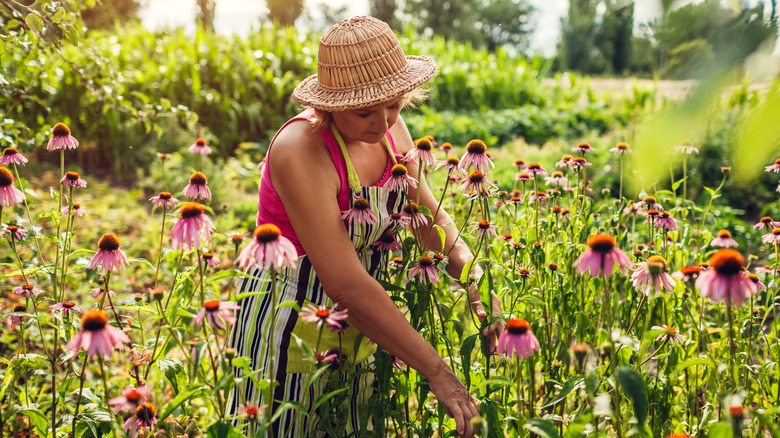
After a summer bursting with blooms and busy pollinators fluttering in the yard, most gardeners aren't ready to say goodbye to their favorite visitors. Luckily, with fall-blooming flowers, you can enjoy their company for a few more weeks. Coneflower (Echinacea) is usually the recommendation you'll get if you're looking for a flower that attracts pollinators through frost. It's easy to see why — bees and butterflies love its nectar, nesting bees overwinter in its stems, and songbirds snack on the seeds. Nobody's saying to kick coneflower out of your garden, but you may want to consider adding another pollinator magnet: lantana (Lantana camara). This small, evergreen shrub is packed with clusters of tiny, button-like flowers that brighten your yard and feed pollinators through fall.
Lantanas offer a few notable benefits that some other fall-blooming favorites don't possess. Namely, their sunset-inspired flowers attract hummingbirds and butterflies. Although butterflies stop by coneflowers, these blooms are primarily visited by bees and wasps. Similarly, bees are the top visitor of pollinator-friendly mum varieties. With lantanas, all it takes is one plant to add hundreds of flowers. In fact, some cultivars have a whopping 30 flowers on each flowerhead. Lantanas are also extremely versatile. You can use them in borders, plant them in a hanging basket, or even use them as low-maintenance flowering ground cover. The main downside is that some lantanas are considered invasive in many southern states. So, make sure to choose either a native variety or a sterile cultivar.
How to grow lantana to attract pollinators through fall
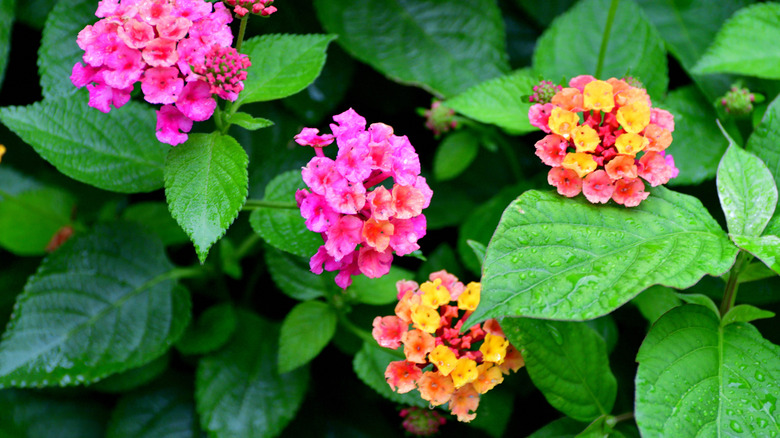
Lantanas come in a variety of sizes and colors, so there's a suitable cultivar for just about anyone. As a tropical plant, most lantanas thrive in USDA hardiness zones 8 through 11. However, some cultivars, like 'Chapel Hill Gold' or 'Miss Huff' are cold hardy to zone 7. They're often grown as annuals in cooler climates, though you can care for lantanas in winter by bringing them indoors as houseplants once the temperature drops. On that note, 'Patriot Rainbow' and other more compact cultivars are going to be your top picks for hanging baskets and potted plants. Keep in mind that lantana's foliage and berries are toxic to animals, so take precautions if you have pets.
Once you have your chosen variety, the next step is making sure your lantana plant gets the care it needs. Fortunately, care is somewhat of an oxymoron for these resilient shrubs. They're extremely drought-tolerant and they're happy in just about any soil you stick them in, including poor soil, given that the soil has good drainage. Proper sunlight is key, so make sure you grow them in a sunny spot that receives at least six hours of direct light.
Although lantanas are a late-season favorite among many pollinators, planting several fall-bloomers in varying shapes and colors will bring you the most visitors. With a garden full of flowers like lantanas, coneflowers, and Rudbeckia, your pollinating friends will be well-fed until they hibernate.