

The Type Of Grass You Should Be Topdressing In The Fall For A Greener Spring

It's not easy bein' green, as a very wise green being once sang. When summer has finally relaxed its stranglehold on water and reasonable temperatures, and the seasonal battle with dormant turfgrass gives way to fall, it's time to turn your attention to the green grass you want in springtime. Is it time for topdressing? If so, which grasses ... and how? Hunker spoke exclusively with Jon Sneider, Owner of Jon Sneider Lawn Care & Tree Service, about how to make the most of your fall topdressing in preparation for a greener spring.
Sneider explained that, because grass is still growing without the struggles of summer, topdressing cool-season grasses in fall can increase your chances of greener spring grass. Which grasses, though, is a slightly more complicated question. "Most lawns aren't made up of just one type. Usually, we'll see a mix because different grasses handle things like shade, foot traffic, drought, and soil conditions differently," he said. Similarly, grass seed is often blended for a range of conditions, particularly in sunlight and shade. But, in general, the cool-season grasses in your area — in Sneider's state of Massachusetts, they are Kentucky bluegrass, perennial ryegrass, and fescues — are likely to benefit from topdressing in fall.
This isn't typically true of warm-season grasses, though. For those, Sneider said, "a better time to topdress is late spring into summer. Early summer is when grasses like Bermuda and zoysia are actively growing and can recover quickly as opposed to heading into dormancy directly after the work is done."
Topdress when the leaves are red, yellow or gold
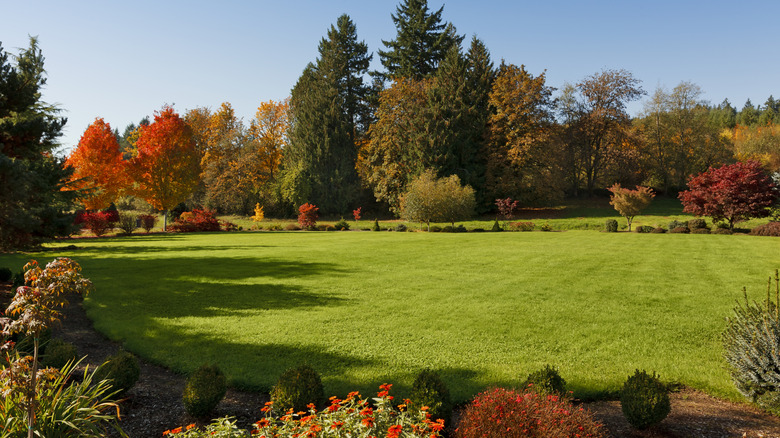
The types of grass commonly found in your area are driven, at least partly, by the growing conditions. Those conditions are what you use to determine when it's best to topdress your lawn. In Massachusetts, that means topdressing is best performed in the weeks from late August through the end of September. That's when, Sneider said, growing grass can still take advantage of the topdressing and recover from the trials of summer before the trials of winter pause things.
"I like to let the new grass have time to develop a good root base before the cold winter sets in," Sneider said. Topdressing and overseeding a lawn often go hand in hand. "I wouldn't change the timing for topdressing, but if I'm also overseeding, I pay more attention to the grass type because perennial ryegrass comes in quickly, while Kentucky bluegrass takes a little longer to get going." Fall, he added, is usually a good time for overseeding if your lawn has any patchy spots that need to be addressed.
Seed choice also matters, and Sneider advises sticking with high-quality seed. "Between all the labor, compost and watering involved, the seed will most likely be the smallest cost so it's not the place to cut corners," he said. "Buy a heavy traffic, disease resistant, and drought tolerant seed."
How to topdress for a green and friendlylike lawn
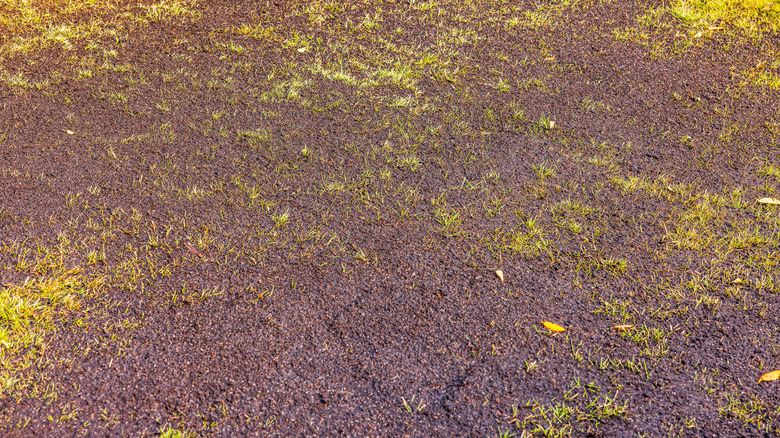
Topdressing has a lot of potential to help with the key factors in grass health. "A thin layer of compost and/or topdressing loam can improve soil structure, drainage, moisture retention, and help the roots grow," Sneider explained. And because root growth is really the endgame if you want a spring lawn that's as green as possible, the place to begin is underground, with a soil test to determine if your lawn needs aeration.
"Topdressing is especially beneficial when combined with core aeration because it helps the material work into the soil and improves germination of the new seed," Sneider said. Knowing how and when to aerate your lawn is key to healthy grass and to making the most of your fall topdressing. The goal is to reduce soil compaction, which stifles root growth and prevents water and nutrients from reaching grass roots. Pinpointing exactly when to aerate your lawn in the fall for a healthy yard in spring is simple: do it right before topdressing your cool-season grass. "[A]erate if the lawn is compacted," Sneider said, "and then spread a thin, even layer of good-quality screened compost that improves the soil without smothering the grass. You should see the old grass poking through after topdressing."
It might not be easy bein' green, but it's worth it. After all, it's the color of spring, as that green bein' Kermit the Frog told us, "and green can be cool and friendly like."