

He Builds Durable And Affordable Stepping Stairs Using Concrete Blocks
We may receive a commission on purchases made from links.
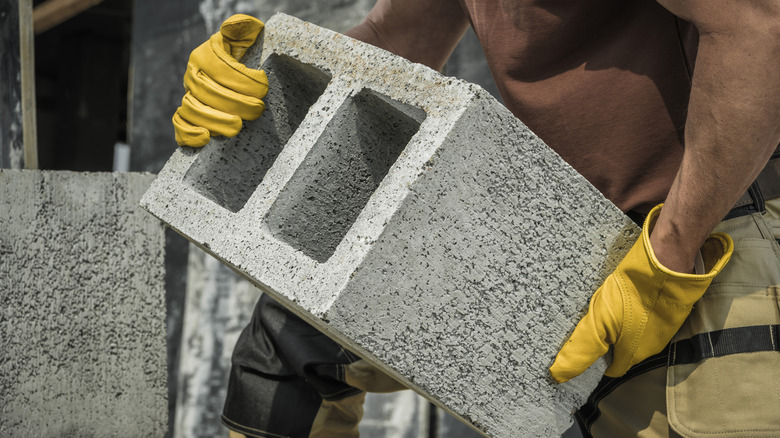
Concrete blocks come in handy, but they don't have to disappear inside a wall to be useful. Around the yard, they can become raised planters, garden borders, bench bases, and even a small set of steps. Building yard or garden steps with concrete blocks can be especially helpful when there's an awkwardly large drop between a back door and the ground — which is exactly the problem one YouTuber set out to solve.
YouTuber Craig Searer built a simple compact two-step staircase by stacking concrete blocks and covering them with cut concrete pavers. He said the entire project cost him approximately $100, although your total will depend on the size of the steps and local material prices. Like the sorts of staircases that would work for a tiny house, this cinderblock DIY has a compact design that solves a height problem without swallowing up too much room. But they aren't intended to replace a professionally designed staircase across a significant height. For that, you'll need to call the professionals and take a look at local building requirements.
If you want to try this project for yourself, you'll need concrete blocks, concrete pavers or capstones, compactable gravel, paver sand, and exterior construction adhesive (rated for masonry). You may already have some of the basic tools needed, but if not, head to the store and grab a shovel, hand tamper, level, tape measure, broom, and caulk gun. Be aware that if any pavers need to be cut, you'll also need the appropriate masonry-cutting equipment and protective gear. A well-compacted gravel foundation is also a must because it helps reduce settling beneath the finished steps.
How to build concrete-block steps that stay put
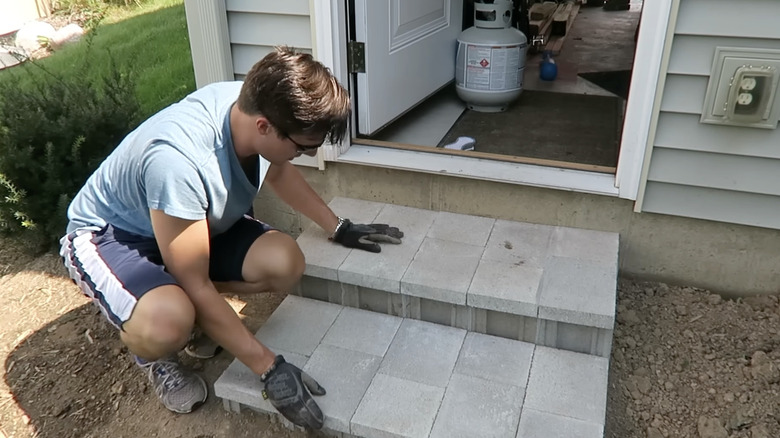
Grab your tape measure and determine the total rise from the ground to the upper landing, including the thickness of the pavers that will cover the steps. The average height of a stair step is usually 7 ½ inches, which is a good starting point, though your local building requirements should determine the final dimensions. Divide the total height into equal risers and dry-stack the materials to confirm your measurements before doing anything permanent.
The real secret to building sturdy steps comes down to what's beneath them. Mark the footprint, remove the grass and loose soil, and pack the ground firmly, making sure it's level. Add compactable crushed gravel in layers, tamping each one before spreading paver sand on top. The YouTuber used pea gravel, but its rounded pieces don't compact as securely. Quikrete recommends 2 to 4 inches of compacted gravel followed by 1 to 2 inches of sand, although your soil and winter conditions may require something deeper.
Set the first row of blocks into the sand, adjusting until it sits firmly. Stack the back section higher to form the second step, checking the height and alignment as you work. Once the entire structure has been dry-fitted, clean the blocks thoroughly and join them using exterior masonry adhesive(he uses Gorilla Heavy-Duty Construction Adhesive). Finish with textured concrete pavers or capstones, placing any smooth cut edges along the front. Allow the adhesive to cure fully before walking on the steps. If anything rocks or shifts (or the stairs serve as a primary entrance), it might be a good idea to have a contractor inspect the setup before use.