

Forget Wood Siding: The More Durable Alternative That's Cheaper In The Long Run
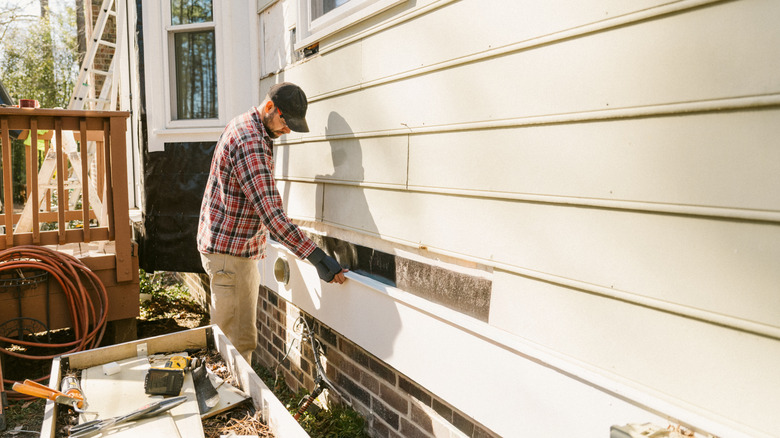
Wood siding has a distinctively rustic charm, synonymous with New England coastal cottages and rural mountain cabins. However, there are quite a few serious disadvantages to wood — it's susceptible to warping and rot when exposed to moisture, any stains will cause fading from extended sun exposure, and it attracts pests like termites and woodpeckers. Regular maintenance is required to keep wooden siding in good condition, but restaining and repainting season after season really adds up. For a more durable, more fiscally sustainable option, you might want to consider fiber cement siding instead. A composite of Portland cement, sand, and cellulose fibers, this paneling alternative is specifically designed to look like wood, without any of its vulnerabilities.
Fiber cement siding is generally made with a factory-applied, baked-on finished which is far more durable than standard paint jobs — in fact, some manufacturers guarantee 15-year or even 25-year warranties against fading. This translates directly into savings, allowing homeowners to circumvent the constant cycle of upkeep required by real wood. Not only does fiber cement repel moisture, rot, and pests, it's also far less flammable than wood siding, making it a safer option as well as a more durable one.
Choosing a style and planning for installation
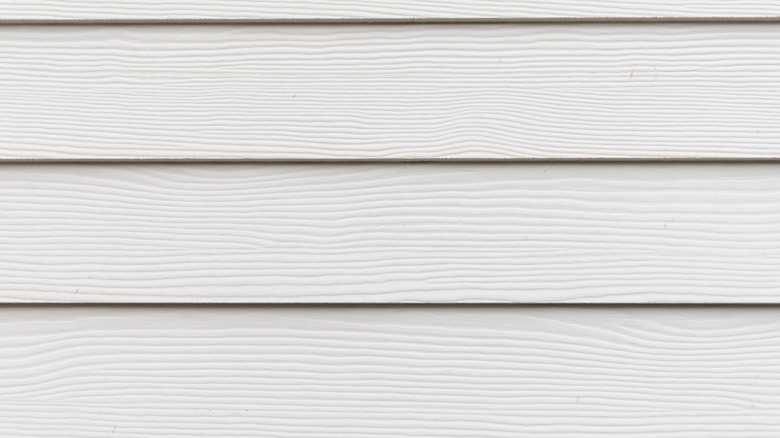
Opting for fiber cement siding doesn't mean you have to sacrifice on stylistic variety. While horizontal lap siding is the most common choice because it resembles traditional wood clapboards, you can also opt for vertical panels for a sleeker, more modern look, or shingle-style panels to recreate that coastal, Cape Cod aesthetic. You'll also be able to choose between pre-primed boards, which give you the freedom to paint in a color of your choice, or lower-maintenance factory-finished panels which are available in a range of curated color palettes.
It's worth noting that fiber cement can have a higher upfront cost than some wood paneling options, depending on your region and the product line you choose, ranging in some areas from $7 to $18 per square foot. However, this investment pays dividends over time, since your maintenance will be limited to the occasional hosing down or spot cleaning. It's also important to bear in mind that fiber cement is significantly heavier and more brittle than wood, so you'll want to hire a professional for the installation rather than trying to handle it yourself.