

Not Mums: The Charming Purple Perennial You Could Be Adding To Your Container Garden
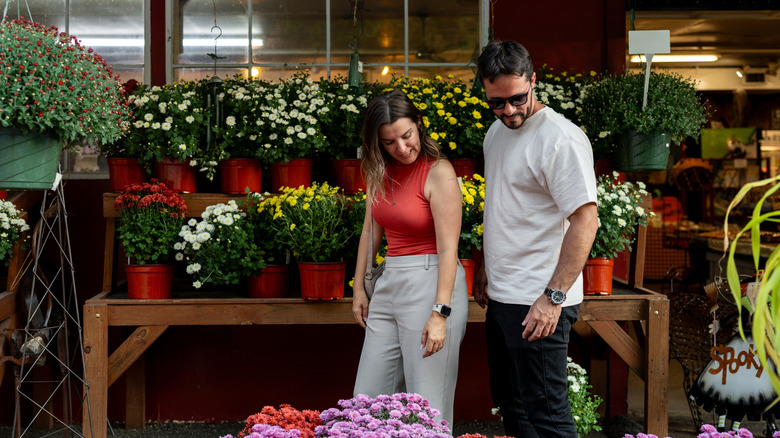
When it comes to adding some color in a container garden, some of the first plants you might think of are chrysanthemums (Dendranthema x grandiflorum). Mums are especially popular as container plants in the fall, providing pops of color when your summer blooms start to fade for the season. If your main goal is to add some color, you might consider an alternative perennial that's easy to grow in containers: purple passion plant (Gynura aurantiaca).
As its name indicates, purple passion plant is known for its color. Also known as purple velvet plant and purple passion vine, this herbaceous perennial stands out due to its large, toothed leaves that are green with purple hairs. These leaves are also velvety to the touch. While not as widely known for its flowers compared to mums, purple passion plant does indeed bloom in the fall if it gets enough sunlight. When it does, you will see small orangish flowers that may last through the winter. Just know that these flowers tend to smell unpleasant, with many gardeners choosing to remove them via pinching or pruning.
How to successfully grow purple passion plant in a container garden
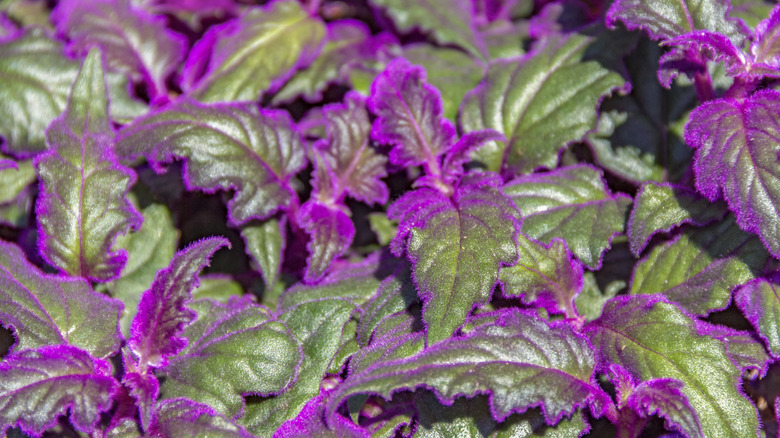
Overall, purple passion plant is considered a low-maintenance plant, which makes it perfect for containers. While technically a perennial, purple passion plant is native to portions of southeast Asia, and subsequently grows best in warm and humid climates. With this in mind, know that purple you can grow purple passion plant outdoors in USDA hardiness zones 10 to 12. It also makes for an attractive plant for hanging baskets on a porch. Alternatively, it can be grown as a houseplant or brought indoors before the first frost in your region. According to the University of Florida, the plants need humidity levels between 40% and 60%.
Unlike caring for mums in containers, which need full sun, constant watering, and good drainage to thrive, purple passion plants require less water with well-draining soil and part-shade. Too much water can increase the risk of root rot, particularly during the winter. To maintain its striking foliage, be sure to place your purple passion plant containers in a spot that gets plenty of indirect light, as well as in a space that does not get battered by direct sunlight in the afternoons.
Other than these key tips, you can expect overall maintenance of these plants to be relatively straightforward. Just be aware that these plants do occasionally have issues with pests, such as spider mites, mealybugs, aphids, scale, and white flies. Keep a lookout for early signs of these problems, and consider spraying neem oil as a remedy (this is also among the essential products needed to keep indoor plants healthy). Be sure to follow all product labels carefully for proper use.