

Should You Cover Exposed Tree Roots With Soil?
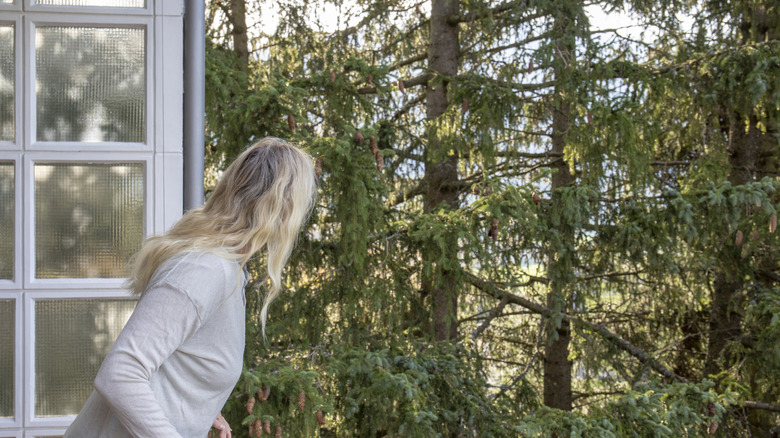
It can be a rewarding experience to watch trees around your property grow larger over the years. Unfortunately, though, you also have to deal with some of the downsides of large trees in your yard, including exposed tree roots. These can certainly make yard maintenance tasks like mowing more challenging, and you don't want you or other members of your household to trip and fall over them, either. Plus, some homeowners understandably find exposed tree roots aesthetically unappealing when engaging in backyard landscaping. Covering up exposed tree roots with thick layers of soil can seemingly solve all of these issues, but you should generally avoid doing so for the sake of your tree's health.
As trees grow, some of their shallow roots can become exposed above ground over time. These are also known as surface roots. They're most common in compacted or eroded soils, and can arise out of the affected tree's attempt to seek more oxygen. While a seemingly harmless practice, piling soil on top of these roots can seriously damage (or even kill) the tree due to oxygen deprivation. This can happen with as little as 4 inches of soil covering these shallow roots, says the Iowa State University Extension and Outreach. You'll also want to think twice about putting slightly less soil over the area — you'll quickly find this to be a futile endeavor because the roots will likely reappear over time. Similarly, you should never attempt to cut the roots out of the ground.
Covering exposed tree roots: What to use instead of soil
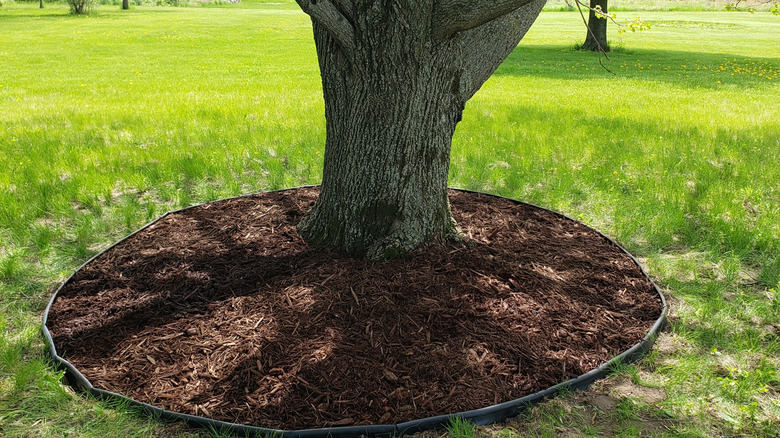
Thick layers of soil are never a good idea for fixing exposed tree roots around your property. This doesn't mean you're doomed for these eyesores to stay in your yard for good, nor do you have to resign yourself to the anxiety-provoking possibility of tripping over the roots. The solution all boils down to using a mulch that covers up exposed tree roots while also being healthy for the tree. Some of the best options include those made with shredded bark or larger wood chips. The K-State Extension recommends applying these around your tree with a maximum thickness of 2 to 4 inches. Apply in a round, donut-like shape for up to 3 to 6 feet away from the tree, starting at least 3 inches away from the trunk.
On the other hand, if you're looking for a quick solution for safety reasons, you may apply a small amount of soil only ½ inch thick at most, says Wisconsin Horticulture's Division of Extension. Consider this a temporary solution to keep kids, pets, and yourself safe until you're able to properly mulch the area. Better yet, you may consider marking off the area with small flags to alert people to steer clear until you can fix it.
It's also worth knowing that almost any large tree can create problems with surface roots somewhere down the line. According to Wisconsin Horticulture's Division of Extension, some of the most common tree species that are notorious for exposed shallow roots include poplar, silver maple, and willow. These are all points to keep in mind if you're planning on planting new trees around your property at some point in the future.