

Does Spraying WD-40 Keep Ants Away?
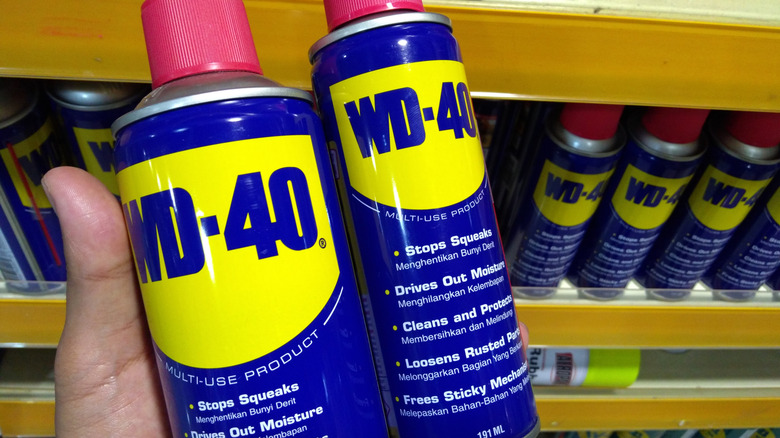
WD-40 is indeed a valuable and versatile product to have around your home and toolshed. It helps to remove rust and lubricate parts for more effective movement. There are a number of other tasks people try out WD-40 for, though these are not necessarily endorsed by the brand. Such is the case with using the product against pesky ants. While WD-40 may be touted by some people on social media and other online forums as a DIY method of ant control, there are more established measures that are safer and more effective.
The best way to get rid of ants in your home is to make the space less appealing to them from the get-go. Make sure you don't leave food out uncovered (including pet foods!), and promptly clean up crumbs and dirty dishes that might otherwise lure ants. Once ants can no longer access food, they will likely leave and try to find sustenance somewhere else. You might also consider going to the source of your ant problem, which is likely around the exterior of your home. Here, the Illinois Extension says you can wash the area with soap and water, which will confuse the ants as they try to search for their previously established pheromone trails. Pest control services may be worth the money if you're dealing with a major infestation.
WD-40 is not made to be an ant-repellant
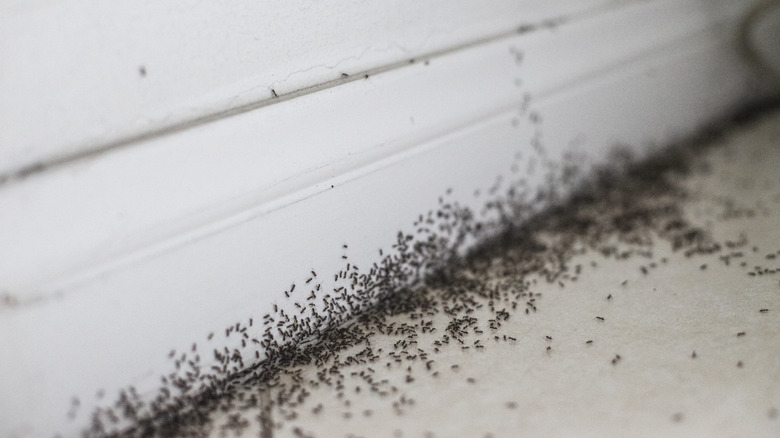
While people might have gotten "positive" results from using WD-40 on ants, you should know that the ingredients are not even designed for such purposes. It's possible that ants and other pests may simply be avoiding surfaces with WD-40 due to its texture and odor, says A-Z Animals. Even if that's actually the way the product works against ants, spraying WD-40 inside your home could potentially harm young children and pets, not to mention surfaces. Also avoid using any WD-40 or chemical-based products around the outer perimeter of your home, as these might inadvertently harm birds and other wildlife.
Despite coming across blogs and social media posts about using WD-40 as an alternative mode of pest control for homes, this is unfortunately not a scientifically-backed method. Also, aside from a lack of clinical evidence supporting the use of WD-40 for ants, this is not an officially recognized use of the product by the brand, either. So while you can technically test out WD-40 against an ant trail, or to coat entry points with the product, you're really doing so at your own risk. Neither the efficacy nor safety of this method can really be guaranteed. It's always best to follow WD-40's product labels carefully for safety and correct usage instead.