

The Common Practice That Has Some Gardeners Facing Fines And Why
Gardening is generally a peaceful and solitary activity. It's just you and your plants with nothing to worry about aside from making sure everything is healthy and growing – except when there are certain gardening and landscaping regulations you need to abide by. Sometimes it's local ordinances or simply HOA rules that dictate where you can plant things, how grass, trees, and shrubbery must be maintained, etc. However, one common regulation that gardeners and homeowners in general should be aware of involves watering your lawn and garden — and ignoring the guidelines can result in hefty fines.
Many areas facing droughts institute water bans and restrictions, which essentially limit the amount you can water your lawn and garden. There are plenty of handy conservation tips for droughts, including checking for leaks and maximizing water usage, but scaling back water usage is a common practice. According to the National Integrated Drought Information System (NIDIS), over 100 million Americans were affected by drought in September 2026 alone, as portions of at least 40 states experienced an extended period of little to no precipitation. Over 30 states had locations experiencing severe drought, including parts of California, Colorado, Florida, Arizona, Oregon, and more. Laws pertaining to water usage are typically mandated by the state or city in which you live, so it's important to check local guidelines to know if your property falls under any watering bans or restrictions. These guidelines will explain what is permitted in your area and any potential fines for disregarding the ban.
Everything you need to know about watering bans
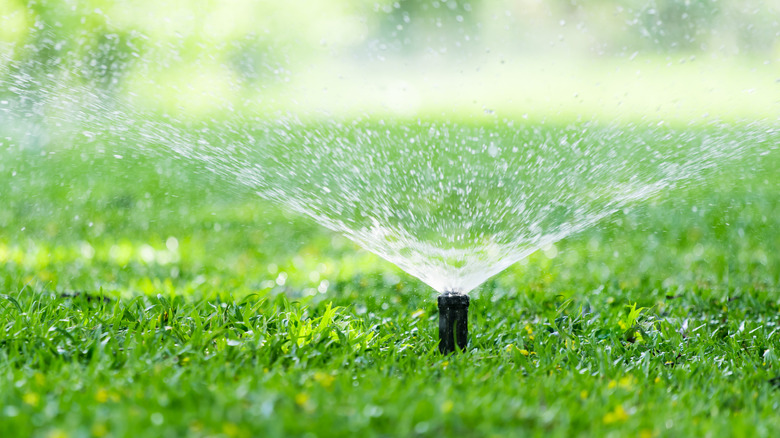
So, what does a watering ban or restriction mean? Well, it can vary based on location, time of year, and the type of property you own, but some aspects are consistent across the board. Most areas restrict the days or times when you can water your lawn or garden. For example, the city of Lakeland, Florida instituted a temporary water restriction due to ongoing drought conditions. Most properties in Lakeland are only allowed to irrigate once per week and the watering schedule is based on home address. There's also a designated window in which residents can only water their property before 4 a.m. and after 8 p.m. Violators can face fines of up to $500, which is why it's important to understand any water restrictions that apply where you live. These restrictions can also affect lawn care before, during, and after a drought, altering how you tend to flower and vegetable gardens as well as your grass.
Denver also enacted similar guidelines to Lakeland that same year. In Denver, residents can water their property twice per week on designated days. To conserve water, there's also an irrigation window before 10 a.m. or after 6 p.m., and residents shouldn't water during rain or high winds. Multi-time violators can face fines up to $1,000. Whether you're an avid gardener or not, water restrictions can greatly affect your daily routine, making it essential to keep up with current guidelines and the best practices for drought safety in general.