

5 Biggest Disadvantages Of Granite Countertops To Consider Before Installation
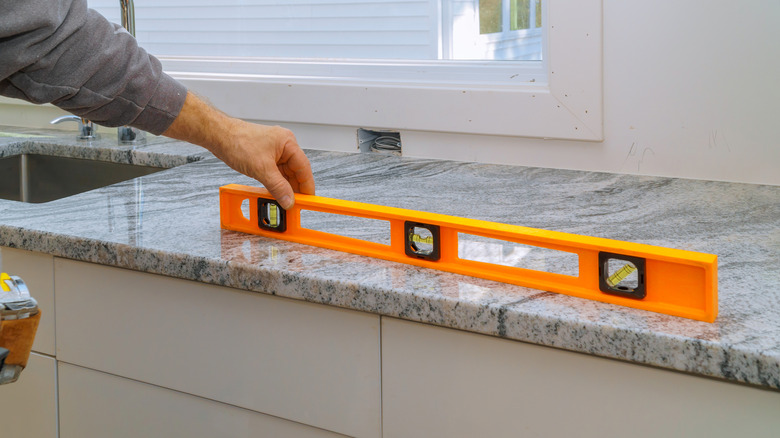
No building material is perfect, and that's a good thing to remember when considering granite as a countertop material for your kitchen or anywhere else. Of course you can expect durability, because granite is, after all, one of the hardest substances there is, second only to diamond. That means your countertop will last a long time, but with durability comes installation issues for which you need to be prepared. You can also expect character, because granite has striking color variations, but that can create problems if you're trying to match existing colors in your kitchen or bathroom.
True granite is an igneous rock — not a mineral — that comes from deep in the earth, where it is formed as volcanic lava cools under intense pressure. That makes it extremely hard and dense, and the colors and hardness of a slab vary depending on the concentration of the three main minerals that form it: feldspar, mica, and quartz. Some commercial grades of granite, like all grades, contain these minerals, but if it's a rock formed through sedimentary or metamorphic processes, it won't be as hard as true granite. This is why it's important to research a slab and find out where it was quarried before buying it.
It seems contradictory that a material as hard as granite would need regular maintenance, but it does, and that's something you need to realize from the start if you want to keep it looking good. You also need to know that granite, hard as it is, isn't indestructible.
Granite can stain and become dull
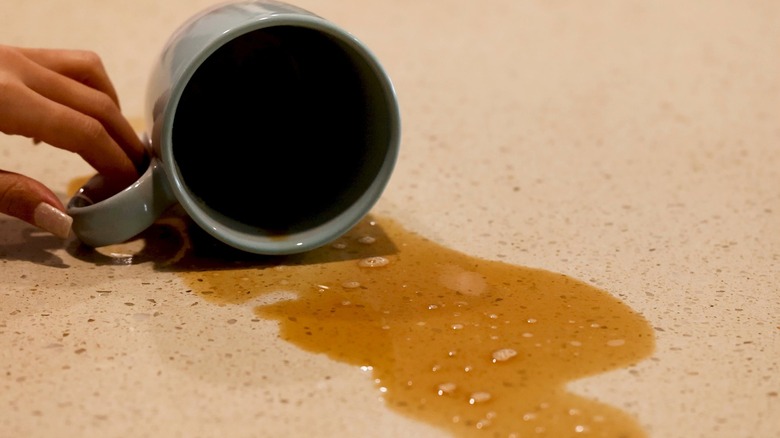
To the naked eye, granite looks completely impenetrable, but if you were to look at it with a microscope, you'd see that's it's full of tiny pores, some extending deeper than others. When oils and liquids with the potential to stain, like wine or fruit juice, seep into these pores, they can discolor the stone. You can often remove these stains with a poultice, but if they are very deep, you might not be successful.
Even worse, acids like vinegar and lemon juice can etch granite, especially if it's a lower grade material that contains soft minerals. Etched granite turns dull, and you may be able to restore the shine by polishing, but if the etching is deep, you may need professional restoration. So this is not a countertop you can wipe with just any cleaning solution.
To prevent these problems, you need to seal granite countertops with a penetrating sealant when they are new, and you need to re-seal every one to three years, depending on the type of granite and amount of use the countertop receives.
Granite is heavy
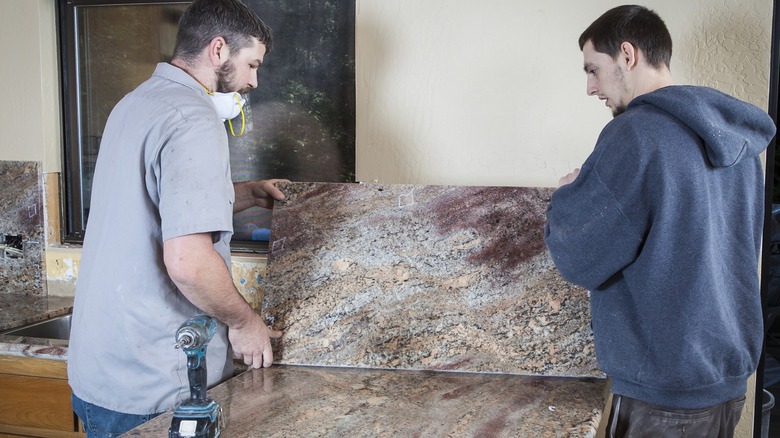
Granite slabs typically come in two thicknesses: 3/4 inch and 1 1/4 inch. A 3/4-inch slab weighs an average of 13 pounds per square foot (psf) while a 1 1/4-inch slab weighs around 19 psf. That makes the weight of an 8-ft countertop that is 24 inches wide either 208 or 304 pounds, depending on thickness. Even a moderately sized slab is too heavy for a single person to lift and put in position, much less a larger one for a long or wide cabinet, so installation is, by necessity, a two-person job. It's not something you can do by yourself on a free weekend.
It isn't just the installation of a heavy countertop that's problematic, it's also the transportation from the supplier to your home. Because of the weight, shipping granite is expensive. It can cost anywhere from $99 to $379, depending on how far you are from the supplier, to ship a slab less than 20 square feet in area. A larger one costs even more.
Granite can break
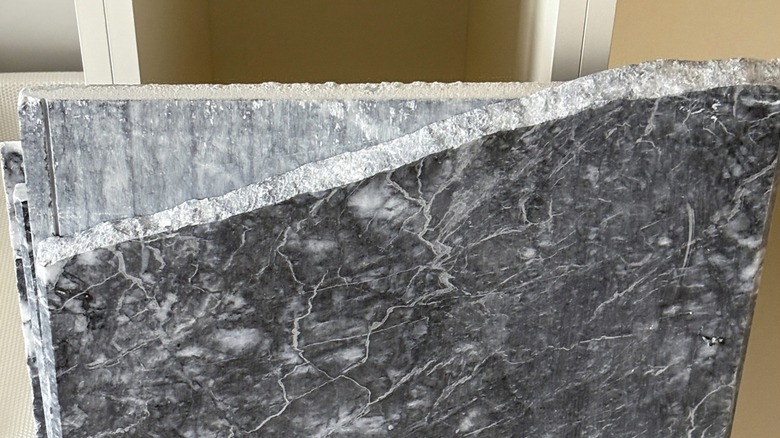
You'd think being difficult to transport and install was the only weight-related disadvantage of granite but it turns out the heavy weight actually creates another hazard. It makes it easy to drop the slab, and if that happens, the slab could break in two. Breaks can happen anywhere, but they're most common around cutouts for sinks and cooktops. You can repair a broken slab with resin, and polish it up afterwards, but it's very difficult to hide the break completely.
You don't even have to drop a granite slab to break it. Granite slabs are especially vulnerable around edges, corners and places where the slab overhangs the cabinet, and an unexpected impact from a falling dish, pot, or pan can chip out a section. It's also possible to repair this type of damage, but it usually takes a pro to do it right, and even then, the damage might not disappear completely.
Granite has color variations
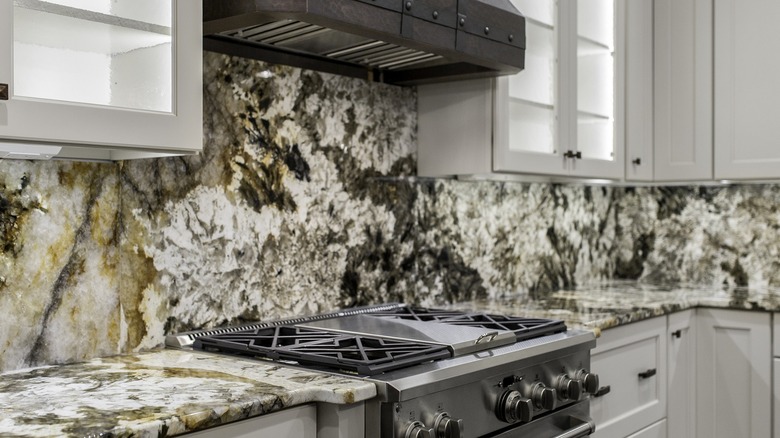
Color variation is part of granite's appeal, but it's also a potential drawback. The color of a single slab can vary — sometimes dramatically and sometimes subtly — and that can make finding the best match for your kitchen or bathroom difficult. Every granite slab is different, so there's no 100% accurate color chip or sample you can take home to compare with the walls and floor. If you decide on a slab, and it turns out to be a poor match when it gets to your home, returning it is a big job, if it's even possible.
The potential color variations make purchasing granite sight-unseen risky. A photo or video image of the slab may not reveal all the complexities of its colors, which could turn out to be significant when the slab arrives and you install it. This is one reason why you should inspect a slab in person before buying it. A close inspection will also reveal other defects, such as chips, cracks, and stains.
Seams are hard to hide
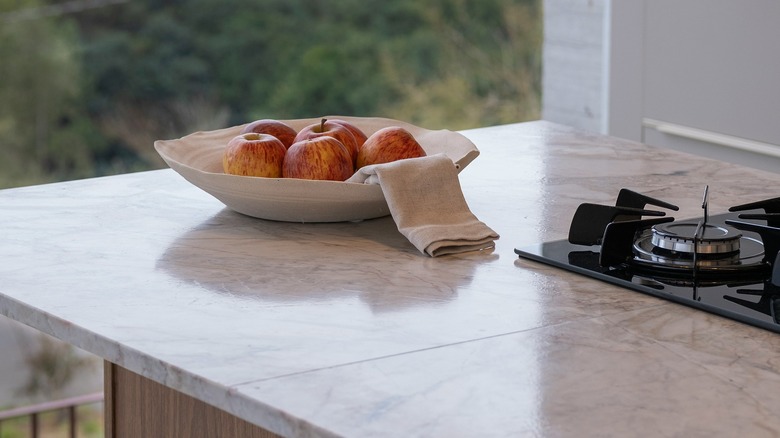
Granite slabs get prohibitively heavy as they get bigger, which puts a natural limit on size. If you have a very long area to cover, or you have wrap-around cabinets, you usually need more than one slab, and that means there will be a seam between them. Seams, like crack repairs, are very hard to hide, and many people choose not to. The problem with that is that a seam on a kitchen or bathroom countertop is a magnet for dirt, moisture, and mold, and like tile grout, you have to clean it regularly.
An alternative to leaving seams visible is to hide them with resin, and the process is similar to hiding a crack repair. It's a job best left to a pro, because color usually has to be added to the resin before polishing, often by dabbing spots on with a paintbrush, and it takes an expert eye to get convincing results. Consequently, if your countertops have seams and you want to hide them, the cost of installation could go up anywhere from $150 to $1,500.