

Forget Grass: The Overlooked, Stylish Alternative For A Weed-Resistant Yard
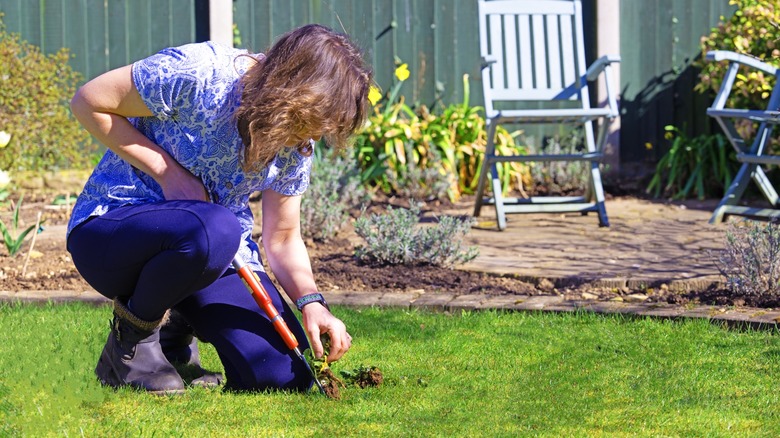
We all want an attractive yard, but for some people, grass isn't necessarily the best way to make that happen. Between the constant mowing and watering, and remembering to add fertilizer at the right time, having a lawn is often more trouble than it's worth. And let's not forget the headache of keeping the yard weed-free. There is a whole industry of chemicals and tools devoted to weeds just waiting to separate you from your hard-earned cash.
Fortunately, there is a stylish option that is often overlooked. Mulch is an easy-care alternative to traditional grass lawns that prevents weed growth by blocking sunlight and helps improve the soil and protect landscape plants. It's simple to apply and comes in many varieties and color options, so you can find neutral and more vibrant hues to complement your surrounding plants and features. If you want to keep things natural and affordable, consider wood chips. You may be able to find wood chips for free from your local arborist, making mulching a budget-friendly alternative to expensive lawn care solutions.
Replacing grass with mulch will also encourage a more naturally stylish backyard. Expansive lawns, no matter how lush, are sometimes referred to as green deserts because of their lack of biodiversity. They also contribute to pollution due to the chemicals used to keep them healthy and free of invasive plants, as well as the exhaust from equipment needed to manage a lawn. When you eliminate the lawn and replace it with mulched areas featuring a variety of low-maintenance shrubs and other complementary plant choices, you help create a healthy ecosystem of pollinators and wildlife that is far more beautiful than grass ever could be.
Creating a weed-resistant landscape with mulch
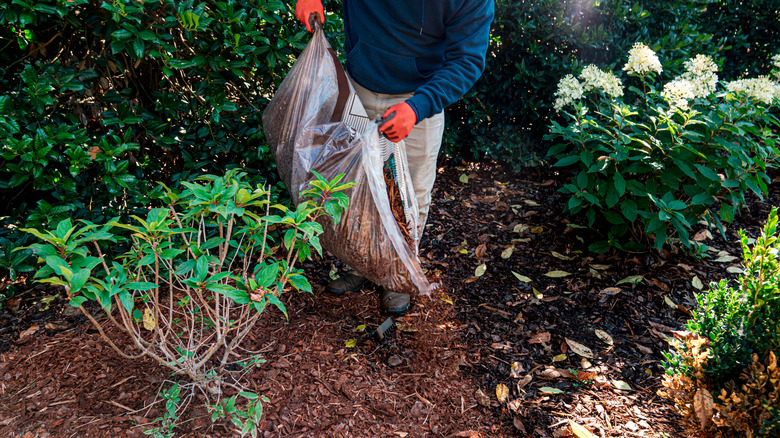
To create a weed-resistant yard, mulch is simple to apply, and you don't have to dig up your lawn to do it. By using a technique called sheet mulching, you can cover the existing lawn and create a new canvas for a beautiful landscape. Fall is an ideal time to start your project, as it is when the lawn will start to go dormant for the winter. Covering it at this time kills the grass, making less work for you next year.
Start by mowing the area of lawn you plan to mulch as short as possible. If you like, you can spray the grass with a pre-emergent herbicide to prevent any further weeds from taking root. Then, cover the lawn with cardboard, landscape fabric, or even old newspapers. Once the lawn area is covered, apply 2 to 3 inches of your chosen mulch. To protect your landscape plants, ensure that you keep mulch 6 to 12 inches from the base of your trees and shrubs. You'll also want a 5-foot margin between mulch and your home's foundation to protect from pests like termites. This area could be filled with decorative gravel or stones if desired.
Now, you can choose the best trees and shrubs for your landscape if you haven't already. Consider replacing those old sections of grass with some native landscaping plants that do well in your state to support your local ecosystem. If you can replenish your mulch annually to continue keeping weeds at bay, you'll be the envy of the neighborhood with a beautiful yard that you don't have to spend your whole weekend (or paycheck) maintaining.