

The Long-Lasting, Weed-Resistant Alternative To Mulch For Neater Raised Garden Beds
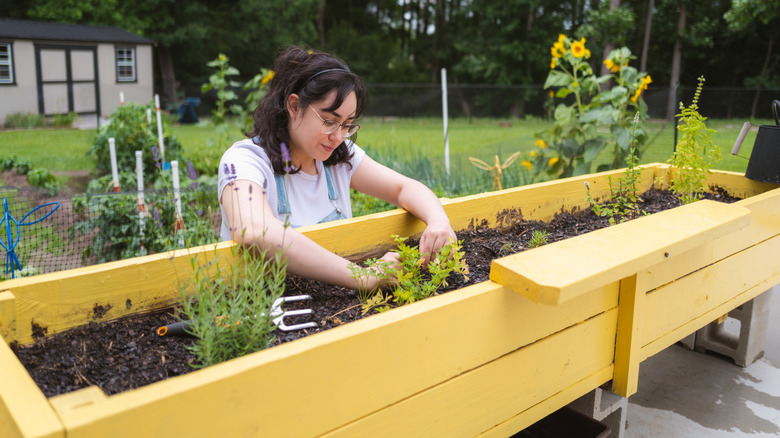
Raised garden beds undoubtedly offer some advantages over growing plants directly in the ground, including better drainage and improved accessibility for gardeners. As with more traditional gardening areas, raised garden beds do require mulch refreshing if you're using organic materials. Over time, this can add up in price and eat up a lot of your time, and the result may not be as aesthetically appealing. Plus, unless you're growing a vegetable garden in your own raised beds, organic mulches aren't always necessary for weed control. Such considerations are important whether you're starting a raised garden bed, or if you're looking for ways to update what you have. If you're looking for neater alternatives to regular mulch to control weeds in your raised beds, you might consider pea gravel as a viable possibility.
True to its name, pea gravel is a type of gravel consisting of small, round-shaped rocks. While used in landscaping more generally, pea gravel has many potential uses. This includes being used in raised garden beds that house ornamentals, perennials, and other plants you wouldn't find in a traditional vegetable garden. Unlike traditional mulches, such as wood chips, straw, or grass clippings, pea gravel is a type of inorganic mulch that will inherently last much longer than its organic counterparts because it doesn't decompose. The initial investment for pea gravel may be higher comparatively, but you're more likely to save time and money in the long-run. It also can help keep raised garden bed soils warm while increasing moisture to plants. Since the rocks are heavier than common types of organic-based mulches, this also ensures pea gravel is more likely to stay in place in your garden beds without creating a mess.
How pea gravel suppresses weeds (with some caveats)
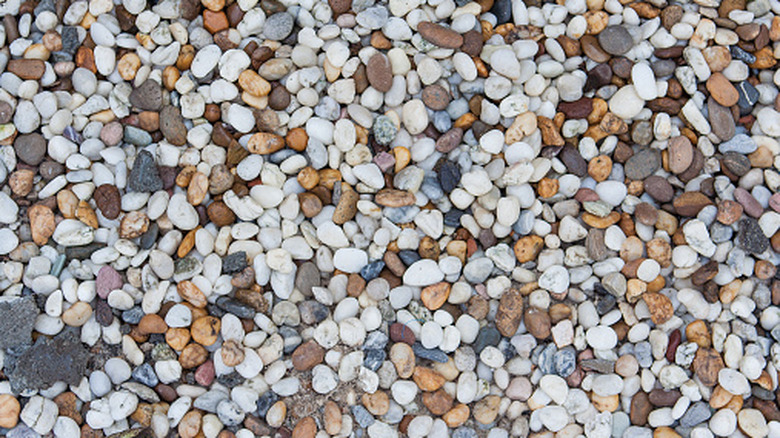
Pea gravel does have the possibility of preventing weeds for up to several years, says the Iowa State University Extension and Outreach. Like other types of rocks, pea gravel may suppress weed growth by depriving underlying soils of the sunlight they need to grow. Pea gravel is not completely weed-free solution, however. While rock-based mulches like pea gravel tend to control weeds to some degree, occasional weeds are still possible. Over time, organic materials can land on top of the gravel that can be conducive to possible weed growth. It's important to monitor your garden beds for early signs of unwanted seedlings and to pull them before they have a chance to grow and spread.
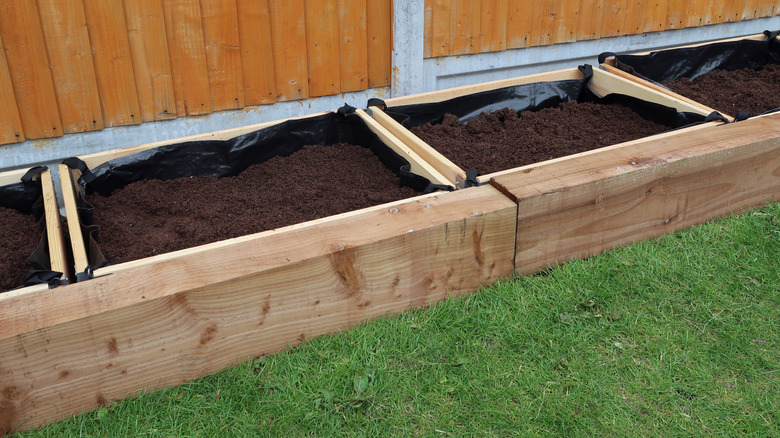
For added weed resistance, you might consider putting down a barrier before installing soil and pea gravel in your raised garden beds. Landscape fabric is one such option that is suitable for non-vegetable gardens. While it's still not 100% preventive against weeds, landscape fabric does offer some resistance while allowing for limited water and airflow.
Remember that pea gravel and other types of inorganic mulches are not ideal for vegetable gardens. These rocks do not add nutrients to the soil, and they also tend to make the soil warmer. You'll also want to keep in mind that pea gravel can make it more challenging to plant new plants (including annuals), as well as removing transplants due to the weight of the rocks. This is why pea gravel works best for perennials and long-term ornamentals that you don't plan on moving around in the near future. Such difficulties with plant removal can also extend to weeds if they become established deep beneath the rocks.
Adding pea gravel to raised garden beds, and how much it costs
Aside from the practicality of pea gravel, it can be a very attractive in a home garden, and there are several color options available to make your raised garden beds look like works of art. Once you have your ideal color picked out, you can install pea gravel over the top of soil in raised beds and around existing plants, or you can start fresh in a new garden bed. The material is often thought of as suitable for drought-resistant plants because gravel-based mulches surprisingly increase water infiltration. As the Colorado State University Extension explains, precipitation reaches small crevices between the rocks, with just a thin layer doubling the amount of water that can access the soil. To gain these benefits, the Extension recommends using up to a 3-inch layer of gravel consisting of rocks that are ½ inch in diameter or smaller. Also know most pea gravel materials fall within this size range, and a 3-inch thickness may control weeds more effectively than a thin layer.
Pea gravel is widely available in bags at garden centers in a variety of colors, which can also make application easier for small raised beds. Alternatively, you can also buy it in bulk from a local landscape supply company if you have several large garden beds. As for cost, much of this depends on whether you're buying bagged or bulk pea gravel, as well as the size of your garden project. According to Angi, most types of pea gravel run from $25 to $55 per cubic yard, but know that certain colors can also cost more (up to $80 a cubic yard).