

Skip Outdoor Vinyl: The Rot-Resistant, More Stylish Alternative For Your Porch
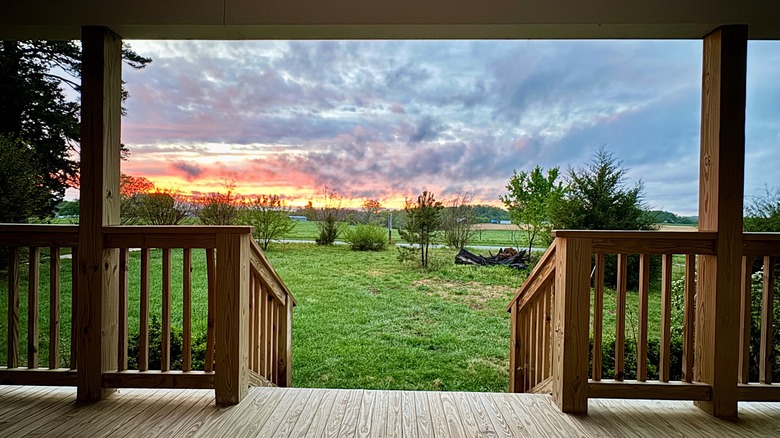
Vinyl decking materials have been around since the 1970s, and manufacturers have improved them to the point where they mimic real wood fairly well. Vinyl isn't real wood, though, and that's obvious when you take a close look. It has the shiny appearance you'd expect from plastic, and any embossed texture or grain patterns it might have are too regular to be real. Most tellingly, planks are a uniform color, without the tone variations you find in natural wood. If you're looking to skip the artificiality of vinyl for your porch floor, consider a real wood product that's just as durable: redwood.
Redwood trees are native to the west coast of North America, primarily the states of Oregon and California. They've long been a timber resource for western builders, because the wood contains rot-resistant oils — a characteristic shared with cedar. Redwood is a softwood that's easy to work, offers an impressive array of sienna color tones, and lasts for years outdoors. These characteristics make it highly desirable for decking, and even more so for flooring for a porch with a roof that blocks sunlight. Sunlight bleaches out the colors of unfinished redwood fairly quickly.
The price of redwood rose steeply during the pandemic and never fully recovered, but it's still cheaper than vinyl. However, keep in mind it that you have the expense of regular sealing if you want the wood to maintain its color, while vinyl is virtually maintenance free.
Shopping for, using, and maintaining redwood flooring
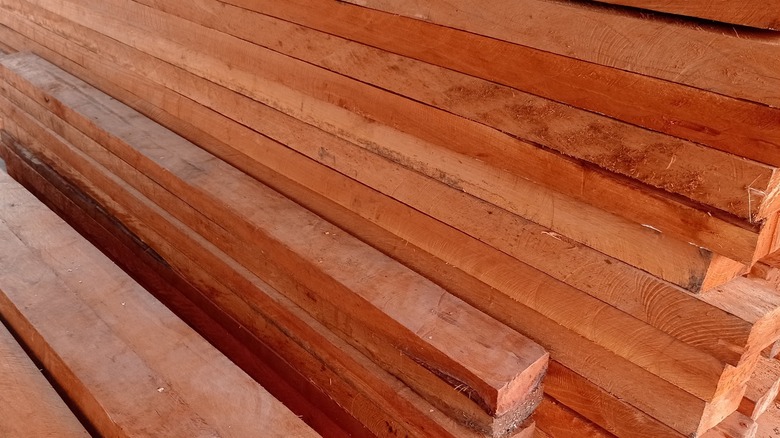
Redwood boards are graded according to which part of the trunk they come from. Clear heart boards, which come from the center, are the most expensive, costing as much as $10 per board foot. Grades below that contain varying amounts of light-colored sapwood, with the cheapest grade suitable for flooring being construction heart (con heart). These days, 2x6 boards, which are a practical choice for flooring, cost around $3.50 per linear foot.
You can install a porch floor just as you would a deck by screwing the boards to the joists from the tops, using properly-spaced decking screws, but this isn't very attractive. An alternative that looks a lot better is to attach the boards with hidden fasteners. This method requires a little more work, because you have to saw a groove in both sides of each board with a table saw. The fasteners, which are screwed to the joists, hook into these grooves and hold the boards down without being visible.
Even with a roof over it, a porch floor gets some weather exposure that will turn redwood gray. You can avoid this by sealing the floor with a UV-blocking finish. A thick outdoor spar urethane varnish will preserve the natural colors, but if you don't mind changing the color a bit, you'll get better UV protection with a semi-transparent stain.