

Not Concrete Or Wood: The Rot-Resistant Material For Long-Lasting Garden Beds

We may receive a commission on purchases made from links.
Whether you're in it for the aesthetics, pest protection, or back-pain-reducing potential, raised garden beds are fantastic for gardeners of every age and skill level. Plus, they come in a variety of sizes, shapes, and materials. And while we love the look of a beautiful wooden raised garden bed, sometimes you need something that's more resistant and can stand the test of time. That's why we're dedicating this post to our true garden bed love: galvanized steel.
We know they're not to everyone's taste with their slightly-utilitarian or industrial look, but hear us out. Galvanized steel beds are ideal for gardeners who can get a little overzealous with their water routines or have to deal with heavy rains because they help move excess water away from your soil, whereas something porous like wood or concrete just soaks it up. They're more rot-resistant, keeping weeds at bay longer than a natural material, and require less maintenance; just hit it with a hose and tamp down those sharp edges. You can buy a protective rubber like Protalwell's 1/16" U Channel Edge Trim which sells for around $8 for 10 feet on Amazon. And galvanized steel beds come in so many sizes and shapes that it's easy to get the right recommended size bed for your flowers, veggies, or herbs. But galvanized steel beds also have some considerations that you need to know ahead of time so that you can make the best choice for your situation.
Things to consider when buying a galvanized steel raised garden bed
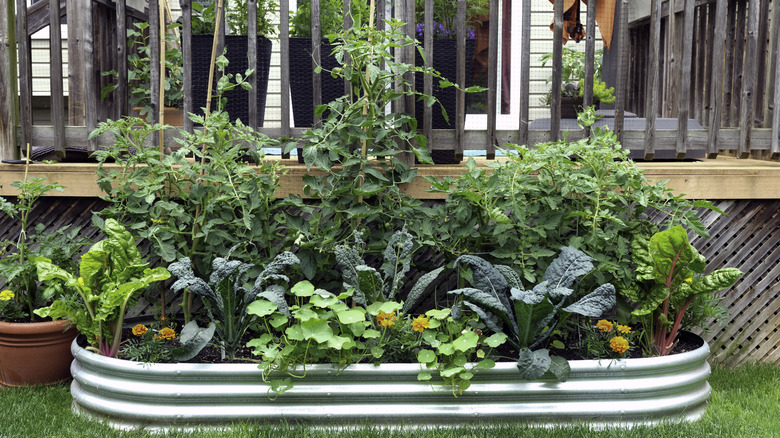
The first thing you'll probably notice is that galvanized steel beds can get expensive, particularly the bigger you get. Taking a quick look on Amazon, at the time of writing, we can find a basic 2-by-4-foot bed from Utopia Home for around $20, which isn't too pricey. But an 8-by-4-foot behemoth from Land Guard is just over $100, also available on Amazon. When you have the budget option to DIY a wooden raised garden bed that will last with scrap wood, the price makes a big difference.
What you're paying for, though, is durability. Wooden garden beds will degrade over time thanks to their constant exposure to soil, moisture, and weather. Concrete or cinder block garden beds are also an option, but they can crack due to exposure and are ridiculously heavy, so we hope you like your garden setup as-is. Galvanized steel beds, on the other hand, aren't porous so won't absorb moisture the way natural materials can, and can be picked up and moved easily once the soil is removed.
The other detail to keep in mind is that steel will heat up over time when exposed to prolonged sun, which is what many of your plants most likely require. To keep overheating at a minimum, avoid dark-colored beds, plant heat-loving plants, and keep an eye on your soil's moisture level.