

Help Stop Frost From Building Up In Your Freezer With One Easy Fix
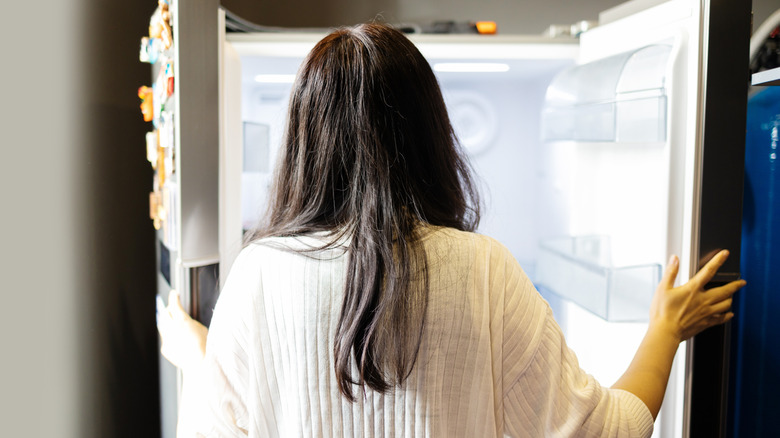
You might think the more ice the better as far as your freezer goes, but we're here to tell you that's not the case. Frost buildup takes up valuable storage space, fusing your food packages together in the process. If this sounds like your freezer, don't panic. A lot of the time, the solution has a lot to do with how you're arranging the items inside.
Being good at Tetris might actually work against you if you're wondering how you should be organizing your freezer. Don't cram every crevice with food and keep the appliance about ¾ full, leaving the space with plenty of airflow so you can avoid the ice rink. Don't put the packages directly against the air vents either. That is a surefire way to restrict circulation, the biggest culprit for uneven temperatures (which, you guessed it, results in frost).
Reorganizing is an easy first step that doesn't require any replacement parts. Every time you open the freezer door, warm air enters, and the moisture it carries can freeze inside on every item you have inside, similar to if you immediately stored hot foods in the freezer. Giving the cold air room to circulate helps the appliance maintain consistent conditions and keep the buildup at bay.
Don't ignore excessive freezer frost
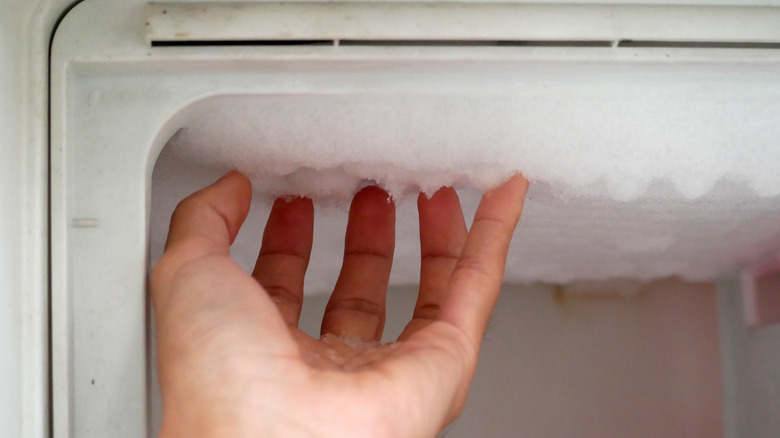
There are a million things to take care of in a home, and cleaning frost off your freezer may not seem like an important chore to do. But allowing frost to linger is one of the mistakes you might be making with your freezer. Freezers have components that help with defrosting, and the more frost you have, the more strain gets put on those parts. Most appliance companies recommend removing the frost before it becomes more than ¼ inch thick.
"The most common causes of freezer or fridge evaporator frost buildup can be a faulty defrost thermostat, a faulty defrost heater, or an issue with the circuit board," Home Alliance appliance and HVAC specialist Denis Davis said to Better Homes & Gardens in 2026. So if you recently defrosted the freezer and heavy frost returns quickly afterward, that's a telltale sign it's time to call the professionals. If they give you a steep estimate, it may be worth learning when it's appropriate to replace refrigerators and freezers instead of continuing to invest in a faulty appliance.
But what if you've reorganized everything and are certain your freezer isn't damaged? The moisture might be entering from somewhere else. Maybe the door was left slightly ajar, or a cracked, dirty gasket is preventing an airtight seal. Give the rubber around the opening a good look for damage and wipe away any debris that could create a gap. And if you open the freezer a lot or are guilty of putting warm food inside, that can also introduce humid air.