

Why Do Some Ovens Have A Blue Interior?

Most ovens are gray or black on the inside, but you might have noticed that some actually have blue interiors! Whether you're a color-lover and want to infuse personality into every last inch of your space or are simply trying to choose the best kitchen appliances, it sure can be a curious sight without much apparent purpose behind it. Is it just for decoration, or is there some sort of cooking benefit to it? The truth is that it may offer a bit of both.
Ovens that are blue inside have a porcelain enamel coating, which is a type of powdered glass. The coating is applied in a slurry and fused directly onto the prepared metal oven interior at high heat (well over 1,000 degrees Fahrenheit). During production, the glass is mixed with other minerals and additives, including metal oxides essential in adhering the enamel to the oven surface in the ground coat. Combinations of metal oxides produce different colors, with cobalt oxide primarily being responsible for the blue tone we often seen on enameled surfaces. However, manufacturers also often pigment the cover enamel coat before firing and setting the glass, giving us the range of vibrant hues seen in various valuable vintage kitchen items, cookware, and decor. Blue is an attractive color that immediately elevates a range's looks, works with many kitchen styles, and signals a higher-end appliance. In an oven interior, it also provides some unique functional benefits for users.
Benefits of having a blue oven interior
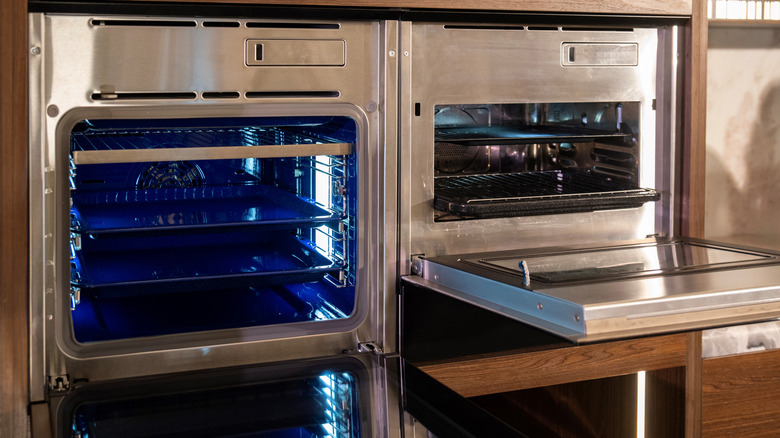
Porcelain enamel has been a popular material in cooking for years because it's durable, resistant to many acids in baked foods, and great at conducting heat. The glossy layer protects the underlying metal oven structure from wear and corrosion, enhances the unit's overall performance, and makes it easier to clean, which is why some of the best appliance brands like LG, Samsung, and KitchenAid keep ovens like this in their lineups. Cleanability, in particular, is a key selling point for many. With it's smooth, non-porous surface, the blue enameled surface makes it easy to lift grimy buildup with a lower-temperature steam cleaning function and a simple wipedown. Interestingly, the blue surface typically needs this kind of gentle cleaning approach compared to many other types of ovens. A common consumer complaint is that the enamel can be prone to flaking and peeling if you use the oven's self-clean function or overly abrasive cleaners to pull up stuck-on messes, leaving you to have to repair the porcelain enamel walls.
When moving away from black or gray oven interiors, blue also offers a practical alternative. For example, the color black is a great distributor of heat, but it also offers low visibility. This makes it difficult to see what is going on inside your oven without opening the door. It would also be hard to see bits of food that have been left behind. However, blue is a bit lighter, so you can see crumbs to remove them or check to see if your bread is rising without constantly opening the door and messing with the temperature. At the same time, the blue isn't so light that it shows blemishes and stains easily, giving you the best of both worlds.