

Ditch Granite: The Germ-Resistant Countertop Material That's Overlooked
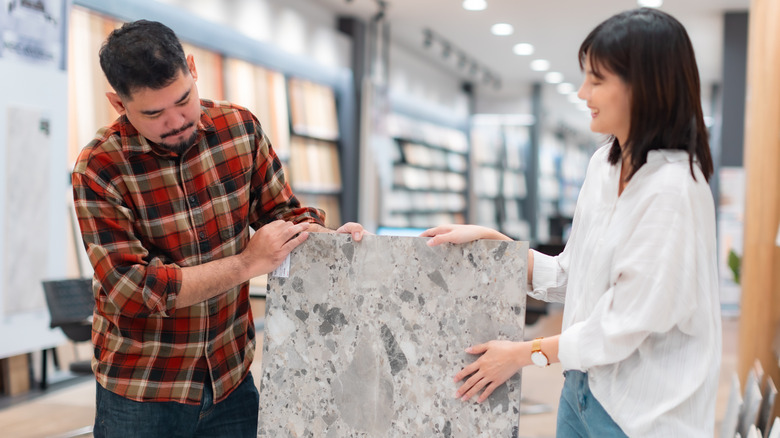
While opinions about granite kitchen countertops definitely vary, this natural stone is still popular due to its durability and appearance. There are also many more options since granite countertops peaked in the early 2000s. If you fall into the anti-granite camp though, the good news is there are several alternatives to consider. But instead of choosing another type of stone such as quartzite or marble, or even manufactured stone like quartz, some homeowners are opting for metal-based options. Zinc is, in fact, one such alternative to granite countertops that offers antimicrobial benefits in addition to its opportunity to create a unique kitchen aesthetic.
Zinc countertops are constructed with sheets of zinc metal that can offer a more rustic appearance in a kitchen. From a safety standpoint, zinc countertops are considered germ-resistant, which is a feature not offered with granite. Without regular granite countertop sealing (a practice that the Iowa State University Extension recommends you do several times a year), the stone is naturally porous due to its rock-based material. In this way, germs and mold can seep into the stone and multiply over time. This is not the case with zinc, which is not porous at all, and has the ability to prevent bacteria presence on its surface. You also do not have to seal zinc countertops. Maintenance is simple – as with granite, all you need to use for cleaning zinc countertops is a soapy, wet cloth.
Zinc countertops are also coveted for their patination
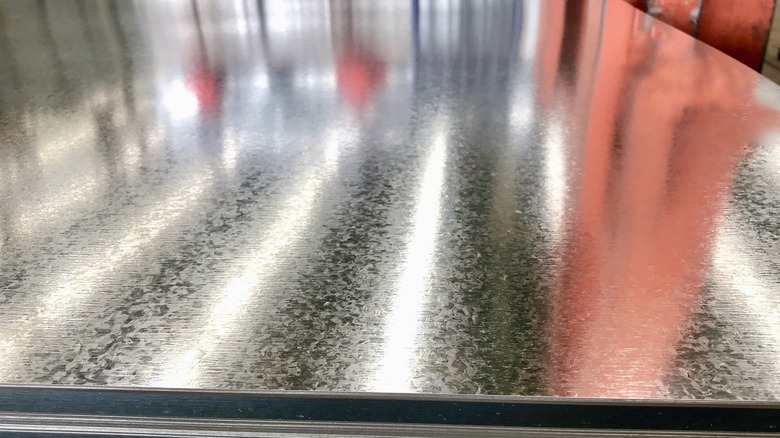
One of the big draws to zinc as a countertop material is the way it changes color over time. This softer metal creates a reaction called patina, which can create blue to gray-colored patterns over time. These do not indicate dirt or germs, and are in fact the result of a natural reaction between the metal and exterior elements. To that end, the reaction can occur with a variety of substances, such as food spills, drops of water, sun exposure, and even your own fingerprints. In this way, you might find that your kitchen investment will gradually transform, creating a whole new aesthetic from year to year. Such attributes are much different than stone-based countertops, which stay the same until you remove them.
As a metal-based material, you might think that zinc countertops are extremely durable. Yet the same forces that cause zinc to change in color over time are also some of the same reasons why it can be quite delicate to damage. In particular, zinc is prone to scratches and heat damage, while granite is more vulnerable to stains. You'll want to keep this in mind based on how your household generally preps and cooks food, and whether you have small children or pets at home.
Despite their benefits, zinc countertops have high price tags

Another downside to zinc countertops is the higher cost. While stone arguably carries the reputation of being expensive, other more niche designs are even more so. According to Angi, zinc carries an average cost of anywhere from $130 to $270 per square foot, giving it the reputation of one of the more expensive countertop options. Compare this to granite, which costs $60 to $100 per square foot, per the National Association of Realtors. Your cost will ultimately depend on your location, where you buy the material, the size of the project, and the company you hire to install it. Given the benefits of zinc countertops though, some people ultimately find the higher price tag worth the cost.
If you do choose zinc countertops, you also have some options in how the material looks during the initial installation process. Some have more of a matte appearance, while others are reflective like mirrors. Other homeowners appreciate the colorful nature of oxidized zinc, and choose sheets that are already patinated. The choice is ultimately yours –- just know the metal will continue to develop patina over time while retaining its germ resistance. You may even be able to utilize zinc countertops as part of the refreshing patina kitchen trend.