

Rat Nests Look Different: Here's How To Identify One In Your Home Or Garage

Maybe you've been told that your hair looks like a rat's nest first thing in the morning, but you must know the ones in your home or garage are a bit different from those at the back of your head. Rat nests look different than the kinds other animals make, so if you're interested in humane pest control, it's helpful to know the key differences. This way, you can make sure you're really dealing with rats before diving into any removal methods. Rat nests look like big piles of shredded materials all swirled together. Rats will use whatever they can find to build their nests and don't seem to have preferences, so you might see papers, grass, stuffing, or even insulation, depending on where the nest is located on your property. Just a whole bunch of this and that, torn up and mixed into a chaotic pile.
Where you find the nest in your house or garage can also help you determine whether it belongs to rats or not. These creatures love building their homes in places that feel safe, so you might not come across them easily as they are tucked away. You might discover one under the stairs leading to your basement, in a far corner of your attic, or at the back of a cabinet that you don't use much — they pick places where the nest can remain largely undisturbed. Nests near the kitchen (or perhaps even unsecured garbage cans in the garage) seem to be popular with rats because they provide easy access to food.
Key features of rat nests that set them apart
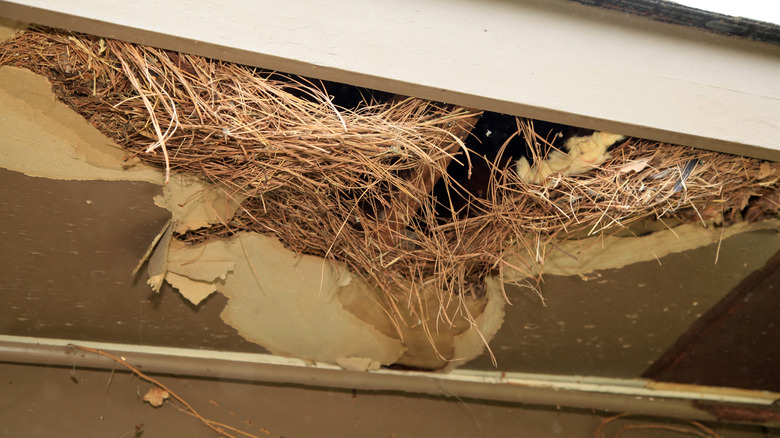
Another way to tell the difference between a rat nest and another house rodent's nest, like a mouse, is its sheer size. Rat nests are typically larger than other kinds of nests — with an entrance that's two to four inches across. This is because rats are bigger and need more space to live. Mice, for instance, have smaller nests, and that's a key difference. Rats can build their nests quite quickly, so even if you find a big one, it doesn't necessarily mean you've had an undiagnosed rat problem for ages.
Another thing to keep in mind is that rats tend to build more than one nest in the same location, so they can safely move around an area. If you find one of these burrows at home, likely there will be others that need removal, too. As a first step in pest control, you might need to remove the rat nests. Be sure to follow proper safety precautions, as rats and their dens can carry diseases.
If you find a nest in your garage, you will need to investigate it further, as it could be a squirrel's lair. Squirrel nests are called dreys and are made mostly of leaves. Additionally, they tend to be very high up, like in the rafters of your garage. If you find a drey, you'll need to learn how to keep squirrels out of the walls, too.