

What Happens If You Mix Vinegar And Citric Acid?

If you're looking to naturally clean your home, white vinegar and citric acid may be among the first products you reach for, especially if hard-water deposits refuse to budge. Seeing the two products side by side may leave you wondering whether combining them would make a more effective acidic cleaner. But before you start playing chemist, know that mixing vinegar and citric acid proves to be pretty lackluster. So don't expect an explosion or any dramatic fizzing.
On its own, vinegar relies on acetic acid to loosen mineral deposits or pesky soap scum. Citric acid tackles similar buildup by binding to the calcium and magnesium ions responsible for water hardness, making the deposits easier to remove. Alone, it's a great way to remove scale from a coffee machine or clean a dishwasher. But because both ingredients are acids, they do not neutralize one another the way something like vinegar and baking soda would. When combined, the citric acid simply dissolves into the water-based vinegar, leaving you with a solution just containing two acids.
In this case, two isn't better than one. Their natural origins may make vinegar and citric acid seem harmless, but the mixture can be tough on your hands, eyes, and acid-sensitive surfaces. Citric acid alone can severely irritate eyes and cause minor burns, as can full-strength vinegar, which can also cause breathing issues in areas that lack adequate ventilation.
Why mixing vinegar and citric acid isn't worth it
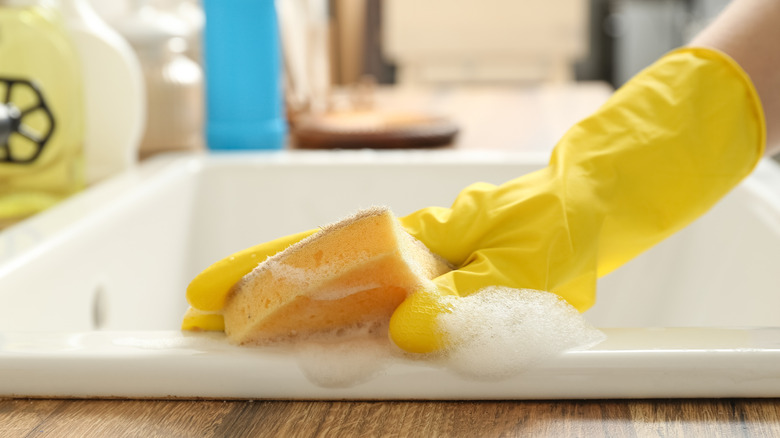
Even if the two products can coexist in the same bottle, they do not make a particularly useful cleaning team. Catherine Green, a sustainable cleaning expert at Smol, told Woman & Home that it's best not to combine the two because it "doesn't make the solution stronger or more effective. In fact, it can actually make your cleaning mixture less efficient because the acids may compete [with] rather than complement each other." And with no standardized ratio and clear instructions, it's too easy to leave the solution sitting too long or apply it somewhere it does not belong.
A spill can still leave its mark on the surface beneath it. Acidic products can permanently dull or etch natural stone, while the effect of citric acid on metals depends on the material and concentration. If you do have an accident, wear gloves to wipe up the solution, rinse the area thoroughly with water, and dry it completely. For valuable finishes or appliances, check the manufacturer's care instructions before attempting further cleanup.
If the mixture gets onto your skin or eyes, rinse the area well with warm water and irrigate your eyes for at least 15 minutes. If there's still cause for alarm, call Poison Control for guidance, particularly if pain, redness, or swelling persists, and of course, call 911 if someone experiences severe symptoms. Once you handle the cleanup, keep the two ingredients separate and use each to tackle jobs on its own.