

Avoid Chemicals: Remove Wallpaper With A Simpler DIY Solution
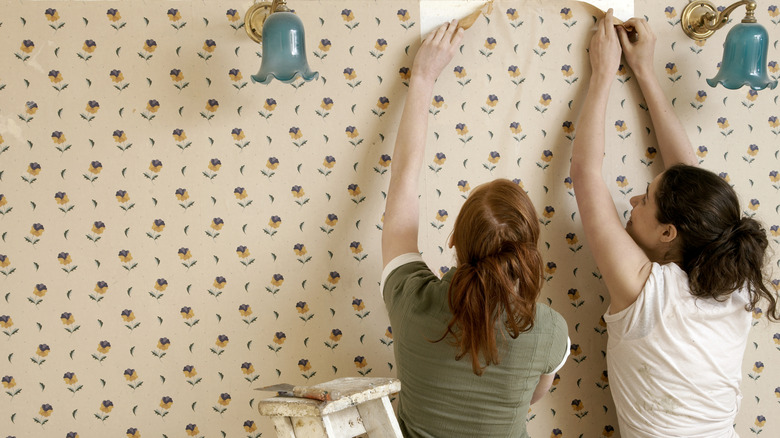
Decorating trends tend to change every 10 months or so. To stay relevant, most decorators recommend you change your style every three to five years. When you decide it's time for a change, you may need to trade in your wallpaper for something new. Chemical wallpaper stripping solutions work very well to break down the glue so you can scrape paper away. While most formulas are safe to use in a ventilated area and with the recommended protective gear, they may still contain volatile organic compounds (VOCs) that can irritate your skin, eyes, and lungs. If you truly want to avoid the hash fumes and opt for something more convenient, a better choice is hot soapy water.
For this hack, there's a good chance you already have everything you need. You don't protective gear or expensive commercial solvents, making this a much simpler choice. Unfortunately, just because you're using basic ingredients doesn't mean it's going to be an easy task. Removing wallpaper requires patience and a good amount of elbow grease to get your walls ready for a new roll of paper or paint.
Avoid chemicals: Remove wallpaper with a simpler DIY solution.
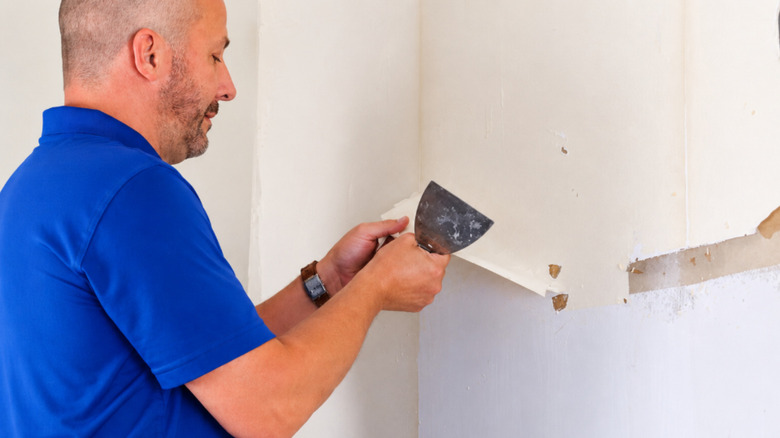
To remove old wallpaper, start by prepping the room. Lay down drop cloths to protect the floors and to keep them from becoming slippery. Use painters' tape to cover any electrical outlets and switches. For safety's sake, you should also turn off the power to the room before you begin because water and electricity don't mix.
You'll need a bucket or spray bottle, liquid dishwashing soap, and a scraper or spatula for this project. Fill a bucket or a spray bottle full of hot water and add a little dish detergent. The water should be as hot as you can tolerate because the warm temperature will help break down the glue. Working in small sections, saturate the wallpaper with a sponge or a spray bottle. Let the solution sit for a few minutes. Once the paper looks bubbly and feels soft, use the scraper to lift one of the seams and carefully peel the paper away from the wall.
For tough areas where the paper just doesn't want to lift from the wall, reapply the water solution and let it sit longer. Avoid scraping too aggressively because this could damage the drywall. Instead, let the water and soap do the job. Keep in mind that this method only works for standard wallpaper. If you have solid vinyl paper or need to remove peel-and-stick wallpaper, these products will resist the soapy water, and you'll probably need to use a chemical stripper or a heat gun. Also, if you or a previous owner covered up old wallpaper by painting over it, you'll need to sand the paint down or score it gently with a blade (taking extreme care not to damage the drywall) to penetrate the surface.