

Spider Mites Vs. Clover Mites: How To Easily Tell The Difference
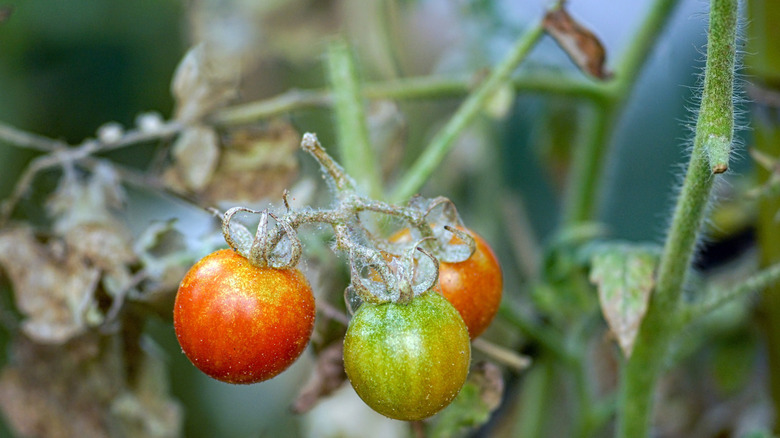
The sight of "dust specks" crawling along your plants, grass, or furniture can be unsettling. Now, you might be aware that these moving specks are known as mites, but you may not know what kind. While there are numerous mites that may hurt your plants, you're more likely to confuse spider mites with clover mites. After all, both can appear red if you look at them through a 10X hand lens — being pin-sized, they're hardly discernible to the naked eye — though both have quite the color diversity across subspecies.
Purely from the color perspective, clover mites are a bright, vivid red, though sometimes they may also be brown or olive green. In contrast, spider mites, if red, appear quite dull, and feature two dark blotches on either side of their face. Other times, they may take on hues like orange, green, and yellow (NPIC has one of the coolest image guides, courtesy of Bugwood).
A better way to figure out which mite is plaguing your plant (without having to buy a high resolution camera) is to conduct a simple experiment. Just slide a piece of white paper underneath an infested plant, lightly shake the leaves to dislodge the creepy crawlies, and take a swipe at them. If they leave a red stain, you're dealing with clover mites. Don't worry, you haven't touched their blood; they're simply bodily pigments. You can reach at the same conclusion if you had the misfortune of stomping or crushing them mistakenly when trying to get rid of tiny red "spiders" on your lawn furniture or home walls. Those are usually clove mites, not spiders. Also, good luck getting those stains out!
Bodily and behavioral differences
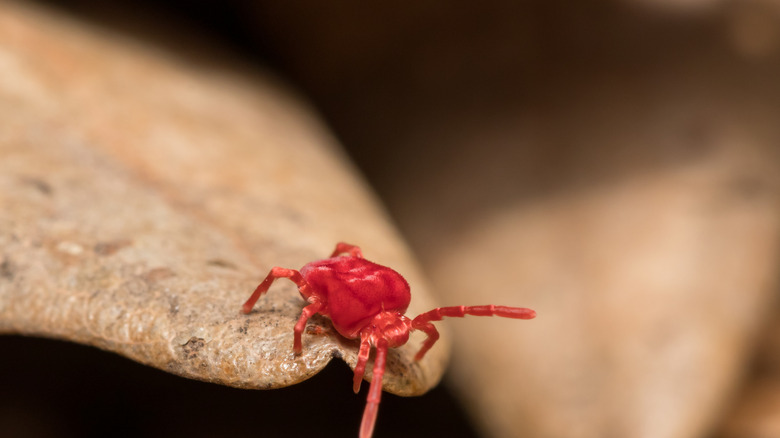
If you're blessed with spectacular eyesight or a hand lens, and don't mind gawking at the mite's anatomy, have a look at their legs. Both kinds have eight legs, unless you found them in their larval stage, when they only have six. However, in the case of clover mites, the front pair of legs may seem like antennae. These forelegs are usually as big as the main body or twice as large as the remaining pairs. However, spider mites have similar-sized pairs.
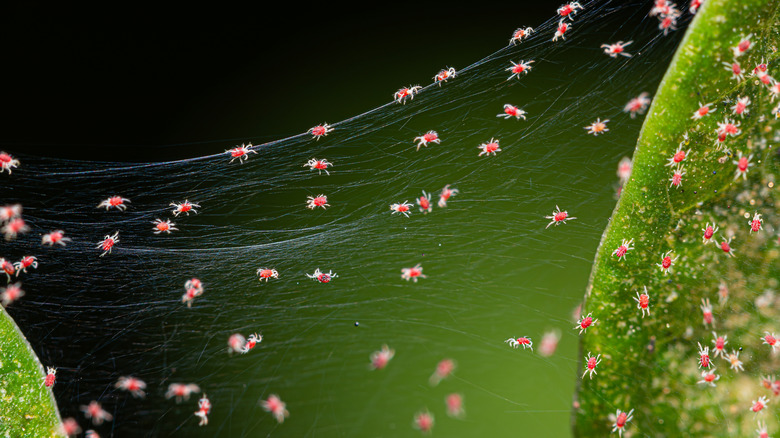
Another difference that may be obvious is webbing. Some spider mites produce silken fluff or threads (like spiders) on leafy undersides. This webbing safeguards them from predators or natural elements and is missing from a clover mite infestation. It's also important to note the time of the year. This is because spider mites become a nuisance mostly during summer, as they thrive in dry, arid conditions. Whereas, clover mites undergo aestivation or inactivity in very warm seasons. Depending on your location, clover mites may have several generations, with the first appearing early in spring after temperatures warm to 45 degrees Fahrenheit. Another generation may be birthed when summer winds down, bringing in cooler temperatures. In other words, clover mites are a cool season phenomenon, while spider mites dominate during warmer months.
Difference in extent of damage
Clover mites make an interesting distinction in that they're wholly and solely female. This means there's no courtship or fertilization. They simply lay eggs that then hatch, followed by a group of female mites that feed for a while until it's time to aestivate or overwinter, depending on the season. However, they must climb a vertical area to lay eggs, and this makes their damage easier to spot. While they make for your clover (duh!), well-fertilized turfgrasses, and other ornamentals, such damage is usually concentrated within 10 feet of an upright object, say a fence, wall, or a tree.
If they haven't already invaded your home by sponging on foundation walls, shingles, or windows, they may leave the foliage looking stippled and silvered. Lawns may have brown or wilted, dead patches that can be mistaken for drought or winter damage. But clover mite damage is usually short-lived. Although they don't eat through any furnishings, bite or sting curious pets or humans, or transmit diseases, you may justifiably dislike their presence. Some natural pest control remedies that keep the bugs at bay involve scooping them with a moist fabric or a vacuum. Don't forget to trash the cloth or vacuum bag after.
Spider mites, in comparison, are more of an outdoorsy problem (unless they travel inside when you bring in plants for overwintering or house a hefty collection of indoor plants). If left unattended, spider mites can seriously harm or kill plants, including vegetables and fruits, often causing discoloration and premature shedding. You can get rid of spider mites through a strong spray of water, followed by horticultural oil sprays or a broad-spectrum miticide.