

200 Years Later, This Essential Bathroom Feature Looks Totally Different
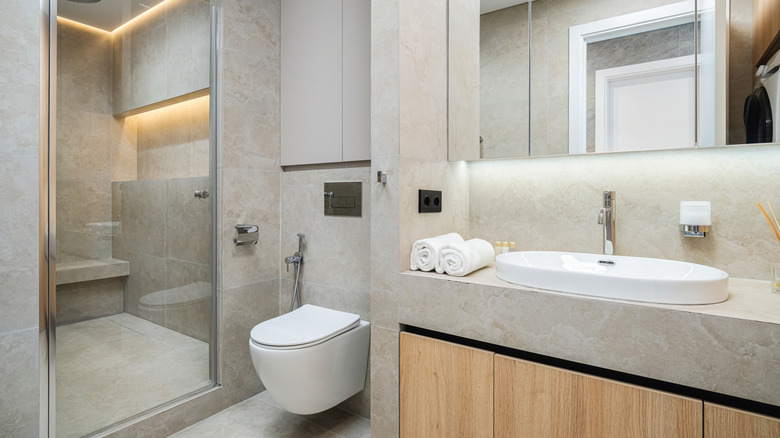
People have been striving to make bathrooms as functional, comfortable, and stylish as possible for centuries. Toilets in particular have had an interesting developmental journey, from simple pots or holes in the ground to the porcelain bowls we have today. Modern toilets feature efficient plumbing and even extra features like heated seats. There are even different types of toilets designed for different needs and preferences. To see how we got here, let's go back to the first toilet.
Most people credit Sir John Harrington, the godson of Queen Elizabeth I, with the invention of the first flush toilet. Sometime in the 16th century, Sir Harrington combined a waterproof basin and a large cistern full of water. It took over seven gallons of water to flush, while modern toilets only need between 1.2 and 1.6 gallons of water. However, toilets didn't become commonplace until the mid- to late-Victorian era, nearly 200 years ago. The Victorian-era toilets looked similar to our modern toilets, but with a few key differences. The outsides of the toilet bowls often featured beautiful decorative sculpting and painted designs. Another notable difference between these 200-year-old toilets and our modern ones is the tank placement. Victorian-era toilets often featured tanks set high on the wall and operated by a pull chain, so that gravity could assist the flushing process. While they're certainly striking, cleaning your toilet tank and bowl is probably easier when they're within reach and lack the grooved designs of older ones.
What about other types of toilets?
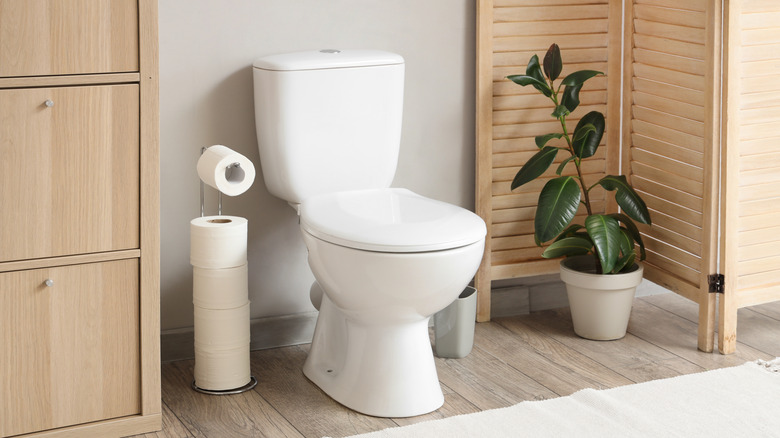
Flushing toilets have changed over the centuries, but they aren't the only type of toilet. The simplest version of a toilet has always been a hole in the ground that can be sat above or squatted over, and there are similar options still in use today. However, even they have changed somewhat over the centuries. The communal toilets of ancient Greece evolved into the more private outhouses, but it doesn't stop there. Portable toilets used for camping or events use the same principles as those historic toilets, plus they're useful if you're trying to add a restroom without sewer access. Squat toilets are also still extremely common, particularly if you're traveling abroad. Modern squat toilets often feature a ceramic or metal covering over the hole, and may have a convenient hose for flushing.
Another historical toilet option was the chamber pot. As the name suggests, this was a pot kept in a person's chambers that they would use to relieve themselves. The pot could then be emptied, cleaned, and reused later. A variation on this was the close stool, a chair with a chamber pot set into the seat. They've become more specialized as indoor plumbing made going to the bathroom much more convenient, but they aren't fully obsolete. Modern bedpans and bedside commodes use the same basic functions as chamber pots and close stools. The shape has changed, however. Chamber pots were larger and often lidded, while bedpans are designed to be used while lying down.