

Better Than Vinegar: An Organic Solution For Killing Poison Ivy In Your Backyard
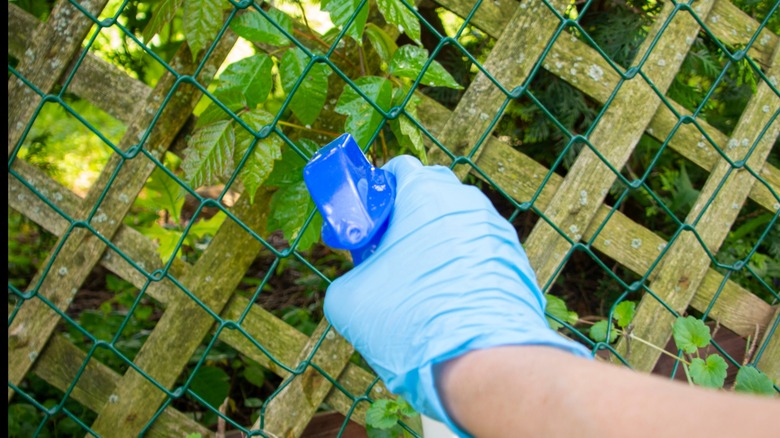
Dealing with the average weed is already frustrating enough, but finding a patch of poison ivy in your garden is extra worrisome. Poison Ivy is a woody perennial that contains urushiol, a mix of chemical compounds responsible for causing the allergic reaction most of us get upon contact. For centuries, gardeners have used vinegar to kill ivy and other weeds. It can work, though household vinegar isn't concentrated enough to kill mature plants and is only effective against tiny seedlings. If you want a more potent organic herbicide, try clove oil. Not only is it more powerful than vinegar, but its efficacy comes without the negative environmental impacts of synthetic herbicides. Glyphosate-based herbicides, such as Roundup, can persist in the soil for weeks, drift beyond the treated area, and harm local wildlife.
Although many prefer safe, natural weed control in the garden, we still want to make sure it actually kills weeds — especially if said weeds cause rashes. Clove oil is an essential oil extracted from the clove tree (Syzygium aromaticum) and works as a contact herbicide. At high concentrations, its active ingredient, eugenol, disrupts cell membranes, dries out the leaves, and rapidly kills them on contact. While clove oil is stronger than vinegar, it's still more effective for smaller infestations. Larger poison ivy vines require a lot more coverage than younger plants, and well-established root systems have more energy to push up new growth.
How to use clove oil to kill poison ivy in your backyard
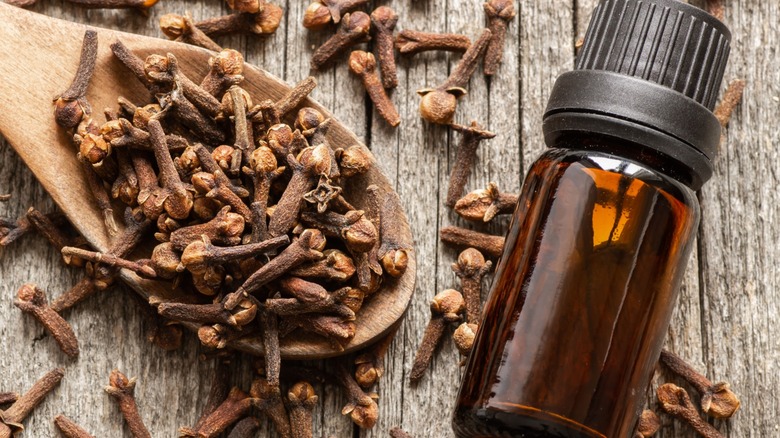
To make your own DIY herbicide, gently combine 5 tbsp of dish soap, 25 drops of clove oil, and 4 cups of water into a spray bottle. You could also use 15 drops of clove oil and 10 drops of cinnamon oil, both of which are essential oils that can kill weeds. The dish soap is a surfactant that helps prevent beading and breaks down the leaves' outer waxy layer. This allows the oil to stick more easily and penetrate the leaf tissue.
To apply, spray the mixture directly onto poison ivy leaves and stems. Because clove oil only kills what it contacts, complete coverage is a must. So, make sure to coat everything, including the undersides of the foliage. Clove oil is nonselective, so be careful not to spray it on nearby desirable plants accidentally.
You'll likely need several applications, so watch for new poison ivy growth and reapply the DIY herbicide every couple of weeks or as needed. Eventually, the cycle of using energy to produce new growth will drain the roots of their stored energy, ultimately killing the entire plant. This could take several years, so you'll want to balance the pros of a natural herbicide against how much effort you want to put into eradicating a large stand of poison ivy. Remember, even dead poison ivy contains urushiol, so always wear gloves when handling it and clean tools thoroughly afterward.