

Check Your Electrical Panel: If It's Made By One Of These Brands, It Could Be A Fire Hazard
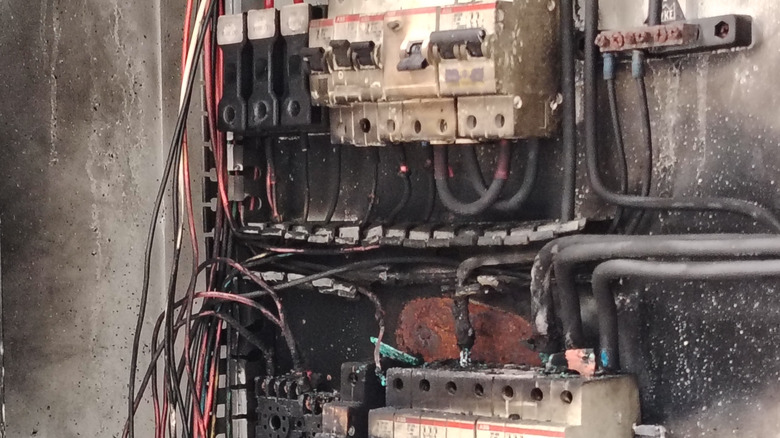
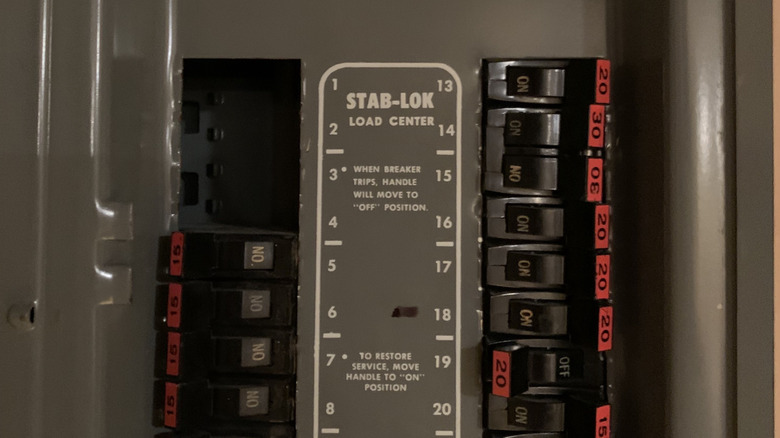
When you're buying a home — or just now looking at a home you bought some time ago — it's critically important that you know what's going on behind the metal door in your closet, laundry room, or garage beyond simply flipping breakers when they trip. First thing's first: Certain brands of older electrical panels are potentially dangerous, starting with Federal Pacific Electric (FPE) Stab-Lok circuit breaker panels.
Dallas Stevens, Certified Master Inspector and owner of Florida Home Inspector Services, spoke exclusively to Hunker about the trouble with legacy breaker panels. He was clear about the correct course of action if you find that you have a Stab-Lok panel: "Call an electrician today and replace it immediately," he urged. "If your home has a panel labeled 'FPE,' 'Federal Pacific,' 'Federal Pioneer,' or 'Stab-Lok,' you should treat it as an active safety hazard."
The main job of a load center is overcurrent protection — interrupting the flow of electricity when more current is detected than the circuit is rated for. When FPE Stab-Lok panels fail, breakers don't trip, leading to dangerous amounts of heat. "Heat is the number one culprit that may cause risk of fire and safety," Stevens said. "Unfortunately, these panels are directly responsible for several fires, millions of dollars in property loss, and, even more terrible, loss of life."
The problem with older electrical panels
Unfortunately, Federal Pacific isn't the only brand that puts homes and occupants at risk. Dallas Stevens explained that Zinsco/GTE Sylvania, Challenger, and Bulldog panels are all "widely considered safety hazards and should be replaced immediately." This also applies to older split-bus panels, a panel design that doesn't have a single main breaker for incoming power. "The Zinsco/GTE Sylvania panels, for example, may have breakers melt or weld themselves to the bus bar," Stevens said. As a result, the breakers might fail to trip, resulting in fire or exacerbating the most common causes of home electrical fires and electrical shocks.
However, a bigger issue lurks under the surface of every older breaker panel, Stevens said. "The 'life expectancy' of an electrical panel is 25 to 40 years. If you have a home that was built in 1986 or older, at this point, and you still have the original panel, regardless of any recall or known issues, you have exceeded the assumed life expectancy and should consider replacement." It's something to act on, not ponder.
Lastly, even if you aren't injured by an electrical panel-related fire, you might find yourself in a financial fix. "At least in the state of Florida," Stevens explained, "insurance underwriters may refuse to continue an existing policy upon renewal or deny coverage on a real estate transaction [where] these panels exist." In other words, it's time to hire an electrician.