

The DIY Tile Rule You Need To Know For A Balanced, Professional Finish
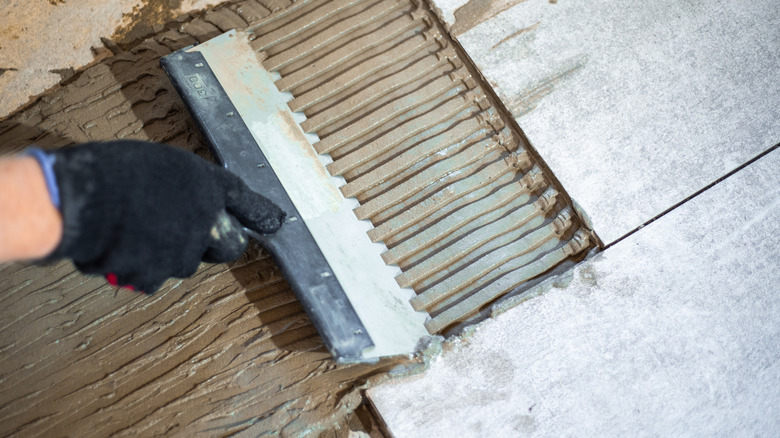
You've picked out the best flooring for your home, gathered all the materials needed to tile a floor, and you're ready to go. All that's left is to decide how you'll arrange them. Staggering their look can make your room warmer and more welcoming. It might seem obvious to arrange them by 50%, but there's a better way. The ⅓ rule is that they should be offset by roughly a third rather than half. If you're having trouble picturing it, imagine you've divided a tile into even thirds with a marker. The edge of the tile above it lines up with one of the third markings. The tile above that one lines up with one of its markings, and so on, creating a subtle stair-step pattern.
It's a minor change, but it looks a little more natural than offsetting them by half or lining them up completely. The staircase pattern has better flow to it than the others, resulting in a more thought-out look. In addition to the aesthetic benefits, shifting each row can also make the surface feel smoother. Tiles that are longer, larger, or made from natural materials are rarely perfectly flat. They tend to curve up slightly in the middle. Staggering them by half would put the lower ends of some tiles directly next to the raised centers of others, creating bumps called lippage.
When should you use the ⅓ rule?
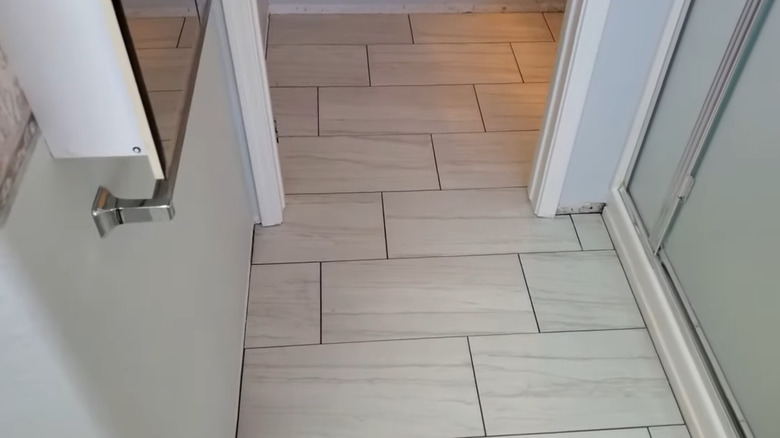
The approach comes with excellent benefits, but it's better suited for some situations than others. It works best with tiles that are longer or larger. With smaller ones, the difference between ⅓ and ½ may be minimal, reducing the impact of the layout. The rule also may not work if you're trying to create a mural or mosaic. If you're painting the tiles yourself, you can set them using this approach, then reference this guide on how to paint ceramic tiles. If they are already decorated, then lay them in whatever way makes the design line up.
The ⅓ rule is particularly useful in high-traffic areas or places where stability is most important. The lippage created by other tile layouts can be a tripping hazard. It may seem like a minor thing, but in places like bathrooms where wet floors are already a cause for concern, the risk can add up. The raised areas can also cast shadows and are more likely to become damaged over time. Reducing that effect gives tiles set with the rule a cleaner, more professional look. Combining the staggered design with other safety steps like installing a grab bar can help make your room a little safer.