

Carpenter Ant Nests Look Different: How To Identify One In Your Yard
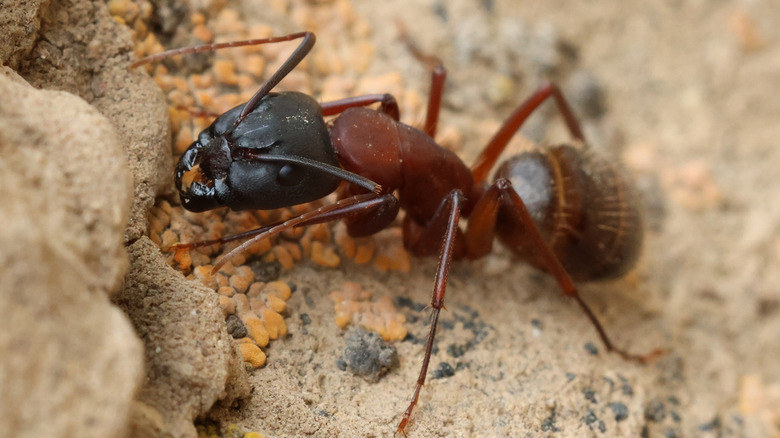
Ants perform great services in your garden, like keeping soil loose, aerated and fertilized, helping with decomposition of yard waste, and even dispersing seeds. Like many beneficial insects, they help, rather than harm, the ecosystem in which they live. But all ants aren't created equal, and one particular type, the carpenter ant (Camponotus species), can be downright destructive. These bulky black or black-and-brown ants grow up to 1/2 inch long, and set up their nests and networks of tunnels in wood. Identifying a colony of these critters in your yard is important, because they could be coming for your wooden house, porch or shed next.
A carpenter ant nest doesn't look like what you may think of when you hear "ant nest". Giant piles of pine needles or small mounds of disturbed soil are obvious signs of some ant colonies, but the homes of carpenter ants aren't as easy to see. Signs of these ants include tunnels and holes in tree stumps and old wood piles, or in branches or trunks of weak or diseased trees. Also look for piles of "frass", which is sawdust riddled with insect parts, around your yard.
Nebraska Extension Entomologist Judy Green discusses how to correctly identify carpenter ants and their nests in a YouTube video. She suggests following a carpenter ant you see back to its home. Carpenter ants are most active at night, so nocturnal investigation is best. You can set out a sweet treat in the evening (they love to eat sugary things), don a headlamp, then follow them as they take the food back to their colony.
What to do if you find a nest
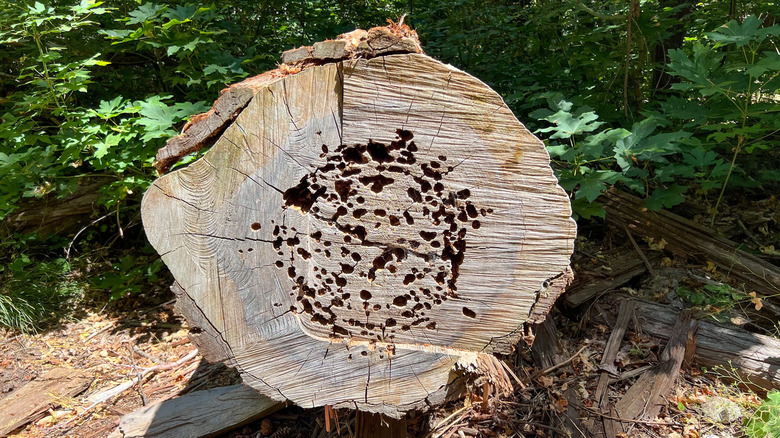
Carpenter ants maintain a network of different nests, regularly moving among them. They are most active spring and through early fall, going dormant in cold months (unless their nest is inside a nicely heated home). If outside nests are located well away from your house, and you don't see any signs of these ants coming inside, then it is fine to let them do their thing. But a nest in your yard could actually be a satellite nest to one that is inside your home, and if you have seen them near your house then you may need to take action. Getting rid of carpenter ants is best done by a professional, and elimination of the outside nests by a pest control company is your best bet. They will use an insecticide specifically made for these ants. If you don't want chemicals, you could try using non-toxic diatomaceous earth in and around the nest sites.
If you are mostly concerned with preventing an in-home infestation, using natural pest control remedies that eliminate their habitat will help. The University of California Integrated Pest Management Program recommends several approaches to keeping these ants at bay, including keeping wood piles, mulch, and tree branches away from your home, replacing decaying wood on your porch or siding, and keeping crawl and attic spaces well ventilated.