

What Happens If You Mix Bleach And Hydrogen Peroxide?
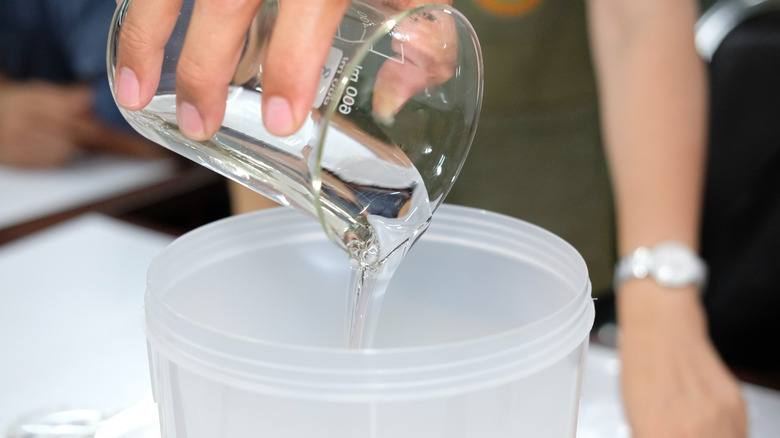
With two stain-removing and germ-killing agents like bleach and hydrogen peroxide (a key ingredient in DIY oxygen bleach) being so powerful on their own, it might seem reasonable to assume they would work just as well when blended together. Sadly, science is rarely so straightforward. If you've caught yourself wondering what would happen if you were to mix them, hold that thought — and resist the urge to try it at home. Combining these two cleaners creates a potentially dangerous chemical reaction rather than a stronger disinfectant. Household bleach contains sodium hypochlorite, which reacts with hydrogen peroxide to releases oxygen gas. That release can cause rapid bubbling, and if you mix them in a sealed container, it may become pressurized or even burst.
The reaction is different from mixing bleach with ammonia or an acid, which generate chloramine or chlorine gas. Still, the CDC advises never mixing bleach with any other cleaner, even when both products are commonly kept under the same sink. When chlorine bleach and hydrogen peroxide are combined, their atoms rearrange to produce sodium chloride (salt), water, and oxygen gas, as well as heat as the chemicals interact. The mixture is fairly innocuous (and useless as a cleaner), but the escaping oxygen creates the immediate fizzing and foaming that could oftentimes be forceful and lead to an explosion. Without the proper eyewear and safety equipment, the reaction can splash bleach and peroxide onto the skin and clothing or into the eyes, while airborne mist may irritate the respiratory system.
What to do if you mix bleach and hydrogen peroxide
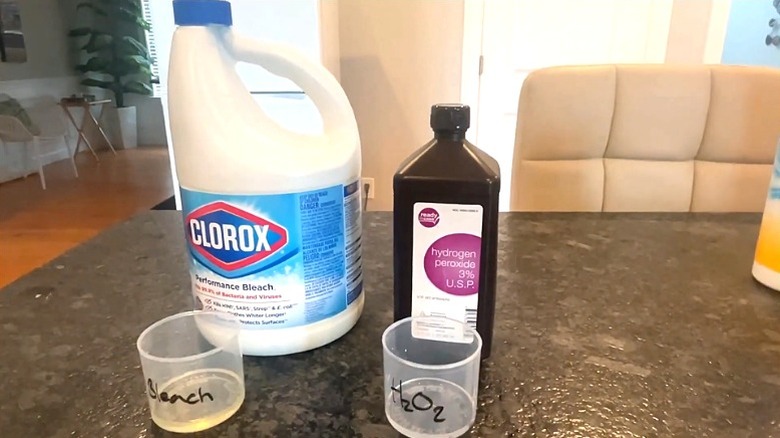
The stronger the concentration of bleach and hydrogen peroxide, the stronger the reaction when mixed. But even though ordinary household varieties are diluted, they can still react violently enough to splash liquid out of a container. If bleach and hydrogen peroxide do accidentally cross paths, step away from the mixture instead of leaning over it or adding another chemical in an attempt to neutralize it, as that could trigger an additional reaction. Perhaps the most important step is to move into fresh air, especially if you experience coughing, burning eyes, throat irritation, or difficulty breathing. From your safe location, call Poison Control at 1-800-222-1222 for guidance or 911 if anyone collapses or has serious symptoms.
If the liquid splashes into the eyes and you wear contacts, remove the lenses and rinse with room-temperature running water for 15 to 20 minutes. If it reaches the skin, remove your clothing and rinse the affected area thoroughly with running water. Do not delay rinsing, as this could lead to a chemical burn. After rinsing, contact Poison Control even if the irritation appears minor, since its experts can determine whether additional medical care is needed. To prevent another mix-up, follow the best practices for properly storing your cleaning supplies, use only one cleaner at a time, and make sure all bottles are correctly and clearly labeled. As a general rule, it's also a good idea to thoroughly rinse surfaces with water before switching products.