

How To Identify A Blister Beetle In Your Home Or Yard
We may receive a commission on purchases made from links.
Beetles are some of the most diverse creatures in the world. According to the Smithsonian, there are about 30,000 known beetle species in the United States alone. Many beetles, such as ladybugs, can be helpful to humans by controlling certain garden pests like aphids, but other beetles can cause harm to livestock and plants, and sometimes even people. One such offender commonly found in the garden is the blister beetle (Meloidae).
Blister beetles can be ¼ to 1 ¾ inches long, depending on the species. Their necks are elongated and extremely narrow. They also have long legs ending in a split claw. These insects may vary in color based on subtype. While many are brownish-gray or black, some can be bluish or even have bright-colored stripes. All blister beetles emit a toxic chemical called cantharidin, which may cause blisters on your skin if you touch them. This toxin can also be emitted from dead beetles, so it's important to avoid contact with them.
What to do about confirmed blister beetles around your home or yard
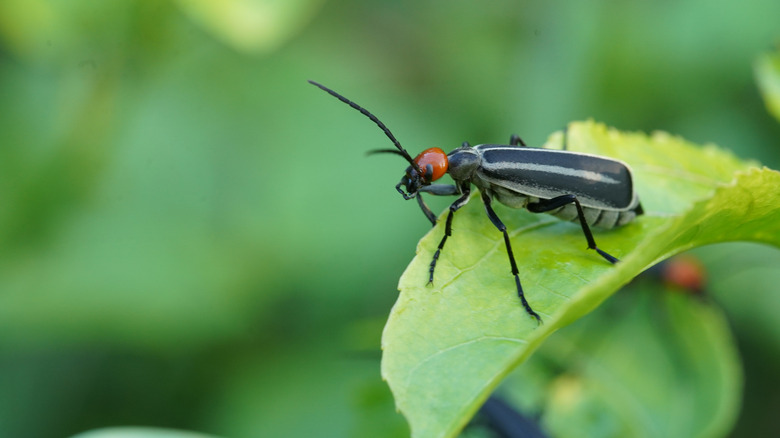
Blister beetles tend to congregate in groups and feed on tomato, cabbage, squash, carrot, and sugar beet plants, to name a few. Adults feed on the foliage and flowers and tend to be most active during the summer months. Unlike carpet beetles, the tiny black beetles that sometimes end up in homes, blister beetles do not usually go indoors because their primary sources of food exist outdoors. That's not to say that you can't find one in your home, but it's unlikely.
If you do spot blister beetles in your home or yard, you may be able to hand-pick them off plants and place the insects in a bucket filled with soapy water. However, you will need to wear thick gloves to protect yourself from accidental exposure to their toxins and subsequent blisters. This method can work for an occasional beetle you may come across indoors, or for smaller groups you might see on ornamental plants.
For larger infestations outdoors in gardens that don't resolve with handpicking, it may be worth considering insecticides to prevent extensive damage to your plants. Sevin Insect Killer Spray is one such option that may be an option for blister beetle management, and it's one way to repel these bugs from hostas and other plants. Be sure to follow all product instructions before use. You'll also want to take extra precautions if you have horses or livestock on your property, as blister beetles have been known to cause serious (and sometimes fatal) harm to these animals when they infest hay and other food sources.