

Why Are Gas Stove Flames Blue?
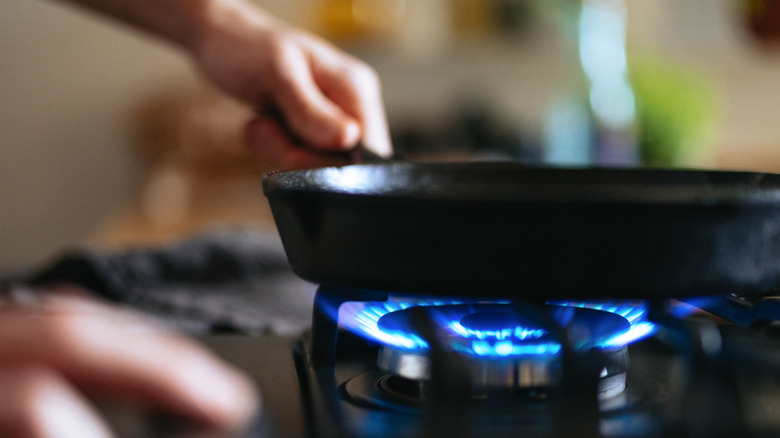
If the burners on your gas stove are emitting blue flames, it's a good sign. It means the flames are hot. Actually, blue flames are the hottest ones possible; they're even hotter than white flames. A hot, blue flame cooks food quickly and helps save gas, so how do you get it? Simple...keep the burners clean.
Gas stoves burn either natural gas — which is mostly methane (CH4) — or propane (C3H8). When either of these gases burns, it combines with oxygen (O2) to produce carbon dioxide (CO2), water (H2O), and lots of heat energy. The temperature of a blue flame on a gas stove is about 2,700 degrees Fahrenheit (1,500 degrees Celsius). That's nothing compared to the surface temperature of a blue star, but as hot as you're going to get on earth unless you burn a fuel like acetylene, or you get hit by lightning. Even a nuclear reactor doesn't produce that much heat.
When the flame on a gas stove burns impurities like grease and soot, it turns different colors, typically white, orange or red. Red flames, like red stars , are the coolest. If the flame on your stove is burning red, it's not very hot and may be about to go out. Regular cleaning can help prevent things from getting to this point.
How to keep that stove flame blue
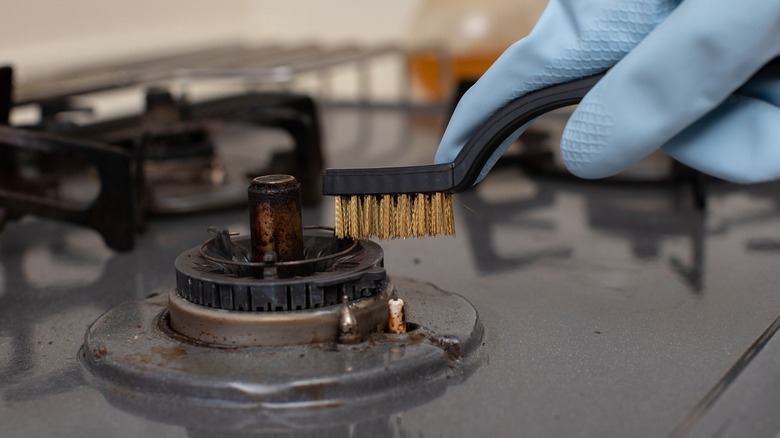
When the flame on your gas stove isn't burning blue, unwanted byproducts like soot (which is unburned carbon) and carbon monoxide might be building up. Soot collects in the burner ports, creating even more obstructions, and carbon monoxide is a dangerous gas that you don't want in your kitchen. Grease buildup can also block the burner ports and interfere with combustion. This is a situation that only gets worse unless you do something about it.
You can maintain a blue flame by cleaning the grates, burner caps, and burner heads. Start by turning off the gas, which may require pulling the stove away from the wall to allow access to the shutoff valve. Take off the grates and burner caps and wash them in the sink with soap water and a scrubber pad. Then use an abrasive pad or wire brush to physically remove soot from the burner ports. Always check the appliance manual that came with your stove to ensure the products you're using to scrub it won't scratch the surface.
If you're still getting a white or yellow flame, check to make sure the burner caps are back in their correct position. Wait until they are cool, then move them slightly to see if this fixes the flame color. Get professional help if you don't see an improvement after doing all this; there may be a problem with the stovetop ignitors or a blockage in the gas tubes feeding the stovetop.