

Why You're Seeing Fewer Lawn Sprinklers (And What Homeowners Are Using Instead)
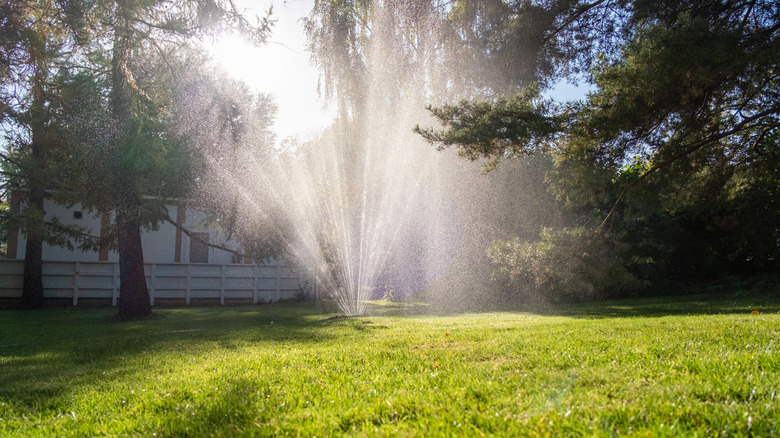
For decades, plants have sung to the hum of sprinkler systems. PVC heads would pop out, rhythmically oscillating and drenching them in water, and pop right back in to emerge later at a planned interval. Recently, however, there's a noticeable dent in their popularity, with some homeowners trading out lawn sprinklers for drip irrigation systems.
Speaking exclusively to Hunker, Sara Bendrick, a landscape contractor and designer, as well as a STIHL USA spokesperson, highlights that today homeowners are using different approaches for their lawns and gardens. "Sprinklers are very relevant when it comes to watering a lawn. However, using them to water a garden is not very popular anymore," she says. Instead, she reports that "Most professionals install drip irrigation, which waters at the ground level so less is lost to evaporation or blowing away."
Indeed, the U.S. Environmental Protection Agency (EPA) believes that a properly installed drip irrigation system — also known as a microirrigation system — can reduce water usage by around 20% to 50%, compared to traditional sprinklers. This equals annual water savings of over 25,000 gallons for an average household, which will automatically lead to lower water bills. Besides, because water trickles gradually into the soil, it doesn't pool, thus ensuring there's minimal leaching or runoff to water bodies, making it an eco-friendly choice.
Sprinklers remain appropriate for turf
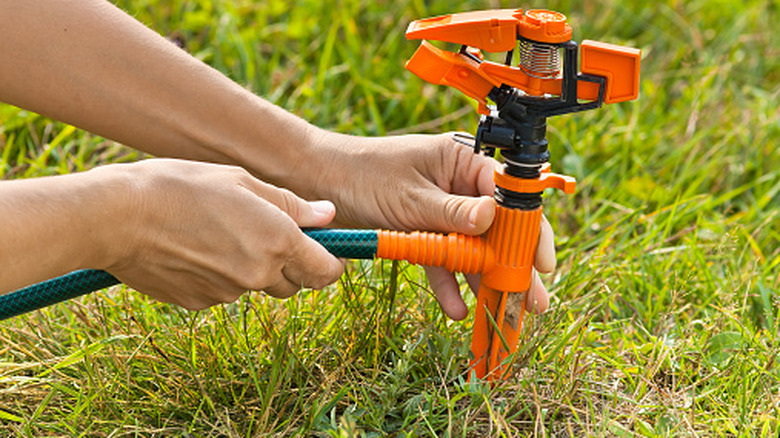
Even though drip irrigation systems are highly water-efficient, they may not always be suitable for lawns for several reasons. For starters, grasses grow densely and require a wider sprinkling to ensure uniform coverage. Drips, in contrast, fare better where plants are located further apart, like in landscaping beds, row vegetable gardens, or around trees. Sharing this sentiment, Bendrick states, "Sprinklers appeal to homeowners with large lawn areas, as it's the most effective way to water a lawn." In addition, unlike drip tubing that may pose trip hazards in recreational areas, sprinklers often remain on the wayside, away from pedestrian traffic and interfering little with lawn care activities like mowing or aeration.
Other than practical uses, Bendrick acknowledges the role of generational divide in determining watering habits. "You might also find some older homeowners who prefer to use sprinklers for their garden as it used to be the standard and they're comfortable with it," she clarifies. "Newer homeowners are more likely to use drip irrigation over sprinklers." Drip irrigation systems that utilize in-line tubing can work for lawns, provided they're placed away from foot traffic.
Creating a water-wise landscape
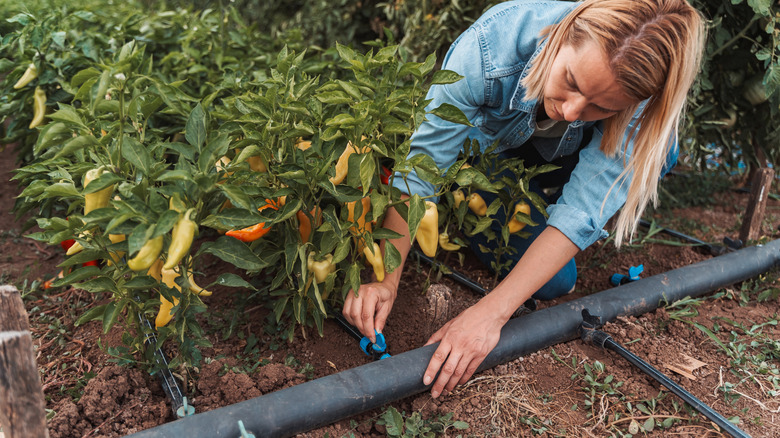
While lawn sprinklers remain suitable for large turf areas, there's no denying that they involve significant wastage. Compared to 90% efficiency for drip systems, conventional sprinklers struggle to maintain around 50% to 70% water efficiency. This means, at the very least, you're losing about 30% of applied water to evaporation or runoff. Plus, with data centers substantially raising the burden on water sources and the looming climate crisis accentuating droughts, it's becoming increasingly important to curb usage and promote water-efficient practices. After all, homeowners, especially in dry regions, can apply nearly 60% of their total water supply on landscape maintenance alone.
Given this, Bendrick offers solid advice to install efficient irrigation for a water-saving landscape. She tells us, "Switch to drip irrigation for garden beds, and if you have a lawn, get MP rotators and adjust your watering schedule." To make sprinkler systems more efficient, many companies are offering high-efficiency or multi-stream rotating nozzle heads. The reason they work better than traditional sprinklers is that they release slower, larger drops that are less prone to being blown away, and there's reduced surface runoff. If you're willing to install a drip irrigation system, Bendrick suggests getting "inline drip tubes where water comes out of little holes, or a solid tube with a micro tube that is punched in and outlets at the plant base." Other money-saving ideas, courtesy of our expert, involve cutting your lawn with a high-quality, battery-powered mower and keeping the grassy blades taller as they shade the ground, enhancing moisture retention.