

Skip Rakes: There's A Smarter Way To Spread Mulch With A Tool Already In Your Shed
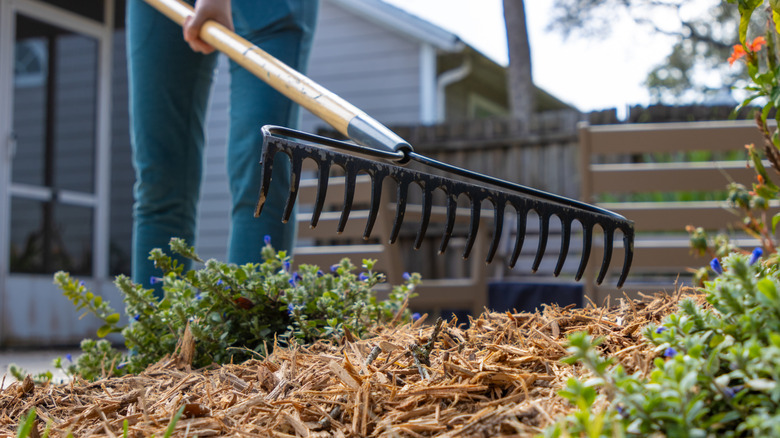
Rakes are a staple when it comes to laying landscaping materials or cleaning up lawns, so it makes sense to use one for spreading mulch. But there may be a better lawn makeover tool to spread mulch, and the best part is that you probably already have one collecting dust in your shed. Get the pitchfork ready, because you're about to tackle your mulch project with this handy tool.
Pitchforks work better than rakes for spreading mulch by design. The tool's long teeth allow it to penetrate piles and grip the mulch deeply, making it easier to lift larger amounts and deposit it around the job site. Reducing the number of trips between the site and the mulch saves time and reduces physical labor, allowing you to better enjoy the impact of your freshly laid landscape. The tines also allow you to sift and comb the mulch to reduce clumps as you deposit it and spread it around the bed.
There are several types of pitchforks to consider for spreading mulch. Since mulch is a lightweight, loose material, pick a pitchfork with tines that are close together to prevent the mulch from falling out during transfer. Generally, the more tines, the better. If your project covers a wide area, consider using a large bedding or ensilage pitchfork. A bedding fork has tighter tines and a curve that makes it great for scooping up mulch, while an ensilage fork has a wider head (typically with at least 10 tines) to tackle larger projects.
How to spread mulch with a pitchfork
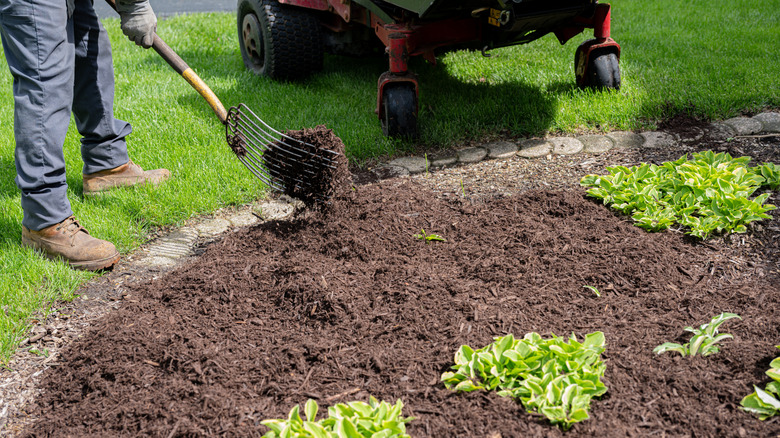
Whether your mulch project serves to improve the appearance of your garden bed, retain water around trees, or provide erosion control, knowing how to mulch a landscape with a pitchfork can go a long way in simplifying the process. Weed the area before laying your mulch. Smooth out the existing soil, ensuring the surface area is a few inches lower than the existing hardscape to prevent spill-over and allow for the mulch to sit level with or just below other surfaces. Once the substrate is level, use your pitchfork to scoop up mulch from your dump truck or wheel barrow and drop it over the area.
For bigger projects, place small piles of mulch in every corner to make it easier to spread. If you miss using a rake, don't worry – you can still use one to level out the surface of your newly laid mulch. Alternatively, you can simply use the back of your pitchfork to smooth it. After spreading the mulch, wipe off the pitchfork to keep it clean and prevent any bits from drying and sticking to the tool.
When choosing a pitchfork from the shed, shorter D-grip options are especially helpful for lifting and moving mulch in raised beds or pulling it from a wheelbarrow or high pile. But for maintaining mulch in garden beds that are on the ground and covering wide areas, it can be better to choose a longer pitchfork to avoid bending and straining your back. You can further reduce physical labor by using a pitchfork with a fiberglass handle, which is more lightweight, durable, and rot-resistant than a wooden handle.